Photo: Ku Ki
One year after a powerful 7.7-magnitude earthquake struck central Myanmar on 28 March 2025, communities across Sagaing, Mandalay, Naypyitaw, Southern Shan and parts of Bago continue the long process of recovery. The disaster struck a population heavily impacted by the armed conflict, displacement and economic uncertainty, compounding existing humanitarian needs.
With more than 40 years of presence in Myanmar, the International Committee of the Red Cross (ICRC) scaled up our operations quickly in the immediate aftermath of the earthquake. Working closely with the Myanmar Red Cross Society (MRCS) and supporting its role in coordinating the Red Cross and Red Crescent Movement’s response, the ICRC helped deliver emergency assistance and longer-term recovery support.
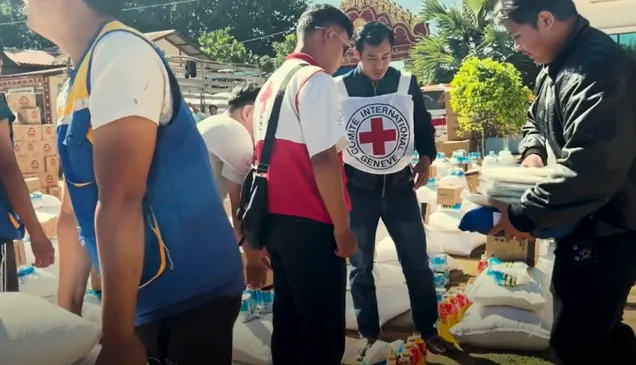
Over the past twelve months, the ICRC and our partners have assisted more than 300,000 people across earthquake-affected areas. Our support has ranged from life-saving emergency aid to recovery and resilience-building activities, including shelter materials, essential household items, food and economic assistance, access to safe water and sanitation, and health services. The response has also focused on strengthening local emergency capacities, including support to local partners, authorities and health facilities.
Many families have taken important steps toward recovery – repairing homes, restoring livelihoods and regaining access to essential services. This progress has been made possible through the solidarity of local communities, first responders, Red Cross volunteers and international partners.
However, recovery remains fragile. Many people continue to live in precarious conditions, and essential services remain under pressure – particularly in communities already affected by armed conflict and displacement.