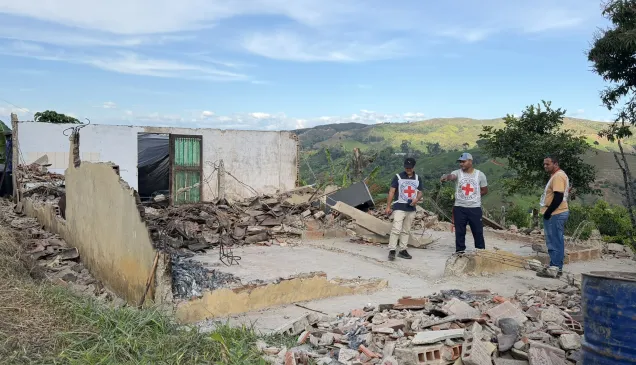
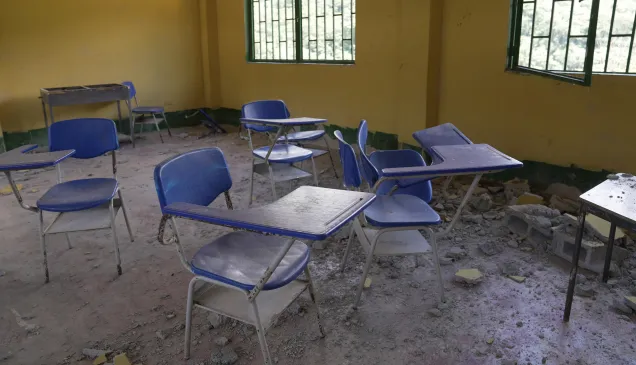
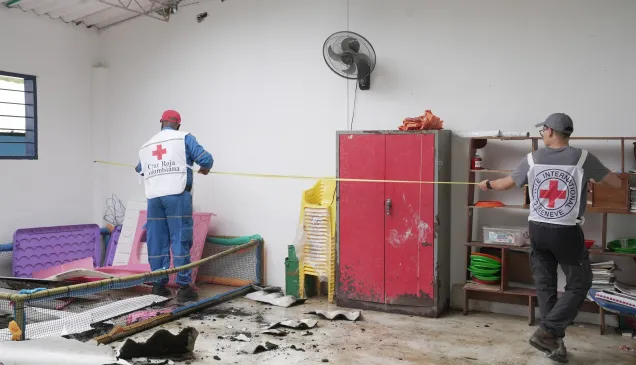
Non-compliance with international humanitarian law deteriorated the humanitarian situation in Colombia in 2025

When I learnt that I would begin my mission in Colombia, it was impossible not to think about everything I had to do. The challenge is great for those arriving in a country of remarkable human richness yet marked by decades of armed conflict. Therefore, my first objective was to understand that reality respectfully and without simplifying it.
Since the end of February 2026, I have taken on the leadership of the Regional Delegation of the International Committee of the Red Cross (ICRC) in Bogotá, with the understanding that contexts such as Colombiaʼs require prompt and consistent responses adapted to the multiple local realities. I have also witnessed the commitment of my nearly 300 colleagues in Colombia. Their discreet and respectful dialogue with all parties to the conflict makes a daily difference in the lives of people who do not, or no longer, take part in the hostilities.
Today, this dialogue is more important than ever. The scale of this human tragedy cannot be described by numbers alone, but is reflected in the suffering of entire communities living in fear of fighting: families forced to leave everything behind in order to survive, the search for thousands of missing persons, and the shattered lives of boys and girls scarred by war. In 2025, our teams worked in a context marked by the intensification and transformation of armed conflict dynamics, including an increasing use of new technologies, such as the use of drones, with significant consequences on civilians’ daily lives.
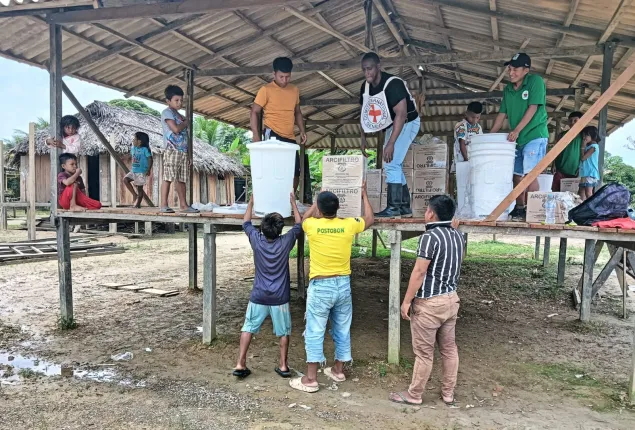
The withdrawal of humanitarian organizations and the reduced resources of those still present in the country created an added challenge in 2025, with immediate consequences across the territories. The ICRC experienced this firsthand by having to reduce its budget for 2026 in Colombia by 30 per cent. In a paradoxical situation with global consequences, we observe that while the humanitarian needs of communities affected by armed conflict are increasing, the resources to meet those needs are decreasing.
The humanitarian situation is certainly challenging and grounds for optimism are limited. However, the humanitarian consequences of conflicts are not unavoidable. They depend on concrete decisions of the parties to a conflict, not just on how hostilities are conducted. Upholding the obligations of international humanitarian law (IHL) is fundamental to maintaining humanity during war.
IHL is not an abstract idea that can be reduced to empty words, but a framework that should guide the daily operations of all parties to a conflict, state and non-state, and must be upheld by each of its members, regardless of rank.
I would like to conclude with a clear message: Colombia is not condemned to suffer indefinitely the consequences of armed conflict. Even in times of hardship, it is possible to ease that suffering. Upholding IHL not only offers a clear path to achieve this, but also constitutes an urgent and unavoidable obligation.
Olivier Dubois
Head of the ICRCʼs Regional Delegation in Bogotá