Sudan: Reaching people in dire need as crisis deepens
People in Sudan are enduring one of the world’s most devastating – and least visible – humanitarian crises. Since the conflict erupted in April 2023, families have been torn from their homes, often with only moments to flee. Essential services, from hospitals and clinics to water supply and other critical infrastructure, are being disrupted, damaged or rendered unsafe by the conflict, leaving health facilities unable to operate normally and many communities without access to basic services. Food is increasingly scarce, and many towns and villages are cut off for weeks or even months at a time.

Mohammed Jamal/ICRC
The violence has also brought devastating levels of sexual violence, separation, and disappearances. Many families do not know the fate of loved ones, and communities live with the constant fear of further violence or loss. These are wounds that extend far beyond physical hardship and will shape the social fabric of Sudan for years to come.
For those living through the conflict, the consequences are immediate and overwhelming. Accessing urgent medical care may require near-impossible journeys. Markets that once bustled with activity now stand empty or too dangerous to reach. Front lines shift rapidly, leaving families unsure of where safety lies or how long they can remain in one place.
It is in these conditions that the International Committee of the Red Cross (ICRC), together with the Sudanese Red Crescent Society (SRCS) and local partners, is working to support the communities that are bearing the heaviest burden of this armed conflict.
Delivering aid in Sudan requires continuous dialogue to ensure safe access, adapt to shifting front lines, and reach communities whose lives have been upended by the conflict. In parallel, we strive to promote respect for international humanitarian law and work to strengthen knowledge of IHL among authorities and weapon bearers.
Our presence across Sudan reflects both the immense scale of humanitarian need and the enormity of the task of alleviating suffering wherever security allow. This overview highlights what communities are facing today, and how our teams are striving to help.
Darfur Region
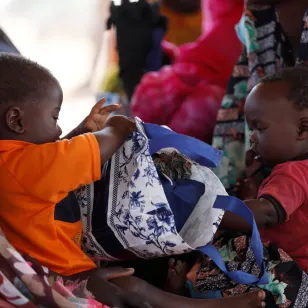
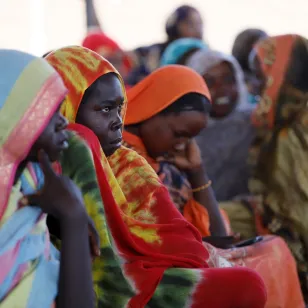
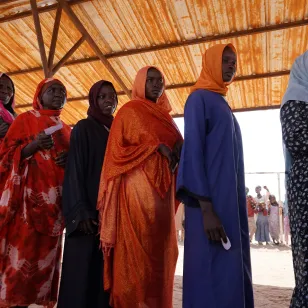
Across Darfur, civilians face some of the harshest consequences of the conflict. Whole neighborhoods and villages have been left largely deserted as repeated violence forces families to flee, many seeking refuge in overcrowded camps that struggle to meet even the most basic needs. Access to food and clean water is limited, health services are scarce, and people often arrive exhausted after days or weeks on the move, carrying the trauma of what they have witnessed and the uncertainty of where they can safely settle.
ICRC in this region
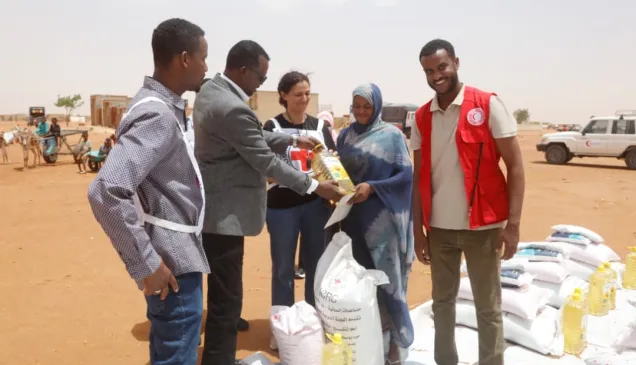
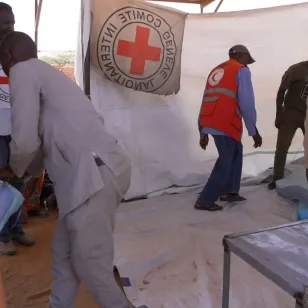
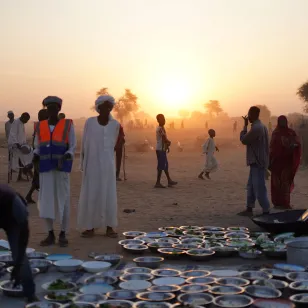
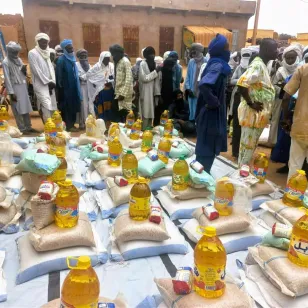
Based in Al Geneina (West Darfur), our team works across a large and highly volatile region where conditions can change quickly and insecurity regularly affects movements and planning. Much of our work focuses on supporting the vast numbers of displaced people, including in areas such as Tawila, North Darfur. We provide essential food, water and shelter materials and financial support to families who have fled with almost nothing.
North & Central Sudan
In Khartoum, River Nile and Northern states, the conflict has left millions living with disrupted basic services and weakened systems of community support. Hospitals struggle to cope with mass casualties, deadly diseases such malaria or dengue and persistent shortages of supplies. Many neighbourhoods in Khartoum have seen repeated fighting, forcing people to move frequently or live in constant fear. Water plants, electricity grids and other essential infrastructure have been damaged or left without maintenance, deepening the hardship for civilians already under immense pressure.
ICRC in this region
From our office in Atbara (Rivel Nile) and growing presence in Khartoum, the ICRC supports health authorities at the Atbara Teaching Hospital, where our surgical team treats people wounded by violence. We also work with water authorities in Khartoum State to keep major water stations functioning, ensuring millions still have access to safe drinking water despite the enormous strain on essential infrastructure. In Khartoum, the ICRC supports forensic and health authorities and the Sudanese Red Crescent Society to ensure the dignified management of the dead. This includes guidance on identification practices, handling and storage of remains, and helping families find closure when possible.
Eastern Sudan
Kassala, Gedarif and Al Jazeera states host large numbers of displaced families who have arrived with few belongings and must now navigate an already overstretched humanitarian landscape. Many have lost sources of income and struggle to afford even the most basic items. Health facilities face chronic shortages, while recurring disease outbreaks - including cholera - place additional pressure on a system barely holding together.
ICRC in this region
From Kassala, our teams provide cash assistance, livestock support and food production assistance to the most vulnerable families and displaced communities, helping them strengthen their resilience and maintain dignity by meeting their essential needs in ways that are most relevant to their situation. We also support key hospitals with medicine supplies and operational funding, including cholera treatment centres, helping to keep essential health services available to communities with nowhere else to turn.
South & Central Sudan
In Blue Nile, White Nile, Sennar and parts of Kordofan, communities live in an environment shaped by shifting front lines and contested control. Many areas are isolated, with limited access to markets, health care or humanitarian actors. Movement is often dangerous, and families may go months without reliable access to food, medical treatment or clean water. The combination of active hostilities and logistical challenges makes these regions among the hardest to reach.
ICRC in this region
From Damazine (Blue Nile) the ICRC attempts to reach these communities through continuous dialogue with all sides, acting as a strictly neutral humanitarian intermediary. When access permits, we support health facilities and restore essential water systems, and provide assistance to displaced families in areas where people have long remained out of sight from the broader humanitarian response.

The critical work of reconnecting families
Across all regions, one of the most painful consequences of the conflict is the separation of families. Many people have fled in chaos; others have been cut off by fighting or are living in areas with no communication networks. Parents search for children, and siblings wait desperately for news of their loved ones.
Through our Restoring Family Links (RFL) programme, the ICRC, together with our primary partner the Sudanese Red Crescent Society (SRCS) and Red Cross and Red Crescent societies of neighboring countries, works to reunite loved ones. We help people trace missing relatives and re-establish contact, we facilitate phone calls, register cases of the missing, and work to reunite families whenever possible. In crisis, this work offers a lifeline of hope and human connection.
Our continuing commitment to reaching those who need our help
Despite our best efforts, there are critical areas we currently have limited or no sustained access to, such as Al Fasher and Kordofan region. Reaching people in these zones is our absolute priority. However, it depends entirely on securing security guarantees from all sides and having the logistical means to operate safely.
The front lines are not static. A town accessible one week may become a battlefield the next, forcing us to constantly adapt our plans. Our ability to cross these lines is not a given; it is painstakingly built through continuous, confidential dialogue with weapon bearers, based on the trust that our work is solely humanitarian and impartial.
Our presence across Sudan – the largest ICRC operation in Africa – is a commitment to the Sudanese people. While our operational reach is a day-to-day negotiation, our resolve is not.
We continue to call on all parties to the conflict to respect international humanitarian law, safeguard civilians, and ensure that humanitarian assistance can reach those most affected. The needs in Sudan are immense, and timely support and protection can prevent further suffering. Humanity cannot be paused. The people of Sudan cannot wait.
Read more about our work in Sudan
- Frequently asked questions: Our work in Sudan
- Sudan: Families fleeing Al-Fasher recount harrowing violence as dire needs rise
- ICRC president: World leaders must act to end the indiscriminate killing in Sudan
- Sudan faces worst cholera outbreak in years as war devastates infrastructure
- “We arrived from Sudan with nothing but our lives”
- Two years of devastation in Sudan: A civilian toll that cannot be ignored