Somalia’s Child Malnutrition Nears Five-Year Highs
Malnutrition in Somalia is pushing stabilization centres to levels not seen in almost five years. During the first three months of 2026, more than 700 children under the age of five were hospitalized at the Kismayo General Hospital. Ten of them died. Nearly 1.8 million more are expected to experience malnutrition this year, as cuts to humanitarian funding have forced the closure of almost 500 nutrition clinics, exacerbating a crisis that shows no signs of ending.

Frail. Listless. Some unable to walk. One after another, mothers file into nutrition clinics cradling babies whose small bodies are losing the battle to survive.
At the Somali Red Crescent Society’s (SRCS) Howlwadaag clinic in Baidoa, the waiting bay is a quiet kind of catastrophe.
Nurta Ibrahim, 25, arrived with her two-year-old daughter, Salaada Mohamed, feeble in her arms. For two months, she debated with the idea of making the trip. With no money, she would have to cover the 25 kilometres journey on foot. She would also have to leave her four other young children behind, with no one but a neighbour to look after them. All the while, her baby’s condition grew worse. In the end, she was forced to make the trip, walking from her humble Moosha village to Baidoa town.
This arduous road in search of healthcare is the bane of many Somali mothers. Health facilities are few and far between, and insecurity and adverse weather conditions make access to the existing ones even harder to reach.
Mothers like Nurta, who are struggling to feed their young families, find themselves at a crossroads: watch your child waste away or leave the rest of your family behind unattended. For mothers in Moosha, the nearest facility sits behind a gauntlet of roadblocks, checkpoints and inflated transport costs.
Access to healthcare in rural Somalia is a luxury.
If there is a drought and your child is sick, there is very little you can do. I thought about taking her to the nearest health facility, but there is none close to our village,” explained Nurta.
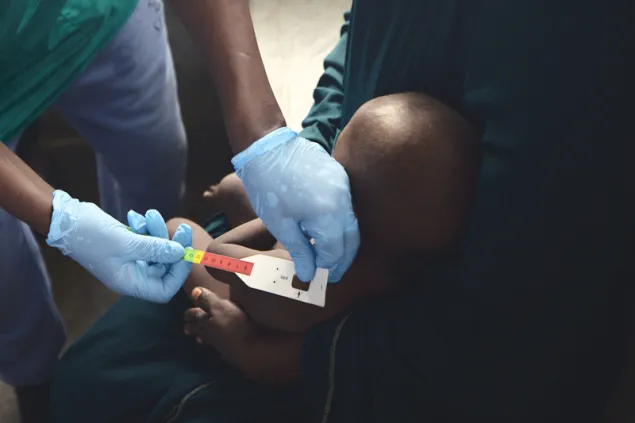
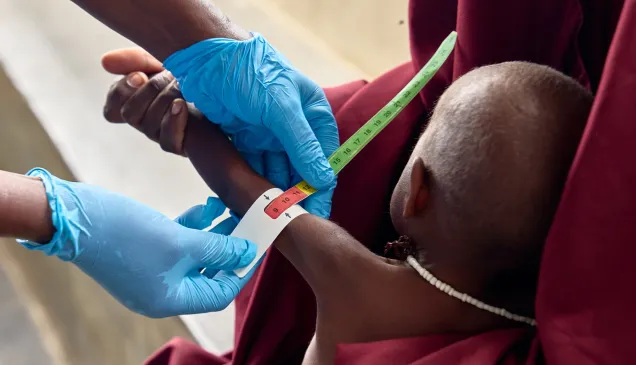
At triage, a nurse measures the middle-upper arm circumference (MUAC) of a child, a quick and effective method to assess whether the child is moderately or severely malnourished.
When the harsh effects of the drought take hold, as it did across the country since late last year, children are always the first to bear the weight of it. Their physiology makes them the most acutely vulnerable when food is in short supply. Carrying fewer reserves than adults and their immune systems still forming, they move from adequate nutrition to moderate malnutrition to severe, faster than adults.
According to IPC [1] , 1.8 million children under five years are likely to suffer from malnutrition this year.
The clinics that offered therapeutic care, have been shuttered. According to the same report, close to 500 nutrition clinics have stopped operations across the country due to humanitarian funding cuts.
For Somali children, this means that the gap from healthy to wasting is closing fast. The rising number of admissions at the Kismayo General Hospital’s stabilization centre, a specialized facility designed to treat the most severe cases with medical complications, tell a story of numbers not seen in nearly five years. In just the first three months of this year, 738 children under the age of five have been admitted.
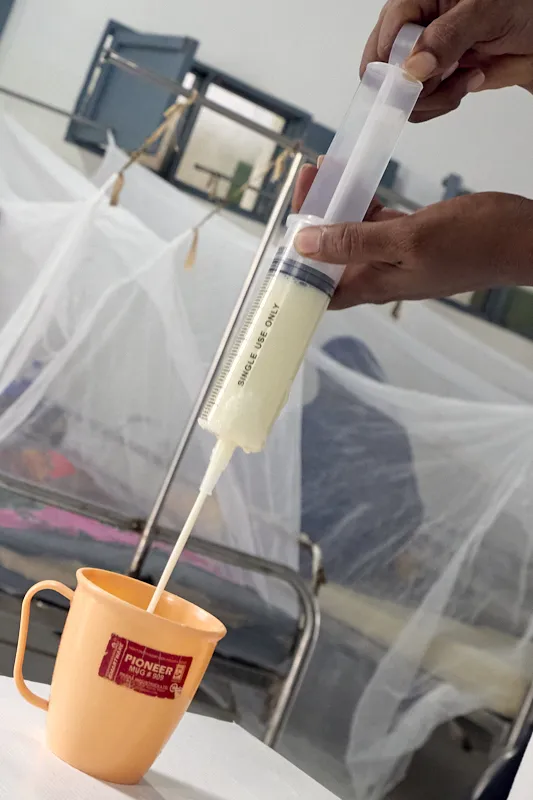
Specialized therapeutic milk given to severely malnourished children under five admitted at the stabilisation centre.
The centre, supported by the International Committee of the Red Cross (ICRC) is one of a kind in a region battling both drought and conflict, serving both Middle and Lower Jubba.
Children coming to the stabilization centre present with acute severe malnutrition with a mix of medical complications like kwashiorkor, laboured breathing, persistent diarrhoea and vomiting. They are swiftly admitted to the ICU within the first hour of arrival.
Here, treatment takes seven to fourteen days with an aggressive medical plan that includes specialized therapeutic milk that is given after every two hours and daily monitoring of vital signs before they are discharged.
But not every child makes it. Some arrive, deteriorated, delayed by distance, conflict and the absence of a clinic closer to home worsening their chances of recovery. 10 deaths have been recorded at the stabilization centre in just the first two months of this year.
As the acute malnutrition rates soar given the persistent drought, the ICRC together with the SRCS are stepping up their nutritional response.
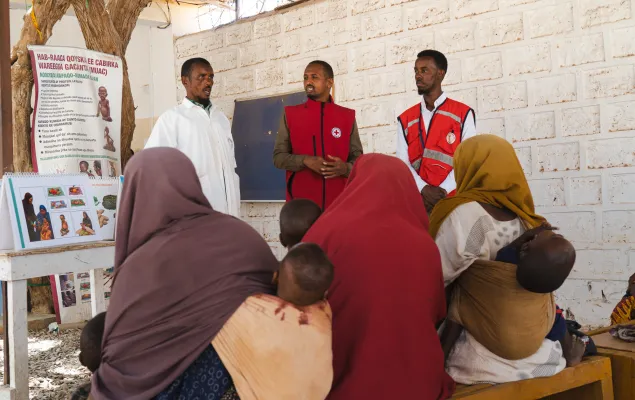
On a daily basis, mothers are educated on proper nutrition and breastfeeding techniques as part of the medical services offered before patients leave the clinic.
Twelve SRCS-primary healthcare centres have been activated to run as nutritional centres in addition to the already pre-existing ten nutritional centres across the country. The clinic staff have been trained on offering nutritional medical services and the clinic pharmacies stocked with both medical supplies and Plumpy'Nut - a nutritious paste that helps stave off the disease. Mothers are also provided with dietary tips and proper breast-feeding habits.
Even with this scale-up, the needs are overwhelming.
The brief rains being experienced across parts of the country have done little to restore soil moisture, replenish groundwater or return surface water levels to near normal. After consecutive failed rainy seasons, any meaningful recovery of the agricultural season is not expected for months, if not until next year. Humanitarian funding cuts, arriving at the worst possible time, makes an uncertain future much bleaker, and the worrying IPC figures an unfolding reality.
[1] Somalia: IPC Acute Food Insecurity and Malnutrition Snapshot | January – June 2026