When Motherhood Becomes a Responsibility before Being an Option

Mother’s Day is never an ordinary day for Sameera*, as before she experienced motherhood in its typical sense, she had already lived that role numerous times, in different forms. Since her childhood, Sameera* was a mother to her younger siblings, then to the children of her brother who is deceased in Syria, and later to her husband’s children. And today, she lives the experience of motherhood with her own children.
“Despite my young age, I wasn’t familiar with the concept of “giving” until I experienced that feeling”.
Sameera* arrived in Jordan in 2013, at a time when the war in Syria had intensified, specifically in the capital Damascus where she used to live. As the conflict escalated, the family moved first to the city of Dara'a, before having to relocate later to Jordan and settle in Za'atari refugee camp. But this time, her younger siblings, whom she considered as her own children, weren’t with her.
Displacement wasn’t the hardest challenge in Sameera’s* life, as her brother’s decease in Syria and losing her other brother, who went missing, formed deep scars in her life that were hard to overcome.
A dream of education deferred by displacement
Sameera’s* journey from one country to another, from village to village, carried many disappointments along the way. During that period, she had to leave behind her dream to study journalism and Arabic language and replace it by the only dream left: that of motherhood, by taking care of her deceased brother’s children for over 8 years.
As time passed by, Sameera* moved out of Za'atari camp in search of a wider space for her life with her brother’s children. So she moved to the south of the capital Amman.
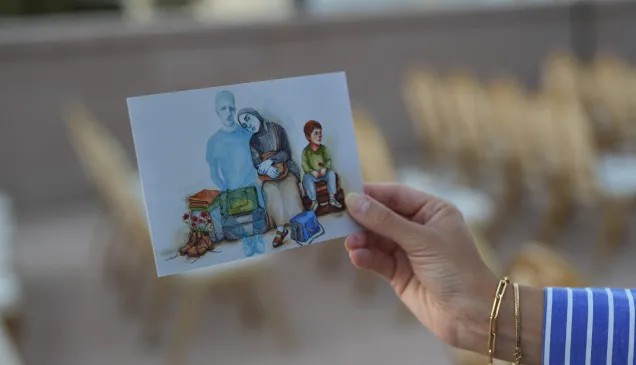
In 2017, hope came back knocking on her door, when she heard about the ICRC’s service that allows families to register their missing relatives due of the conflict in Syria. “I didn't see it with my own eyes... so he could still be alive.” Samira said.
Although more than 10 years have passed since the disappearance of her brother, hope still lingers in her heart. She embarked on a journey of search for him at the moment she saw herself not just as a sister, but also a mother.
A mother throughout all stages of her life
Motherhood became part of Sameera’s* life early on, even as she moved to her husband’s home in Madaba governorate, where she found herself once again with three children who needed care and attention after their own mother left them. The “stepmother” became the mother.
She says, with a smile: “my stepchildren only call me ‘mommy’, because I came into their lives when they were quite little.”
After settling down in Madaba, Sameera* finally had her own children, Samar* and Khaled*. She adds happily: “I have two children, and a third on the way.”
Although she experienced the meaning of motherhood many times before, the feeling of having her own children was different, in that it compensated her for losing the warmth of a large family; a feeling she lost on the day she left her home in Damascus for the first time.
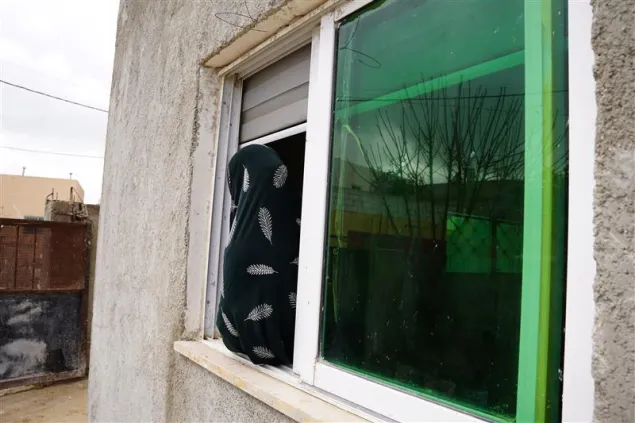
Loss is not the end of the road
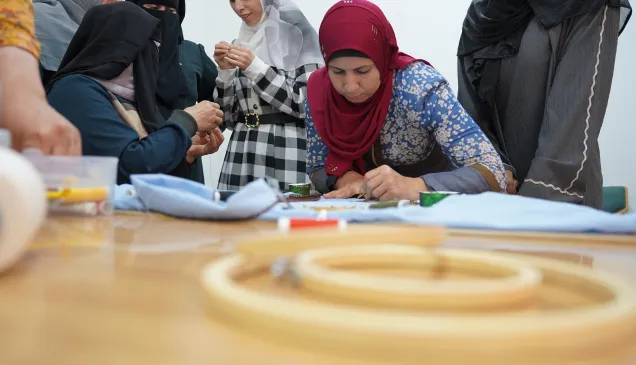
As her family grew, so did their needs. Therefore Sameera* started supporting her husband in providing for the family. With the help of her mother-in-law, who taught her cooking skills, she started to prepare home-cooked meals to sell to the surrounding families in Madaba governorate.
Against this background, and as part of its support to the families of the missing, the ICRC provided Sameera* with financial assistance within the Accompaniment Programme that aims to help her establish a small business and improve the livelihoods of these families. Sameera’s* was one of the 898 families who received such support by the end of 2025.
Thanks to the ICRC support, which also included business management training for the beneficiaries, and to Sameera’s* diligence, she was able to establish her first home-based project. Within six months only, her income almost tripled, as after she used to earn around 50 JOD a month in selling food, she now earns between 150 and 200 JOD a month, selling dairy products, pickled eggplant (makdoos), and other homemade products. “Previously, I used to calculate my income randomly, whereas now, I am far more capable of managing my financial affairs by myself.”
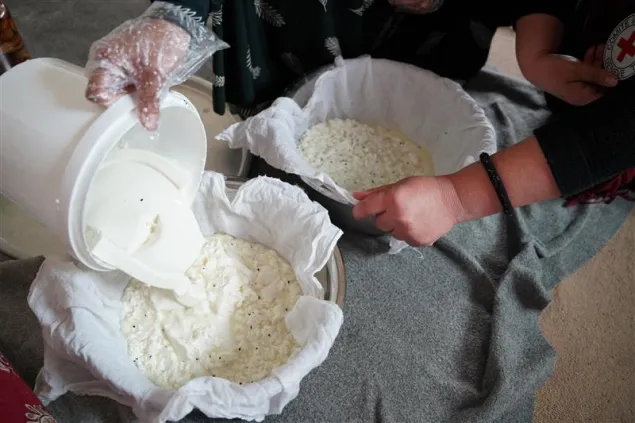
Financial support is not enough on its own
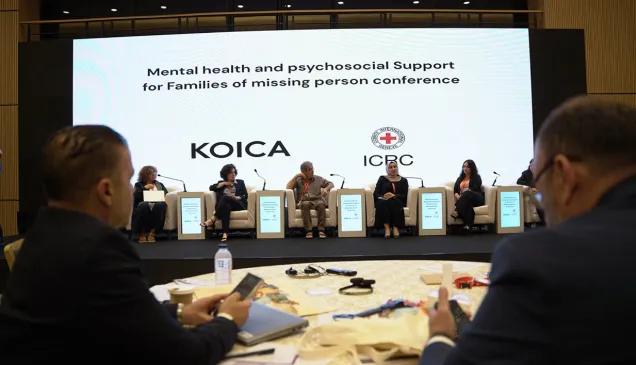
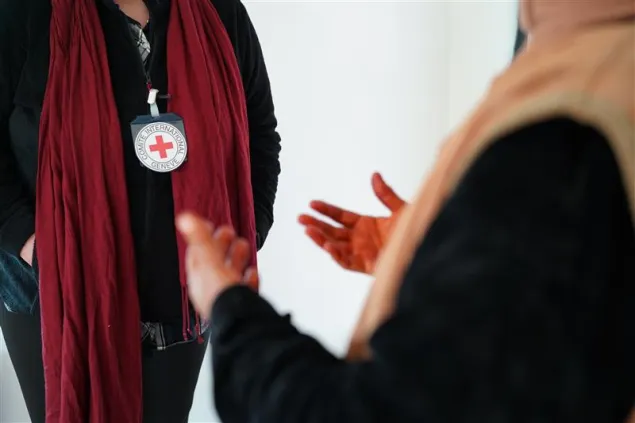
It was not just the financial support that helped Sameera* overcome her difficult circumstances, as she also benefitted from the psychosocial support services offered by the ICRC to the families of the missing, in an attempt to secure their mental and emotional stability under the challenges they go through.
This Mother’s Day, Sameera* feels even stronger. Today, she is mother to her own children, to her stepchildren, and to her brother’s children.
Yet despite all these changes in her life, one thing remains the same: Sameera* is still waiting for any news about her brother who went missing in Syria over ten years ago. Maybe one day, as she puts it, when she learns of his fate, the mother’s heart within her would finally find peace.
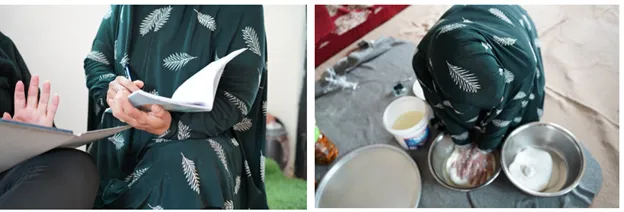
*Names have been changed to protect individuals’ privacy.