Democratic Republic of the Congo

The ICRC has been working in the Democratic Republic of the Congo since 1978, providing protection and assistance to victims of the armed conflicts and other violence that regularly afflict the country. We strive to promote respect for international humanitarian law and its incorporation into domestic legislation.

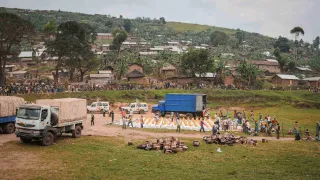
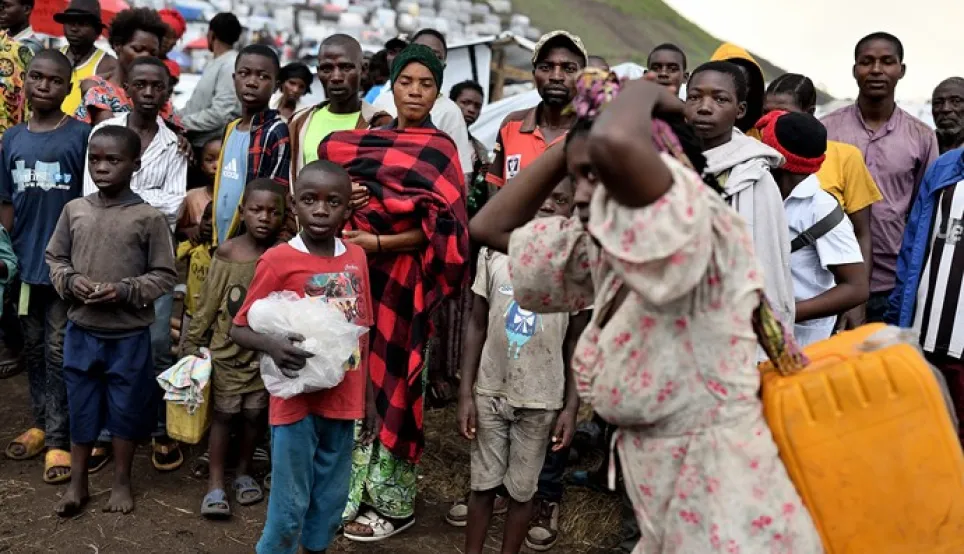
The ICRC organises a food distribution for displaced people in North Kivu province.

Our work in the Democratic Republic of the Congo

In the Democratic Republic of the Congo, as elsewhere in the world, the ICRC works according to its principles of neutrality, impartiality, and independence. Its role is to protect the lives and dignity of victims of armed violence.
 
Our teams work as closely as possible with the communities concerned to monitor whether they are being respected and protected by the parties to the conflict and can meet their basic needs. We reunite separated family members and visit people who have been arrested and detained to ensure that they are treated with dignity.
 
We help the wounded, the sick and victims of sexual violence to gain access to health care. We help the most vulnerable people maintain or regain a stable livelihood. We improve access to water and hygiene.
 
We promote knowledge of and respect for international humanitarian law and universal humanitarian principles among civil society, authorities and weapon bearers.

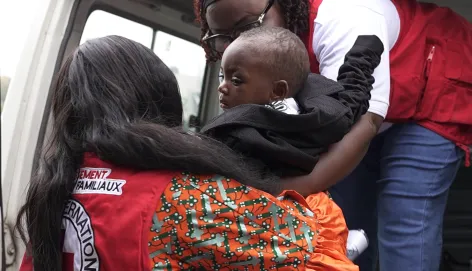
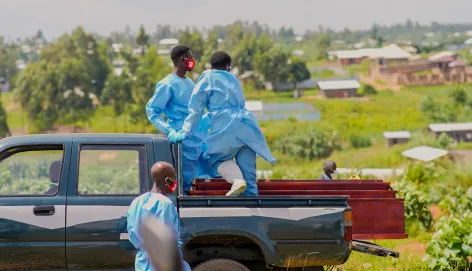
image véhicules CICR - RD Congo

The impact of our work - January to June 2026

116,166

medical consultations were carried out in supported health centres and hospitals

994

mobility devices and assistive products were delivered to users of the four supported physical rehabilitation centres

20,430

people, members of 3,405 displaced and returnee households, received multi-purpose cash assistance

456,154

people benefited from ICRC activities to support access to essential water, energy and health services in Ituri, North Kivu and South Kivu provinces.

2,768

free phone calls were facilitated, enabling separated family members to re-establish contact

54

visits to places of detention made it possible to individually follow up on 3,502 people deprived of their liberty, in order to ensure adequate conditions of detention and humane treatment and, where necessary and possible, to restore or maintain contact with their families

Our services in the Democratic Republic of the Congo

  • The ICRC provides water in conflict zones and creates or maintains a sustainable living environment.

  • The ICRC works closely with all parts of the Movement present in the country to ensure a concerted, effective and rapid response to the humanitarian needs arising from armed conflict and other situations of violence.

  • The ICRC defines economic security as the ability of individuals, households or communities to cover their essential needs, such as food, shelter, clothing, health care and education, sustainably and with dignity.

  • The ICRC and National Red Cross and Red Crescent Societies locate people, exchange messages, reunite families and clarify the fate of missing persons.

  • The ICRC ensures that people affected by conflict can get basic health care that meets universally recognized standards.

  • The ICRC is stepping up its efforts to prevent this type of violence and help the victims.

  • We remind authorities and others of their legal obligations under international humanitarian law and international human rights law.

  • The ICRC visits people who have been arrested and detained, particularly in the framework of an armed conflict or another situation of violence, to ensure dignified and humane treatment and living conditions.

Contact us

Address

Gombé, Avenue Papa Iléo, Kinshasa, RD

Telephone

0817 006 060

Media contact

Kongolo Francine

Our work with the Democratic Republic of Congo Red Cross

The ICRC helps strengthen the capacity of the Red Cross Society of the Democratic Republic of the Congo to assist the most vulnerable communities. The ICRC helps strengthen the capacity of the Red Cross Society of the Democratic Republic of the Congo (link 2) to assist the most vulnerable communities.