Protecting the wounded, sick and dead: why the rules of war must translate into action

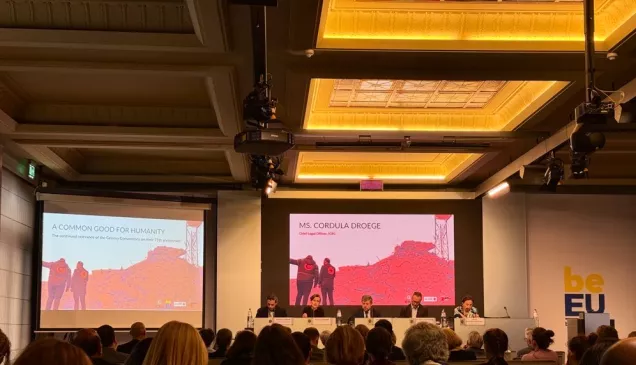
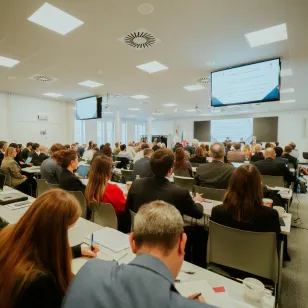
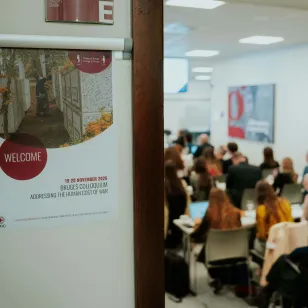
Legal experts, military practitioners, policymakers and humanitarian professionals gathered in Belgium for the 26th Bruges Colloquium on international humanitarian law (IHL), held on 19 and 20 November. Discussions focused on upholding IHL to better protect the wounded, sick and dead in armed conflict.
During war and long after it ends, the suffering does not simply disappear. Some people remain trapped in waiting rooms: the wounded and sick, waiting for treatment and care; families, waiting for news of loved ones who have been killed or are still missing.
In 1859, Henry Dunant saw tens of thousands of soldiers lying dead or wounded after the battle of Solferino. With local villagers, he cared for them regardless of which side they had fought for. His call for the creation of a neutral organization, and for rules to protect those giving care, led to the first Geneva Convention in 1864. Today, the Geneva Conventions of 1949 are ratified by every State.
From rules to practice: a perspective from Belgium
This year's theme of the Bruges Colloquium, Addressing the Human Cost of War: Upholding IHL to Protect the Wounded, Sick and Dead, was explored across five panels that traced a chronological journey, from the realities of the battlefield to the return and reunion of loved ones with their families.
Created in 1999 and co-organized by the ICRC delegation in Brussels and the College of Europe, the colloquium is the annual meeting point in Belgium for IHL experts and practitioners to discuss the challenges, development and faithful implementation of IHL.
Tweet: https://twitter.com/ICRC_bxl/status/2125263500532441355
What the law says
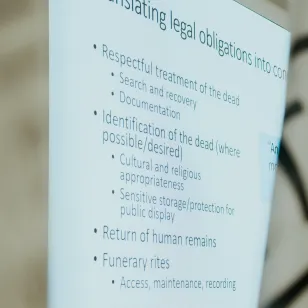
Under IHL, all wounded, sick, and dead individuals must be accounted for, respected, and protected. The wounded and sick must receive care based on their needs, regardless of the party to which they belong. Parties are obligated to search for them, and the dead must be handled with dignity. This also helps ensure that people do not go missing.
Tweet: https://twitter.com/ICRC_bxl/status/2126259897096388999
What this means in practice
Parties to an armed conflict must have a clear understanding of their obligations toward the wounded, sick, and dead. All must be respected and protected, regardless of the party to which they belong. Appropriate medical attention must be provided as quickly as possible, without distinction between military or civilian, friend or foe.
Tweet: https://twitter.com/ICRC_bxl/status/2125867042507047091
At all times, and particularly after hostilities, belligerents are obligated to take all possible measures to immediately to search for and collect the wounded and sick, protect them from pillage and ill-treatment. IHL further requires that the remains of those who have died during an armed conflict be handled with dignity and properly managed. This includes searching for, collecting, and evacuating the dead, which also helps ensure that people do not go missing.



More than 160 years after Dunant's call for action, the work to implement these rules goes on.