Confronting Absence: Art, Testimony and Humanitarian Action on the Crisis of Missing Persons

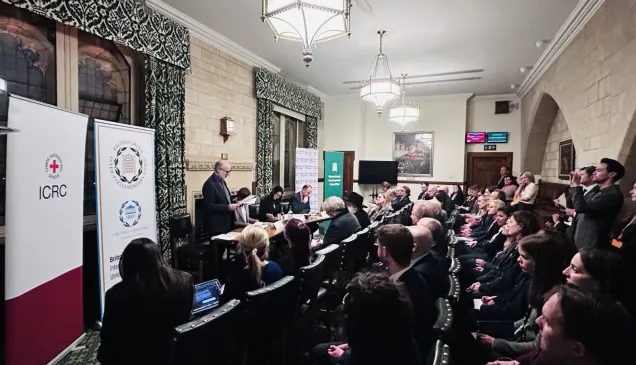
Art, testimony, and policy came together at the Embassy of Switzerland last week. Hosted by Dominique Paravicini, Switzerland’s Ambassador to the UK, and delivered in partnership with the British Red Cross and the University of Bath, the event reflected on the issue of missing persons: what it means for those left behind and what humanitarian and state actors are doing, and must do, to address this global crisis.
© Devon Shoob/Embassy of Switzerland in the United Kingdom
© Devon Shoob/Embassy of Switzerland in the United Kingdom
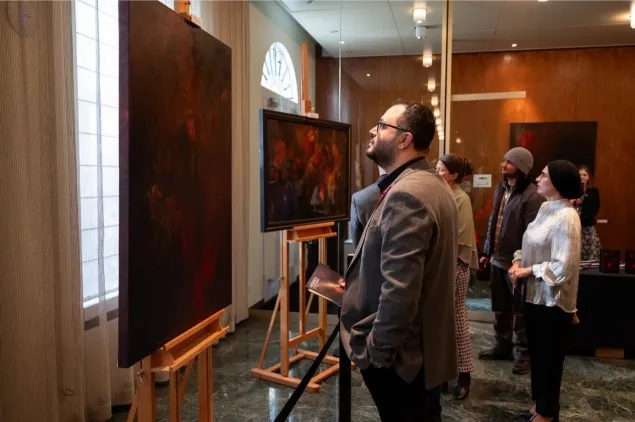
The event took place alongside an exhibition of abstract works by Chantal Meza, a Mexican artist and Artistic Engagement and Impact Research Fellow at the University of Bath, whose practice reflects on disappearance, memory, and grief. The artworks and testimonies framed absence not only as a political or legal issue, but as a deeply human one.
The programme commenced with opening remarks from Dominique Paravicini, Ambassador of Switzerland to the United Kingdom, who underscored the vital link between humanitarian action and strengthening the international order, highlighting the crucial role of multilateral platforms such as International Geneva.
This was followed by a conversation between British Red Cross CEO Béatrice Butsana-Sita and advocate Rima Yaseen Al Khayat, whose brother and cousin went missing in Syria.
Rima described the moment her family received the news: “I will never forget the phone call from my mother. She said, ‘They took your brother’. It was like a fire that caught my whole family alight: his wife, his two daughters, me. Where did they take him? Is he still alive? When will he come back?”
She filed a missing persons tracing request in 2019 via the British Red Cross, to help find information about her missing relatives. Seven years later, her family is still searching for answers.
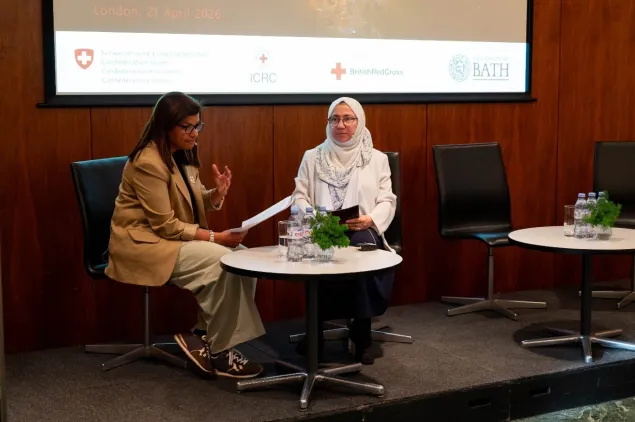
© Devon Shoob/Embassy of Switzerland in the United Kingdom
© Devon Shoob/Embassy of Switzerland in the United Kingdom
Rima’s experience echoes that of hundreds of thousands around the world, whose lives continue in anguish after their loved ones go missing. Such suffering can last for decades and can even cross generations. For Chantal Meza, these realities were all too familiar from her upbringing in Mexico, where reports of missing persons were a constant presence in daily life.
Speaking during the event, she said: “The concern for the missing should touch us all. While art will never bring a loved one back, it helps speak to what is unspeakable and reminds us that when a person is missing or disappeared, we are talking about a human life who is often someone’s entire world.”
Personal stories of loss framed the panel discussion that followed, chaired by ICRC Head of Regional Delegation for the UK and Ireland, Philip Spoerri. He was joined by Morris Tidball-Binz, UN Special Rapporteur on extrajudicial, summary or arbitrary executions, Noémi Krauer, Deputy Head of Humanitarian Diplomacy at the Swiss Department of Foreign Affairs, and Dr Rurik Marsden, Head of Humanitarian Policy and Partnerships Department at the UK Foreign, Commonwealth, and Development Office.
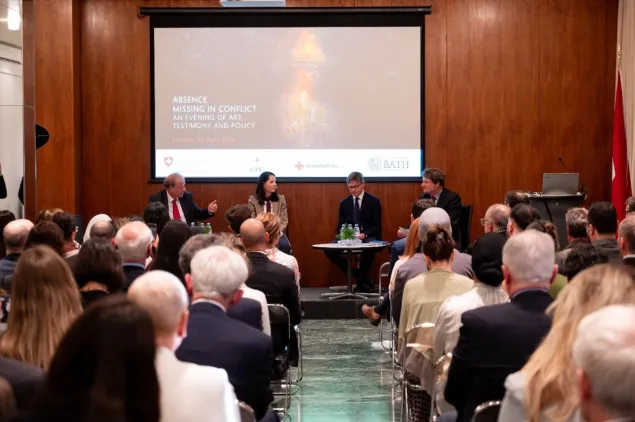
The discussion combined perspectives from international law, humanitarian action, and public policy, reiterating the need for multilateral action by states and institutions to address the growing crisis of the missing.
Notably, the Global Initiative to Galvanize Political Commitment to International Humanitarian Law, launched in 2024 by the ICRC and six founding states - and now supported by 106 countries - includes recommendations to prevent people going missing in armed conflict and to ensure their families receive answers.
The panel noted that humanitarian forensics, too, plays an important role in providing such answers. In the case of the Falkland Islands (Islas Malvinas), two missions carried out in 2017 and 2021 by the ICRC and supported by the governments of Argentina and the UK led to the identification of 121 individuals killed in conflict.
To this day, however, the number of people missing in relation to conflict continues to rise. Spoerri explained that in 2025 the ICRC recorded over 178,300 new cases of missing persons - the sharpest rise in at least two decades. “Behind each one is a family living in anguish and uncertainty, with a right to know what happened to their loved one,” he said.
“This is not just a moral imperative but a legal duty: under international humanitarian law, states and parties to conflict must prevent people from going missing and account for those who do. This is also critical to achieving lasting peace and reconciliation. The ICRC, together with the British Red Cross and the wider Red Cross and Red Crescent Movement, works to help restore family links and provide answers for families with missing loved ones.”
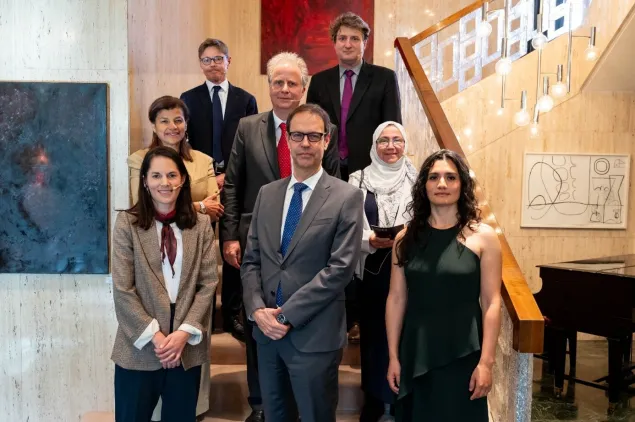
Front: Dominique Paravicini, Ambassador of Switzerland to the UK (centre), Noémi Krauer, Deputy Head of Humanitarian Diplomacy, Swiss FDFA (left), Chantal Meza, artist (right).
Second (L-R): Béatrice Butsana-Sita, CEO, British Red Cross; Philip Spoerri, Head of Regional Delegation, ICRC, Rima Yaseen Al Khayat, advocate.
Back (L-R): Morris Tidball-Binz, UN Special Rapporteur, Rurik Marsden, Deputy Director and Head of Humanitarian Policy and Partnerships, FCDO
Ambassador Paravicini said it was “a privilege to work with the ICRC, British Red Cross and the University of Bath, to convene powerful voices of testimony and advocacy at the Embassy."
He added: “Platforms for dialogue, networks of expertise, and institutional memory sustain us through challenging periods, which is why Geneva’s multilateral forums, and collaborations like these, matter more than ever.”
Professor Brad Evans, Director for the Centre for the Study of Violence at the University of Bath, called the event a “compelling example of what’s possible when art, policy, and academia are brought together.”
“It is humbling to know that the work we have been doing at the University of Bath is resonating and changing how we might respond to disappearance in the 21st century”.
To learn more about how the arts can help families of missing persons express their personal experiences, visit the Missing Persons Global Response website. To explore the broader work of the Red Cross and Red Crescent Movement on the issue of the missing, listen to the ICRC podcast Search for the Missing, available on Spotify and Apple Podcasts.