ICRC Brings Humanitarian Perspectives on Unmanned Systems to World Peace Forum

As unmanned systems have become an increasingly prominent feature of contemporary armed conflict, their increasing availability is raising questions about legal responsibility, human judgment, and ethical constraints.
On 3 July, the International Committee of the Red Cross (ICRC) convened a panel on “The Use of Unmanned Systems in Armed Conflict and Its Implications” in partnership with the Institute of International Relations of Tsinghua University (TUIIR) as part of the 14th World Peace Forum in Beijing, to hold discussions with interlocutors from various backgrounds and explore the challenges of unmanned systems in armed conflict.
The panel brought together over 100 participants, including experts from international organizations, academia, policy institutions, diplomatic and military research communities.
One of the concerns is the dual-use and sometimes multiple-use nature of unmanned systems that are used for military purposes, and for humanitarian operations such as disaster response and delivery of aid.

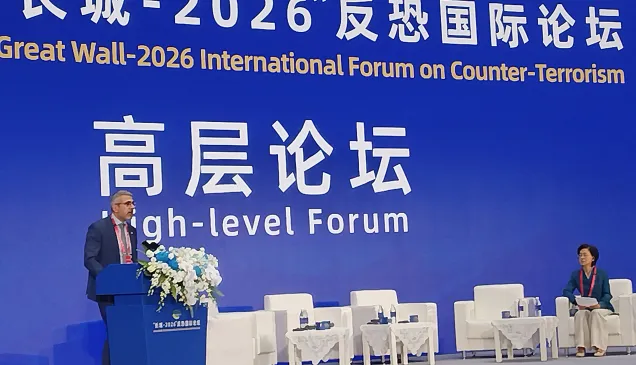
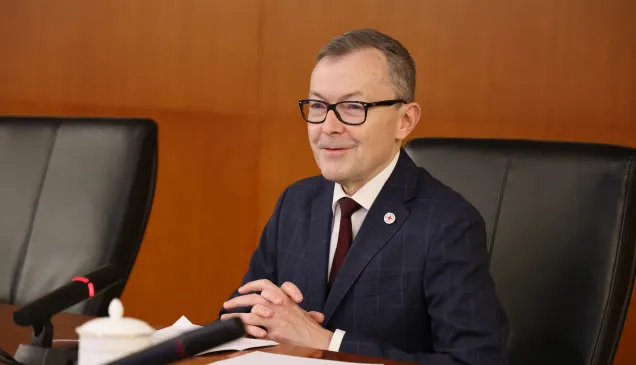
Boris Kelecevic, Acting Head of the ICRC Regional Delegation for East Asia, delivers opening remarks at the panel on unmanned systems during the World Peace Forum in Beijing on 3 July 2026.
Boris Kelecevic, Acting Head of the ICRC Regional Delegation for East Asia, underscored the humanitarian and legal implications of rapidly evolving military technologies and the need for reflection on their consequences for civilian protection, accountability, and international humanitarian law (IHL).
“At a moment when technological developments are advancing at remarkable speed, it is essential that we reflect on the ensuing humanitarian consequences and on the broader choices about the use of technology that societies have to tackle now and, in the years ahead.”
The ICRC maintains that the use of unmanned systems such as drones and unmanned ground and maritime vehicles in armed conflict must fully comply with international humanitarian law.
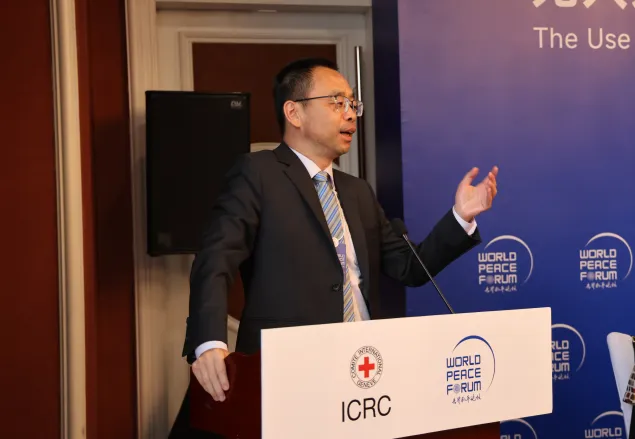
Sun Xuefeng, Dean of TUIIR, delivers opening remarks at the panel on unmanned systems during the World Peace Forum in Beijing on 3 July 2026.
In his opening remarks, Sun Xuefeng, Dean of TUIIR, stressed the importance of working with the ICRC in advancing dialogue on international security and humanitarian challenges. He emphasized the value of sustained academic–practitioner exchange, noting: “Our partnership with the ICRC has enabled us to jointly explore emerging issues in international security and humanitarian affairs in a rapidly changing world.”
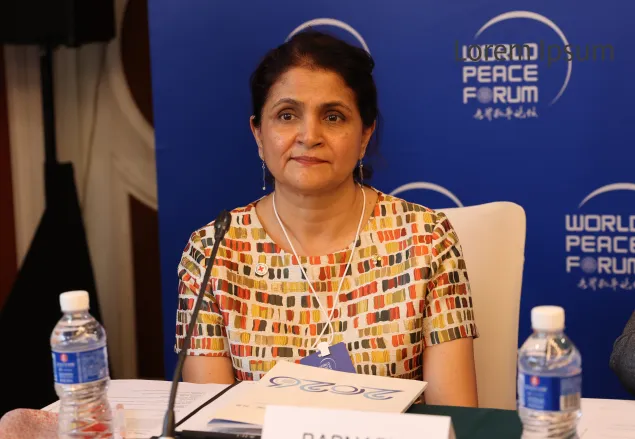
Fiona Barnaby, Head of Humanitarian Affairs and Policy at the ICRC Regional Delegation for East Asia, chairs the panel on unmanned systems during the World Peace Forum in Beijing on 3 July 2026.
Fiona Barnaby, Head of Humanitarian Affairs and Policy for the ICRC Regional Delegation for East Asia, structured the discussion around the interlinked dimensions of current realities, risks, and responses, highlighting how unmanned systems are already reshaping operational environments, introducing new protection risks, and requiring adaptive governance approaches.
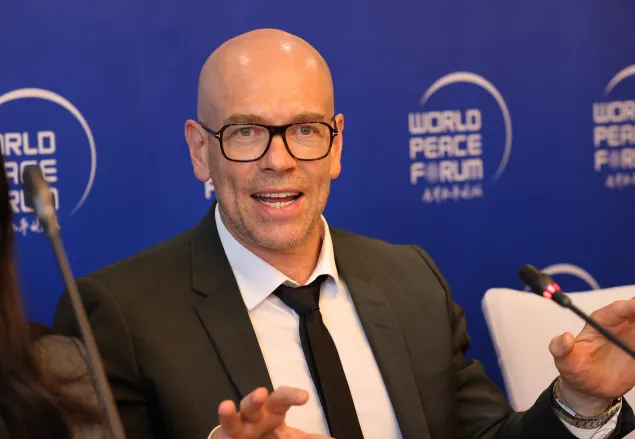
Dr Robin Geiss, Director of the United Nations Institute for Disarmament Research.
Dr Robin Geiss, Director of the United Nations Institute for Disarmament Research, noted that unmanned systems have become mainstream in contemporary warfare, with increasing autonomy and accessibility enabling broader use by state and non-state actors, while counter-drone measures remain comparatively costly. He highlighted implications for strategic stability and the regulation of emerging military technologies.
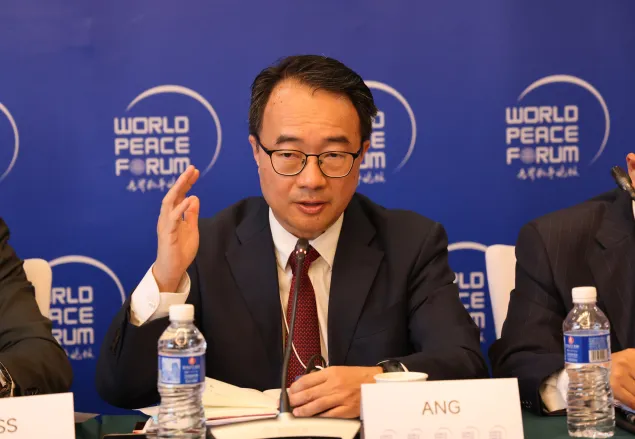
Mr Benjamin Ang Cheng Koon, Head of the Centre of Excellence for National Security at Nanyang Technological University.
Mr Benjamin Ang Cheng Koon, Head of the Centre of Excellence for National Security at Nanyang Technological University, described a spectrum of unmanned systems ranging from remotely operated platforms to swarm-based technologies. He pointed to key technical constraints, including data bias, cybersecurity vulnerabilities, and classification challenges, and stressed the importance of maintaining human-in-the-loop safeguards to ensure responsible use.
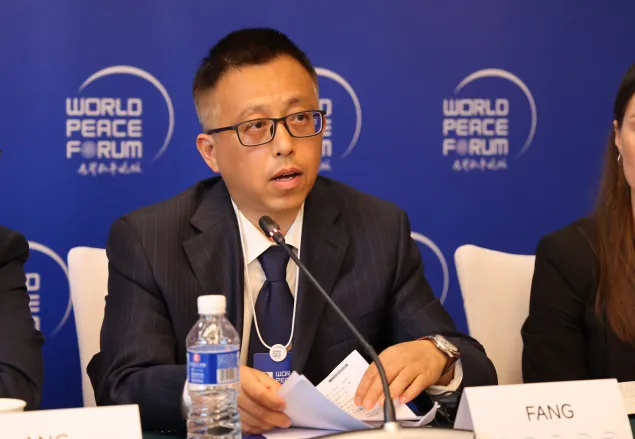
Senior Colonel Fang Yong, Senior Research Fellow at the Academy of Military Science.
Senior Colonel Fang Yong, Senior Research Fellow at the Academy of Military Science, observed that unmanned systems are evolving into core military capabilities across strike, logistics, and support functions, with increasing reliance on autonomous and swarm operations.
He highlighted their growing operational significance in contemporary conflicts, warning of associated risks such as escalation dynamics, cyber and electronic warfare vulnerabilities, and potential nuclear miscalculation. He emphasized the need for strengthened technical safeguards to manage these emerging risks.
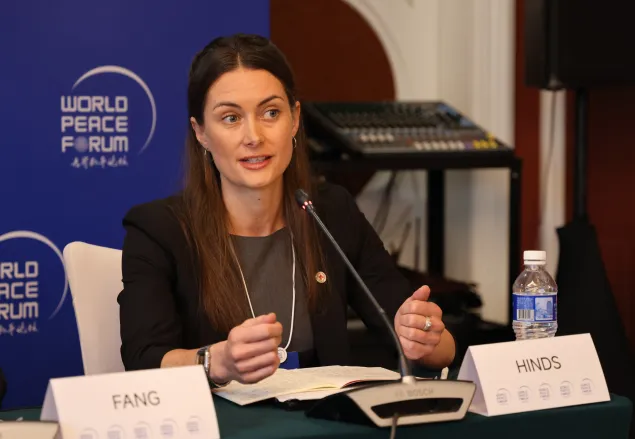
Georgia Hinds, Legal Adviser of the ICRC.
Georgia Hinds, Legal Adviser of the ICRC, reaffirmed that international humanitarian law fully applies to unmanned systems, cautioning against assumptions of increased precision. She noted that using drones that are armed with heavy explosive munitions in populated areas continues to cause severe civilian harm and highlighted persistent challenges in ensuring distinction, proportionality, and effective legal review amid increasing autonomy.
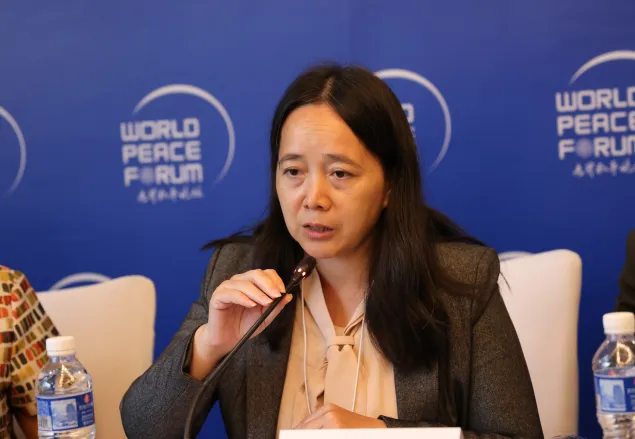
Professor Qi Haixia, Deputy Dean of TUIIR.
Professor Qi Haixia, Deputy Dean of TUIIR, compared nuclear weapons and AI-enabled systems, noting that while nuclear weapons have contributed to strategic deterrence, AI weapons pose different challenges due to their affordability and ease of use. She stressed the need to distinguish between types of AI-enabled weapons to improve safety and control risks and noted that regulatory frameworks are lagging behind technological developments, calling for strengthened international cooperation.
During the Q&A session, participants raised probing questions on accountability, escalation risks, non-state actor use of unmanned systems, and gaps in existing regulatory frameworks, further enriching the exchange.
A recurring theme throughout the discussion was the importance of preserving meaningful human control over the use of force. Participants emphasized that technological change does not diminish obligations under IHL, but rather reinforces the responsibility of States, operators, and developers to ensure compliance with legal and ethical standards.
The panel concluded with a call for sustained international dialogue and strengthened governance frameworks to address the humanitarian, legal, and security implications of increasingly autonomous weapons systems, reaffirming the continued importance of international humanitarian law.