“Wherever you are, I want you to know” Letters from families who are still searching for their loved ones in Latin America

On International Day of the Disappeared, family members from seven Latin American countries write to their loved ones. Their letters speak of absences, but also of sons and daughters growing up, milestones reached, families expanding and a search that never stops.
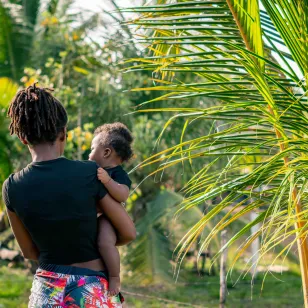
Absence does not stop the passage of time. While a family searches for answers about the whereabouts of a loved one, children grow up, new family members join the household, dreams come true, and they continue to celebrate important dates they once shared together.
Each year, on 30 August, the International Day of the Disappeared is observed. To mark this day, family members from Colombia, Venezuela, Mexico, Honduras, El Salvador, Peru, and Brazil have written letters to their loved ones, whom they continue to search for. All the letters begin with the same sentence: “Wherever you may be, I want you to know…”. They speak of the pain of loss and the anguish of not knowing what happened, but also share updates on family life as it unfolds and reaffirm a promise: never to give up searching.
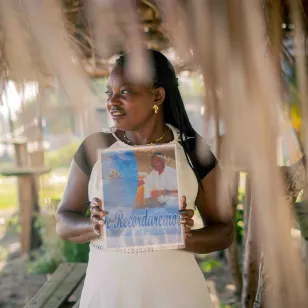
"Wherever you are, I want you to know that today, 30 August, your memory is more vivid than ever,” writes Paola Medina Charry to her brother Tarcisio, who has been missing in Colombia since 1988.
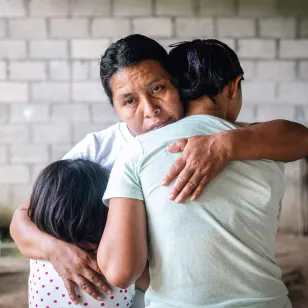
In Latin America, enforced disappearance is one of the most profound humanitarian consequences of armed conflicts, violence and disasters. It can leave families facing emotional, financial, legal, administrative and social challenges for years or even decades, without knowing what happened to or where their loved one is.
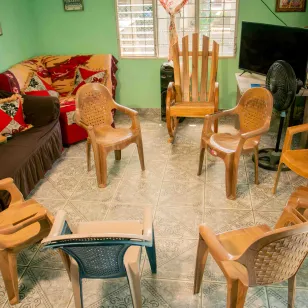
The letters put these consequences into words and show how absence reaches into the most intimate spaces of family life: family celebrations, an empty seat at the table or a voice that is no longer heard.
In Mexico, Lupita Mendoza, the wife of Alfonso, who has been missing since 2024, recalls the sound that announced his arrival home: “Our home was left waiting for that sound we knew so well: the air brakes on your lorry signalling that you were on your way home.”
In Brazil, Camila Gadelha, daughter of Marla, who has been missing since 2001, writes about the grandchildren her mother never had the chance to meet: “I’ve imagined you so many times running around with your grandchildren, making up games, building blanket forts in the living room and hiding Easter eggs all over the garden. They have the best grandmother in the world.”
“My son, I want you to know that during the first few days after you went missing, I did not move from the door, because I thought you would come home at any moment. And so the days, months and years went by,” writes Yenny Aponte, the mother of Gabriel, a Venezuelan who has been missing in Colombia since 2020.
In El Salvador, Verónica Tepa, the wife of Rigoberto, who has been missing since 2020, tries to answer her daughter’s questions: “Our daughter Merari is in second grade. She is very clever, and she keeps asking me about you—if you’ve abandoned us. I canʼt answer that; I just tell her ‘no’, that you love us.”.
Families keeping the search alive
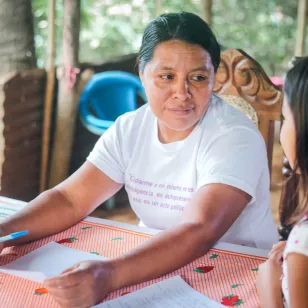
The families of missing persons face more than just the consequences of their loved ones’ absence. They are demanding answers, defending their right to know and supporting others in their search. Their determination keeps the issue of disappearances in the public eye and drives actions and changes to move towards justice, reconciliation and peace.
“Ever since they took you away, we have marched, put up posters and raised our voices to demand justice and find out the truth about what happened to you, my love,” writes Lupita in Mexico.
In Honduras, Chely Torres, Secundino’s daughter, explains that she and her mother have turned their search into a collective effort: “Today, my mother and I have been working with other families on a law regarding missing persons and their families, ensuring search efforts and protection.”
In Peru, Luyeva Yangali, Fortunato’s daughter, recalls the path that led to the passage of the Law on the Search for Missing Persons in 2016: “I remember walking with four young volunteers from the Para que no se repita (So it doesnʼt happen again) organization to help pass the Law on the Search for Missing Persons in 2016.” She adds “Thanks to this humanitarian law, many missing persons are finally receiving a dignified burial.”
Families’ experiences and knowledge are essential for guiding search efforts. However, their efforts do not replace the authorities’ responsibility to prevent disappearances, ensure mechanisms for searching for, locating and identifying missing persons, and provide comprehensive support to their families.
Supporting families and strengthening responses
Across the Americas, the International Committee of the Red Cross works to help mitigate the humanitarian consequences of disappearance. It supports families in their efforts, helps them participate in search processes and advocates for their needs, experiences and knowledge to be taken into account in institutional responses.
The ICRC also works with authorities and forensic institutions to strengthen search mechanisms, information sharing and the processes for identifying and returning the deceased with dignity.
In addition, through the International Red Cross and Red Crescent Movement’s Restoring Family Links network, the ICRC helps prevent separations and disappearances, protect family ties and re-establish contact between separated individuals.
Listening to families and taking their knowledge and needs into account is essential to moving towards effective responses, reconciliation and peacebuilding.
“Wherever you may be, I want you to know that I’ll keep looking for you, and that, for as long as I live, I’ll fight to find you,” Paola writes at the end of her letter.