Yemen: Health system faces mounting pressure as fighting intensifies

As fighting intensifies across parts of Yemen, hospitals are struggling to cope with growing numbers of war-wounded patients while an already fragile health system faces critical shortages of medical supplies, staff and specialized care.
All front lines have witnessed an unprecedented surge in weapon-wounded cases; Marib, Taiz and the Red Sea Coast have some of the highest casualty burdens. Hospitals and health facilities are overwhelmed. Some front-line facilities recorded over 700 admissions during a single week. Mass casualty influxes are increasingly frequent.
“Trauma care staff are under enormous pressure. Only a small proportion of Yemen’s functioning health facilities have the capacity to provide comprehensive trauma care, while front-line hospitals are receiving large numbers of wounded people with limited supplies of surgical materials, anaesthesia, oxygen and medicines. Health workers are having to treat these emergencies while continuing to provide essential care for mothers, children and patients with chronic diseases,” said ICRC health coordinator Feras Abusamra.
Over a decade of conflict, economic hardship, displacement and disease outbreaks have left health services in Yemen with limited capacity to absorb a new surge in needs.
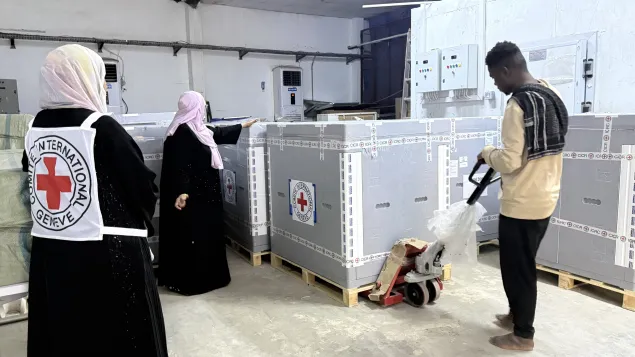
The ICRC donates medical supplies to the Ministry of Public Health and Population at Al-Gamhuria Medical Supply Department, Aden. 13 October 2026
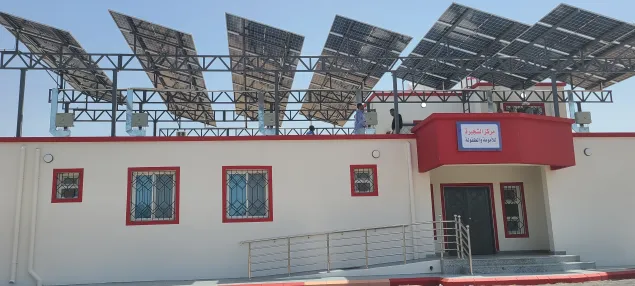
A maternal unit at Al-Shugiarah Primary Health Care Center newly constructed with support from ICRC in Ad Durayhimi District, Hodeidah, equipped with essential supplies and solar energy to improve maternal healthcare. 6 May 2026
Supporting hospitals where needs are greatest
The ICRC supports health facilities across Yemen, on all sides of the front lines, responding to the most urgent needs.
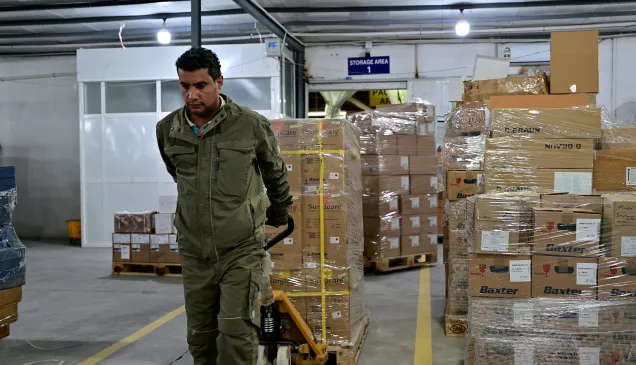
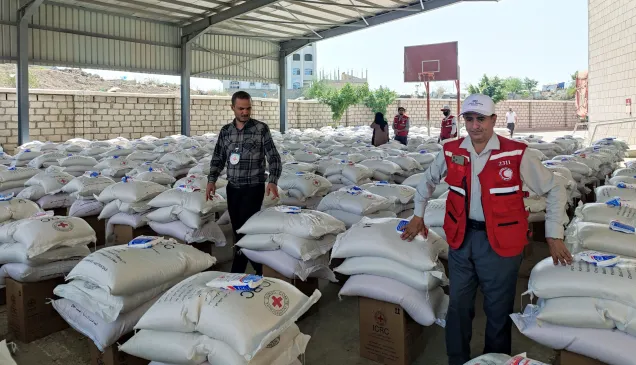
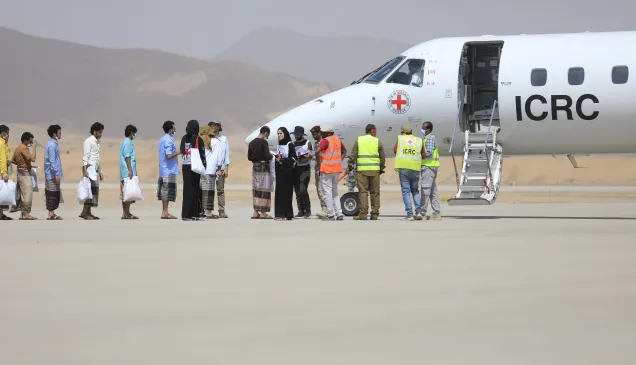
- Medical supplies: Since the escalation began, the ICRC has chartered flights and trucks to bring over 500 tonnes of life-saving medical supplies to Sana’a and Aden, to replenish dwindling stocks and support hospitals treating increasing numbers of war-wounded patients. The supplies are being distributed to priority hospitals and health facilities across the country.
- Emergency medical support to front line health facilities: Currently, the ICRC supports over 40 health facilities. In Aden, Taiz, Al-Dhale and Lahj our support covers major hospitals, eight Public Health Care Centres (PHCCs) and over 20 Casualty Collection Points, with additional support provided through Yemen Red Crescent Society (YRCS) ambulances. Recent ICRC support to hospitals includes the provision of weapon-wounded and trauma stabilization supplies, as well as technical support to health-care workers at three hospitals in Marib, Zabid Rural Hospital in Hodeidah, Al Hazm in Al Jawf, Aboud Hospital and Al-Jumhuriya Hospital in Aden, and elsewhere. In Taiz, the ICRC has been supporting over 10 health facilities in several affected districts on both sides of the front lines. This network allows the ICRC to maintain support close to areas where weapon-wounded casualties may require initial stabilization and onward referral.
- Emergency surgical care: An ICRC mobile surgical team has worked alongside Yemeni staff at Marib General Hospital since 23 August, strengthening surgical capacity. Another supports Al Talh Hospital in Saada.
- Trauma preparedness: Training in conflict-affected areas covers trauma management, basic emergency care, mass-casualty preparedness and emergency surgery, continuing work begun years before this escalation.
- Physical rehabilitation: Prosthetic and rehabilitation services support people who have lost limbs. This includes outreach in conflict-affected areas.
- Ambulance and referral services: Getting wounded people from the front lines to a hospital can be as critical as the treatment they receive once they arrive. Together with the Yemeni Red Crescent Society, the ICRC is supporting emergency ambulance services across Yemen. More than 60 ambulances are operating with ICRC support, helping transport wounded and sick people from conflict-affected areas to referral hospitals and transporting the deceased with dignity.
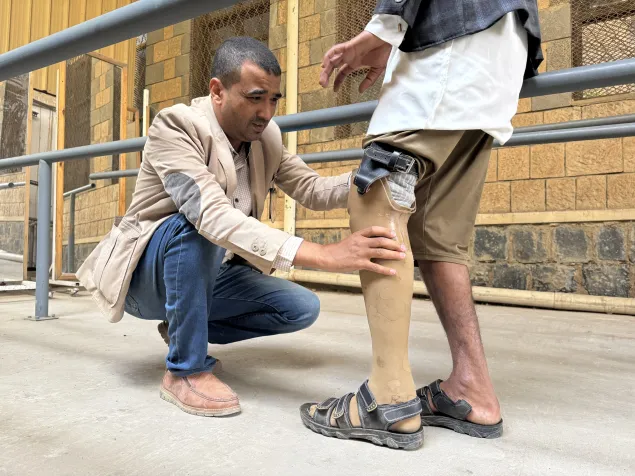
An ICRC Physical rehabilitation programmes specialist assisting a beneficiary with a prosthesis at Sana'a Physical Rehabilitation Center. 1 March 2025
A health care system reaching its limits
Rising displacement further strains communities with limited access to health care. People who have fled their homes can face difficulties in accessing medicines, vaccination, maternal and reproductive health-care services, and treatment for chronic diseases.
“Additional pressure on hospitals can mean fewer beds, fewer supplies and less capacity to treat people with conditions unrelated to the conflict,” said Eduardo Toro, ICRC surgeon in Marib General Hospital.
The ICRC continues to respond to health emergencies and other chronic diseases by providing medical supplies, supporting treatment centres and working with health authorities and partners on disease surveillance and response. But the scale of the emergency could quickly exceed existing response capacities. Sustained humanitarian access, resources and support are needed to maintain essential services and reach people affected by the conflict. Humanitarian and medical personnel must have safe passage to reach people in need, and ambulances must be able to operate without obstruction.
“Our concern is that the system may have little capacity left to absorb a major surge in casualties. Our urgent support aims to help front-line hospitals continue life-saving care to all weapon-wounded in an impartial manner,” said Christine Cipolla, ICRC’s head of delegation in Yemen.
About the ICRC
Since 1863, the International Committee of the Red Cross (ICRC) has worked to relieve suffering and preserve human dignity during war and armed violence. Alongside our Red Cross and Red Crescent partners, we deliver life-saving aid across front lines and strive to reconnect families and locate missing people.
Engaging with authorities and armed forces on all sides, often confidentially, we advocate for humane treatment of detainees and urge compliance with international humanitarian law to protect civilians from harm, including online.
For more information, please contact:
Iscander Saeed, ICRC Sana’a: +967 730500719, ialmamari@icrc.org
Hachem Osseiran, ICRC Geneva, Tel.: +41227489674, hosseiran@icrc.org