Minister, members of the jury
honoured guests,
my dear Gerda,
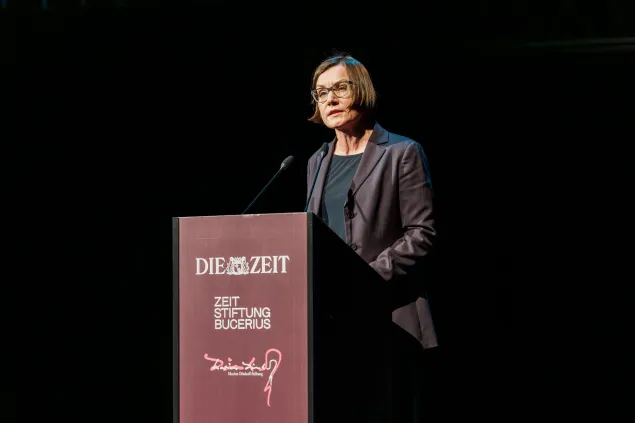
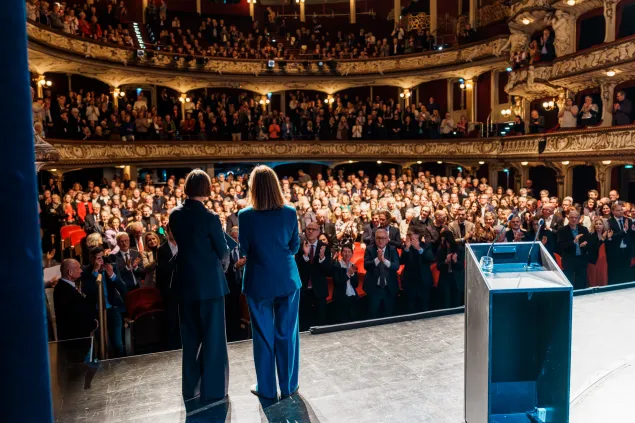
It is a great honour for me to accept the Marion Dönhoff Prize on behalf of the International Committee of the Red Cross.
Marion Dönhoff was a strong woman, who understood that true leadership demands a clear head, a moral compass and the courage to be independent.
Furthermore, Marion Dönhoff found a new home right here in Hamburg.
This city is not only a place of trade and openness towards the world. It is also a place where humanitarian history was made. On 2 February 1864, twelve Hamburg businesspeople founded the Committee for the Care of the Wounded and Sick, one of the first such civilian aid initiatives in the world and the predecessor of the Hamburg branch of the German Red Cross.
Currently, the ICRC has some 130 armed conflicts on its list – more than twice as many as just 15 years ago. Wars are long and brutally violent. Those responsible have an increasing tendency to contravene the rules intended to limit cruelty in war.
For over 160 years, we have been endeavouring to protect the victims of armed conflict through neutral, independent and impartial action. One reason we can do this is that we can talk to all the parties to a conflict; it takes courage and integrity to sit down at the same table as those whom the world condemns.
We have recently conducted delicate operations in Gaza and Israel, reuniting hostages and prisoners with their families. But our work there is not yet done. Gaza has been destroyed, and thousands lie buried under the rubble.
In Sudan, civilians are enduring immeasurable suffering, with no end in sight. Currently, no other war is driving so many people into flight and poverty.
The ICRC Central Tracing Agency has registered over 170,000 people as missing in connection with the conflict between Russia and Ukraine. This figure represents families and relatives hoping for news, for a sign of life.
These examples illustrate the varied facets of suffering that people endure in conflict zones. The missing brother or sister, the independence lost to a landmine, the enduring trauma that violence and devastation leave behind.
And yet grave breaches of international humanitarian law – war crimes – are today viewed with a worrying degree of tolerance. The governments of this world are not even capable of intervening with sufficient determination when urgent food aid is misused for military purposes. Marion Dönhoff’s life reminds us that there can be no excuse for looking on helplessly, still less for passive acquiescence. Her own words reveal that she knew the feeling that drives me every day: you simply have to do something.
Standing up for a minimum of humanity builds bridges. How enemies are treated determines whether peace is possible.
There are some 450 armed groups in the world today. The ICRC is talking to about half of them. In an armed conflict, all parties are bound by international humanitarian law. But primary responsibility lies with states.
Why do I say that?
Hannah Arendt describes a paradox that is more relevant today than ever: how can one act, without being driven by partisan emotions? She distinguished between personal love and political action, and emphasized that politics is born not of feelings but of relationships between people, a common point of reference, an “inter esse” that creates space for understanding.
I believe that this is also true of relations between states.
The Geneva Conventions are one such common point of reference and the foundation of the ICRC’s mandate. The states signed these four instruments in 1949, to ensure an unconditional minimum degree of humanity under all circumstances. Their applicability is universal.
What we bring to the negotiating table is not love, but an unwavering commitment and a clear interest – the recognition of the other, respect for the human dignity of every individual, regardless of which side they are on. Our impartiality is not distance; it is the means whereby we give effect to this approach. It enables us to operate where emotion, hate and distrust would otherwise bar every door.
The ICRC is not a peace organization, and yet the first steps towards peace are humanitarian. Our neutrality opens doors that remain closed to others. Because we never take sides, we create channels of communication and implement life-saving agreements between warring parties.