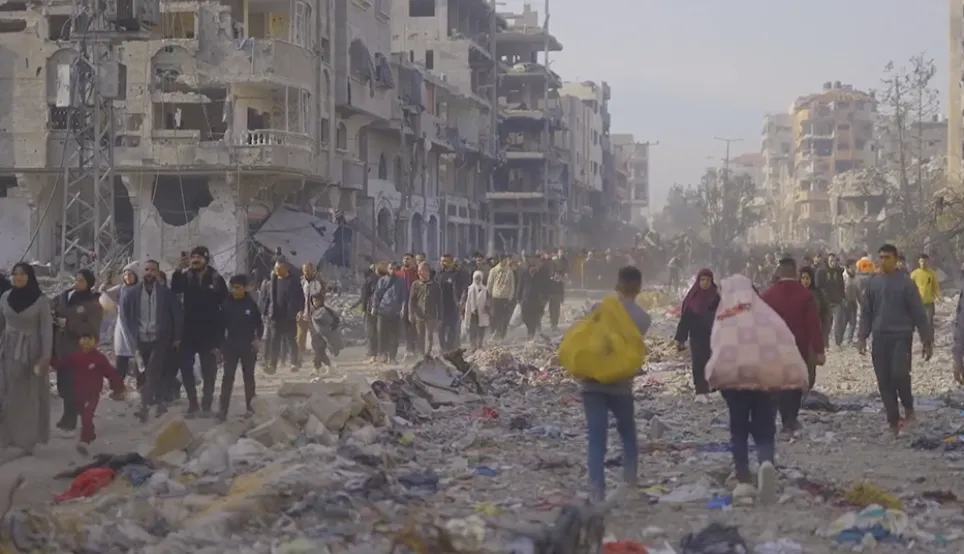
Iraq

The ICRC has been present in Iraq since 1980, assisting people and communities severely affected by past armed conflicts and other violence.

IDOD IRAQ

Our work in Iraq

As the situation in Iraq has evolved since 2017, and the country focuses on recovery and reconstruction efforts, the ICRC has also been significantly adapting its operations in line with the remaining humanitarian needs across the country. Many of our activities are carried out in cooperation with the Iraqi Red Crescent Society (IRCS) and the relevant authorities.

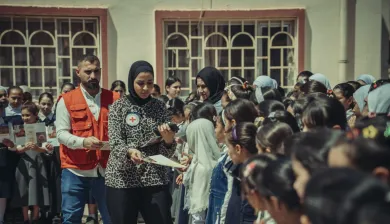
Our activities mainly focus on vulnerable groups, namely detainees, displaced families, returnees, the missing and their families, persons with disabilities and communities living in highly contaminated areas. Additionally, we always stand ready to support the authorities in responding to emergencies arising from any potential new episodes of violence in the country.
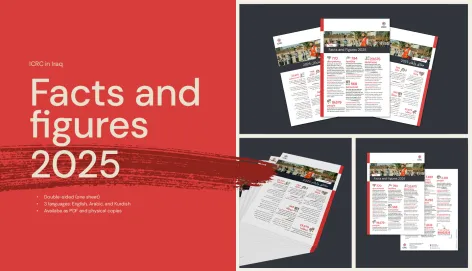
The impact of our work - In 2025

37,000

Detainees in 18 places of detention have seen their living conditions enhanced through the distribution of hygiene items, clothing and books in coordination with the prison authorities.

23,675

Detainees gained improved access to health care through technical support and medical equipment donations in 6 places of detention.

5,692

Red Cross Messages were exchanged between separated family members, mostly between detainees and their relatives.

183

Sets of human remains from the Iraq-Iran War were exchanged under the auspices of the ICRC.

518

missing persons, their fate and whereabouts were clarified.

794

Families of missing persons benefited from legal, psychosocial, and material support. A total of 137 civil documents were issued to relatives of missing persons, while 263 benefitted from legal advice.

770

Documents attesting the detention of former prisoners of war or individuals during past conflicts and met by the ICRC while in detention were provided, in partnership with Iraqi Red Crescent Society (IRCS).

11,642

People were trained in sessions on risk awareness and safer behaviour, and 558 units of weapon contamination equipment were donated to the national mine action agencies, Civil Defense, and clearance actors to support safe clearance operations.

1,033

Participants benefitted from 29 trainings on international humanitarian law (IHL) and international human rights law (IHRL).

568

Personnel from state agencies attended 40 training sessions on best practices on the search for and identification of missing persons, as well as for protecting and preserving the dignity of the deceased and burial places.

Quotes from the field

When the ICRC visited and gave me a Red Cross message from my son — telling me he was still alive after so many years of being missing — it felt as if they had brought him back to me in flesh.”

Abu Talib A father who was reunited with his missing son.

I have a missing relative, so I relate to their [families of the missing] suffering. The coordination between the ICRC and Iraqi Bar Association is so successful that I began receiving calls from other governorates, like Salah al-Din and Karbala, from families of the missing not referred by the ICRC, asking for my help with their documentation procedures

Abdelhameed Fadel One of the participating lawyers who volunteered for the Accompaniment Programme to facilitate the issuing of official documentation for families of the missing.

The collaboration between ICRC and the Iraqi Bar Association allowed me to get the unified national identity cards for my two children. It has made it easier for them to access many services and benefits, including official school registration, social welfare, and other programmes provided by NGOs and government institutions.

Sabrin Kareem A mother whose husband is missing.

Even birds grieve when they lose their young — so just imagine how we feel as parents.

Abu Talib A father who was reunited with his missing son.

Our services in Iraq

  • Our Community Contact Centre in Iraq is the first point of contact for communities and families suffering the consequences of armed past conflicts and seeking information on the ICRC’s assistance and work in the country.

    If you have a missing family member or would like to share your feedback regarding our activities, please call the toll-free number:

    800 22222 (Iraq)

Contact us

Community Contact Centre

Telephone

80022222

Opening Hours:

8:30 - 15:30
Saturday - Thursday

Address

Al-Salhiya - Al Sikak district - Quarter 220, Street 4, House 6 P.O. Box 3317 Al-’Alwiyah Post Office Baghdad, Iraq

Opening Hours:

8:00am–4:00pm

Media contact

Hiba Adnan

Our work with the Iraqi Red Crescent Society