Haiti: Everything must be done to protect the population from escalating armed violence

Since mid-April 2026, armed clashes have been raging in several areas of Port-au-Prince, Artibonite, the central region and, more recently, in the South-East. The spread of violence is causing the living conditions of already severely affected communities to deteriorate further. Meanwhile, the prospect of new offensive operations is raising fears of increased humanitarian consequences if all necessary precautions are not taken.
"Areas that just yesterday we still considered safe are now becoming unsafe. There is nowhere left for people to take shelter," said Marisela Silva Chau, ICRC Head of Delegation in Haiti.
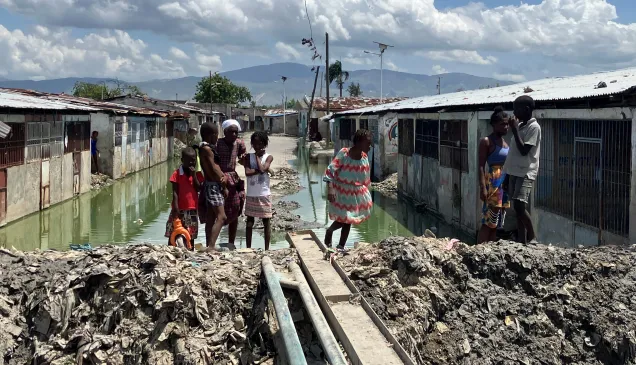
Growing insecurity is only part of it: the very fabric of people's daily life is unravelling. The mounting consequences of violence, including repeated displacement, limited access to health care and dwindling livelihoods, hit the most vulnerable hardest.
"Each new wave of violence pushes families who already had almost nothing left even further into hardship. Mothers no longer know where they can sleep safely, children are born and raised amid the sound of gunfire, and the wounded sometimes have nowhere to go for medical care," Silva Chau added.
In densely populated areas, offensive operations could lead to an escalation in armed violence in the heart of residential neighbourhoods, new waves of displacement and an already swamped health-care system no longer being able to handle the influx of patients. They could also cause an increase in the number of people imprisoned for violent crimes, overwhelming a prison system that is already at capacity and in which conditions are deteriorating.
"Any scale-up of operations in such densely populated areas must be accompanied by all necessary precautions to spare the civilian population and to prevent a surge in humanitarian needs. Protecting local communities must remain the top priority," said Silva Chau.
In the second half of 2026, internal displacement in the country reached unprecedented levels. According to a new United Nations tally, nearly 1.5 million people have fled their homes, while more than half the population is in need of emergency humanitarian aid.
In light of this situation, the ICRC is continuing its dialogue with all weapon bearers, particularly through awareness-raising sessions on applicable international law and norms. We urge them to conduct their operations in compliance with international law, particularly with regard to the use of force, and underscore the need to effectively protect civilians–including in the planning and conduct of operations and by safeguarding humanitarian action, ensuring safe access to vulnerable populations and protecting detainees.
Our humanitarian response in Haiti from January to June 2026:
Access to health, emergency and trauma services
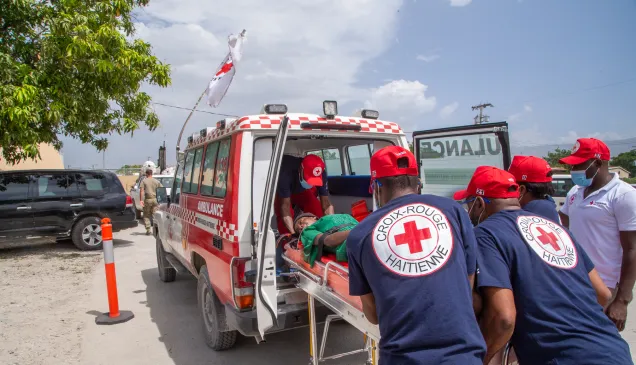
- More than 3,691 people with weapon injuries and other patients transported by ICRC-supported emergency services (ambulances and community transport)
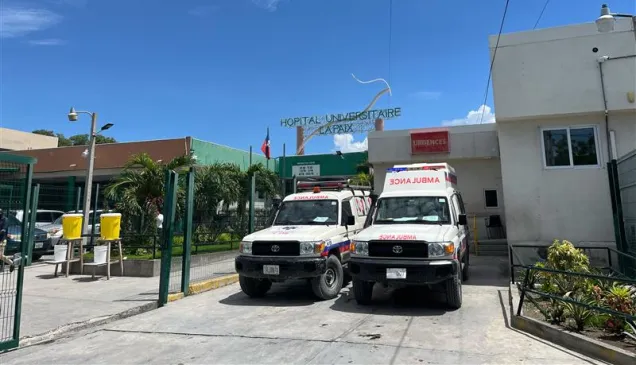
- 380 people with weapon injuries treated at 5 hospitals with ICRC support
- Approximately 120,000 people served by 3 ICRC-supported health centres in the areas of Port-au-Prince most affected by armed violence
- Almost 10,000 internally displaced people cared for at 1 ICRC-supported mobile clinic
- 20-bed emergency department at CHOSCAL hospital renovated
Protecting vulnerable populations and restoring family links
- More than 100 victims of armed violence (including sexual violence) received emergency care from the ICRC
- More than 1,200 hygiene kits were supplied to organizations looking after vulnerable people
- More than 1,000 returnees and internally displaced people received help re-establishing contact with their families, in partnership with the Haitian Red Cross
Improving living conditions for residents and displaced people
- More than 1,000 woollen blankets distributed at sites for internally displaced people (IDPs)
- 500 hygiene kits distributed at IDP sites
- More than 500 solar family lamps distributed to improve lighting and the security of families at IDP sites
- More than 750 metres of road cleaned, helping to improve the living environment for more than 25,000 people