Nepal: Operational update on humanitarian response after devastating floods

Humanitarian needs continue to rise in Nuwakot, Rasuwa, and other districts after flash floods in Nepal on 26 August claimed hundreds of lives. Thousands of people are still missing, leaving families separated and many communities vulnerable, even as the confirmed death toll keeps increasing.
The humanitarian impact of the flood on Nuwakot, Rasuwa and other areas has been severe: many people have been separated from their families while some have been left without access to essential services. According to the authorities, more than 1,000 bodies have been recovered and more than 5,000 people are still missing, while 12,000 have so far been rescued. These figures remain fluid as search and recovery operations are ongoing.
Access remains the principal constraint, with damaged roads and bridges slowing the movement of relief supplies into severely affected communities in Rasuwa, and several locations reachable only on foot.
Urgent needs include the dignified management of the dead, family tracing and psychosocial support. The consequences of the disaster, including for infrastructure, the economy and development, are likely to be long-term and far-reaching. The psychological toll and emotional scars of the floods on the affected communities and people will also last beyond the initial rescue and recovery phase.
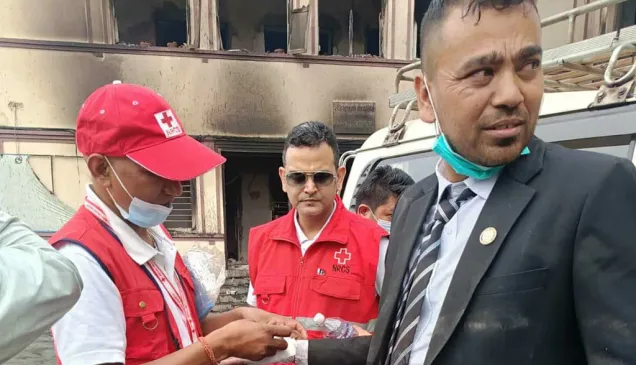
The Nepal Red Cross Society (NRCS) is leading the response, with support from the International Federation of Red Cross and Red Crescent Societies (IFRC), the International Committee of the Red Cross (ICRC) and other humanitarian partners. The ICRC Regional Delegation in Delhi quickly deployed Restoring Family Links (RFL), forensics and managerial experts and mobilized material support. It has been contributing with technical expertise and essential supplies to help the NRCS and its trained volunteers in two areas: trying to reconnect families, search for the missing and reunite loved ones through the Restoring Family Links (RFL) Network; and working to ensure that the dead are handled safely and with dignity.
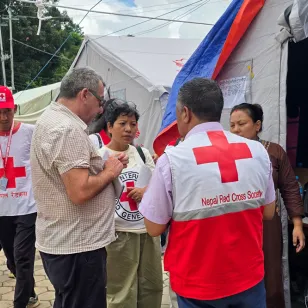
These efforts include a joint NRCS-ICRC visit to Nuwakot Camp to provide support on restoring family links and dignified management of the dead, involving hospital records, missing-person information, and relevant responses to people and communities in Rasuwa and Nuwakot districts. 700 body bags, supplied by the ICRC before the floods, have been used in responding to the needs on the ground to safely manage the dead with dignity. An additional supply of over 3,500 body bags arrived in Nepal last Friday.
ICRC specialists have also been working with NRCS staff and volunteers to provide training and guidance on emergency preparedness and response, advocate and support for integrating RFL into their contingency plans, providing support to the NRCS to try and ascertain the status of people who remain missing with specific cases in management of the deceased, and offering guidance on how to store and transfer data on the missing and the dead. This includes helping to strengthen the system used to register missing people, manage tracing cases, and safely handle information about people who are missing or have died.
This support forms part of the ongoing approach the ICRC has taken in working with the NRCS. Based on the four-day Emergency Preparedness and Response workshop jointly organized by the ICRC and the NRCS in February this year, the increased institutional readiness that was built is now drawn upon in responding to humanitarian needs. This long-standing approach of preparedness and cooperation taken by the ICRC also resulted in cross-border floods response. Building on Indian Red Cross Society (IRCS)-ICRC engagement during the Assam floods in July 2026 – the first since 2014 – the IRCS alerted all 36 branches to the needs to try and reunite missing Indian nationals in Nepal with their families.
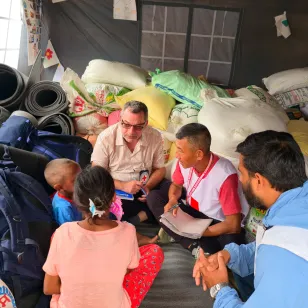
In temporary shelters in Nuwakot, NRCS staff and volunteers have been helping families to register missing loved ones with all the necessary details in the hope of finding out their status, including unaccompanied and separated children whose parents or other family members remain missing. Volunteers are also helping people make phone calls to relatives when needed.
Children and families who are separated can face significant emotional distress. The ICRC has been engaging with authorities and our humanitarian partners to better understand and complement ongoing efforts to address psychosocial needs. For families who have lost loved ones, knowing what happened and being able to identify and properly lay their family members and relatives to rest is an essential part of recovery and of avoiding the mental anguish and grief associated with ambiguous loss. The psychological needs also extend to volunteers and professionals involved with safely handling and managing the dead.
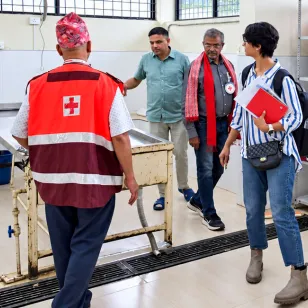
The ICRC has also been providing humanitarian forensics expertise to support the NRCS, local authorities, hospitals and other relevant services in safe, dignified and systematic management and identification of human remains. Following the floods, more than 100 bodies and human remains recovered from areas including Tanahu, Gorkha and Mugling, were being managed through coordinated efforts involving local authorities, hospitals, the Nepal Police, Nepal Army and the NRCS. In Pokhara, the ICRC visited the Forensic Medicine Department at Western Regional Hospital and provided personal protective equipment to support post-mortem examinations. In Kathmandu, the ICRC also provided essential supplies for post-mortem examinations to the Department of Forensic Medicine at the Institute of Medicine, Tribhuvan University Teaching Hospital, at the department’s request.
Working together as part of the Movement, the ICRC will continue support to the NRCS and relevant authorities, with a focus on helping families reconnect with missing loved ones and ensuring that those who have died are treated safely and with dignity. We stand ready to provide further support in response to the evolving needs of affected communities.