Philippines: Displaced farmers begin rebuilding their livelihoods

A few months ago, the lives of 68-year-old Tuding and 300 other residents of Barangay Kematu in T’boli, South Cotabato were abruptly disrupted when armed clashes between government security forces and a non-state armed group forced them to flee their homes.
The displaced families, with their meager belongings, walked for two hours through mountainous terrain to reach a neighboring village, where they stayed for nearly 20 days.
Tuding and his family initially stayed at a government-run evacuation center before being taken in by relatives in Barangay Blangas. However, the prolonged displacement placed additional strain on their relatives.
“They were struggling themselves; their situation became even more difficult when we stayed with them,” Tuding recalled.
The displacement also disrupted the planting cycle that the residents followed. They had left their homes during the village’s corn harvest season.
“Farming was our only source of livelihood. The abaca plantations, which require regular maintenance, were also left unattended,” he said.
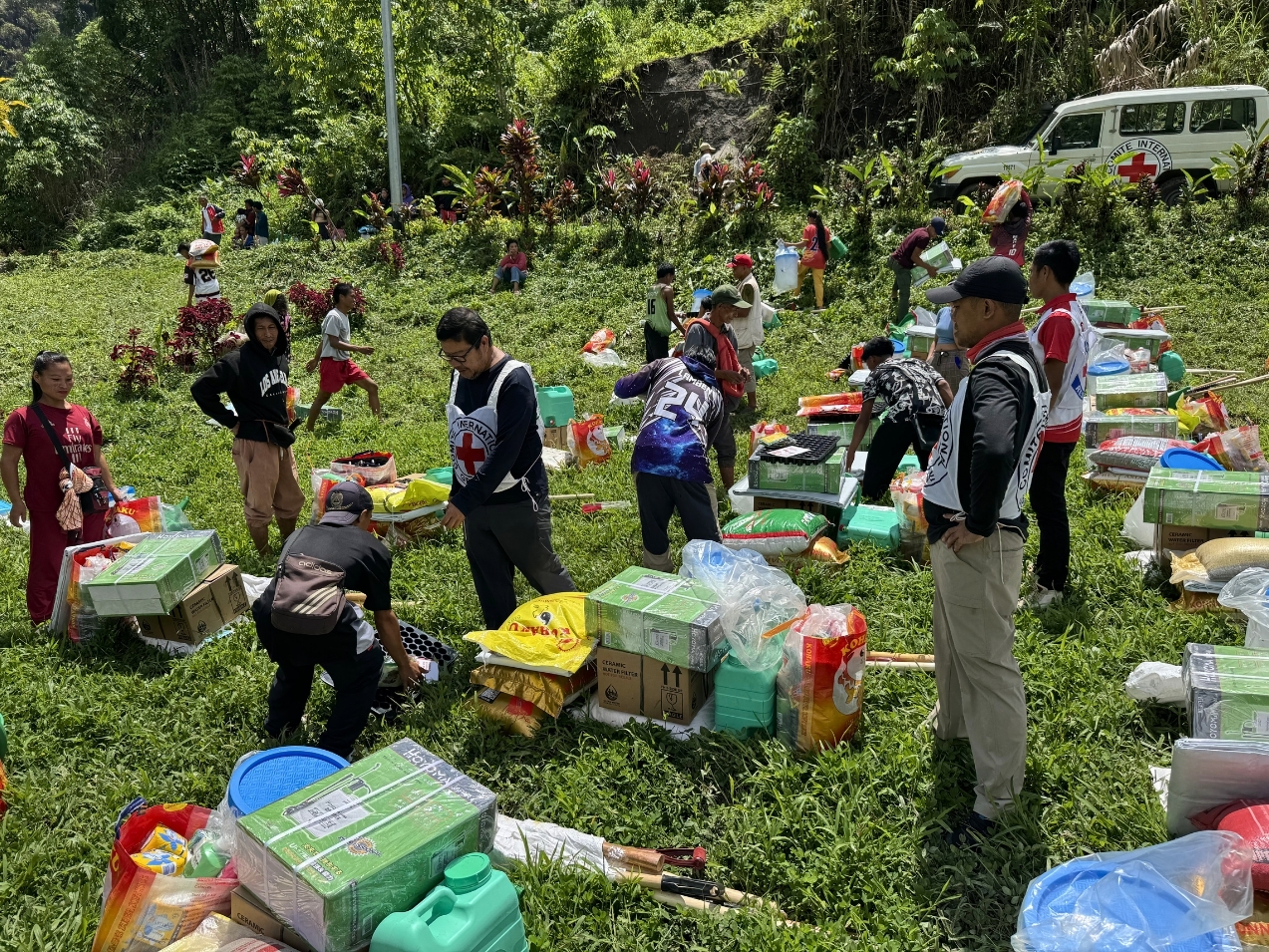
Staff from the International Committee of the Red Cross, with support from Philippine Red Cross, facilitated the relief distribution in Barangay Blangas in T’boli, South Cotabato. Photo: A. Sanggacala/ICRC
Losing income, struggling to pay debts
To better understand the impact of the displacement, the International Committee of the Red Cross (ICRC), which strives to protect the life and dignity of people affected by armed conflicts, conducted an assessment in the community.
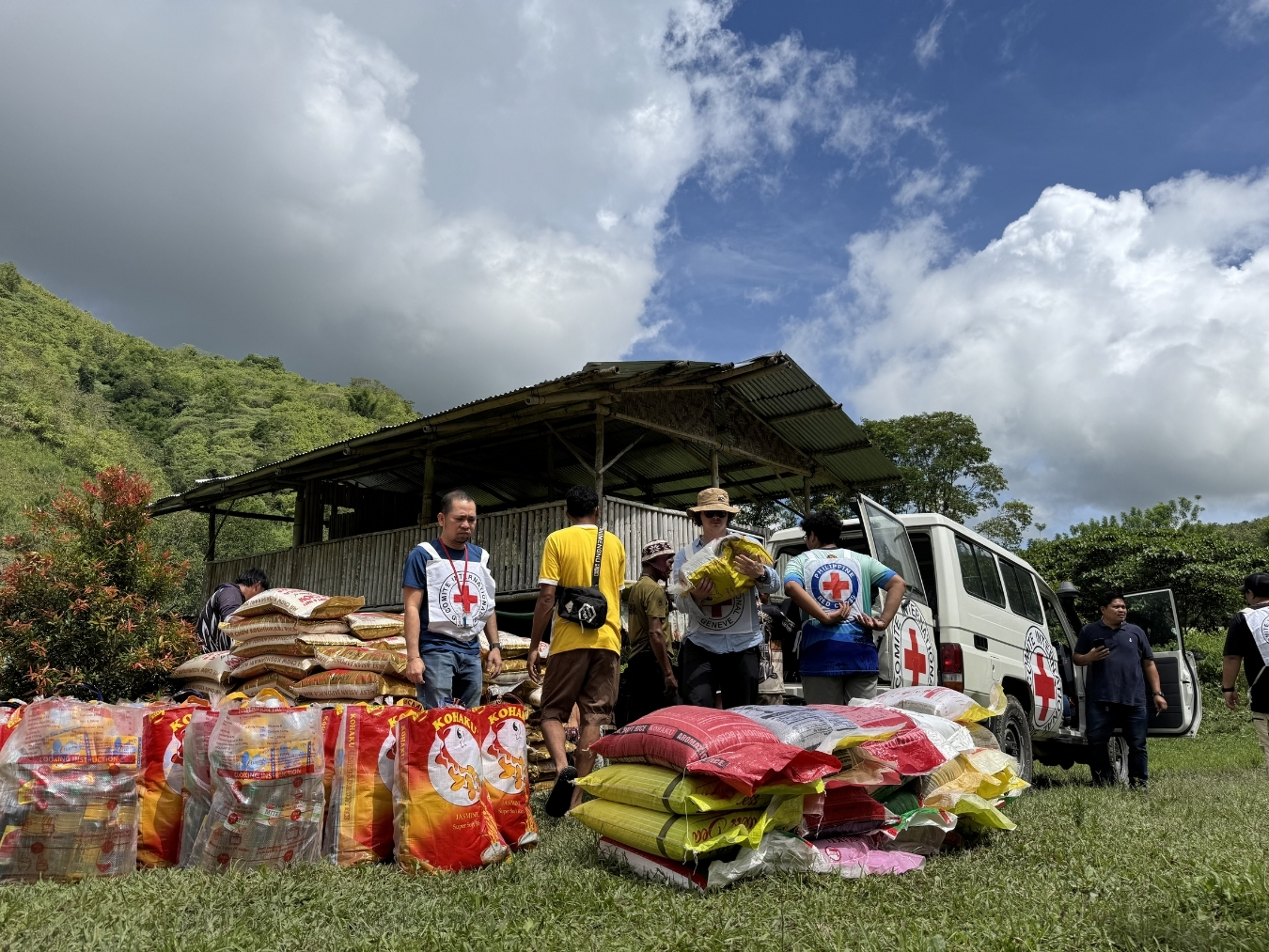
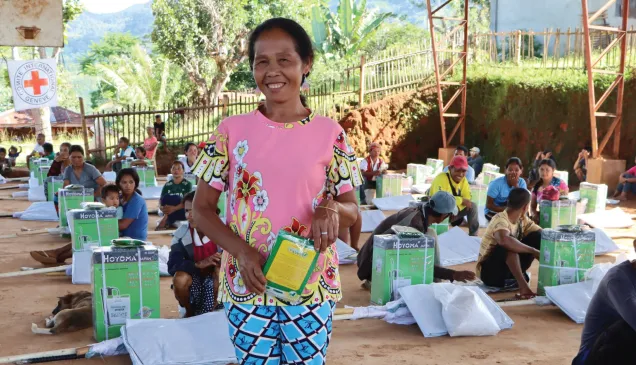
Community members received a one-month food ration, hygiene kits, agricultural tool kits, corn and vegetable seeds, ceramic water filters, jerry cans, and a conditional cash grant. Photo: A. Sanggacala/ICRC
“Our assessments revealed that there were substantial losses in income, with the families having limited access to food and farming inputs,” said Michael Cornelia, ICRC’s economic security field officer.
“The families struggled to pay their debts or access the necessary credit to finance the next planting cycle. They lacked the capital to purchase seeds and fertilizers, which could delay their recovery,” he added.
To help the community restore their livelihoods, the ICRC, with support from the Philippine Red Cross (PRC) – South Cotabato Chapter, provided food, hygiene kits, ceramic water filters and jerry cans, corn and vegetable seeds, agricultural tool kits, and a conditional cash grant of Php 20,000 (approximately USD 320) in July.
“The cash grant gave families the flexibility to purchase what they needed the most, like seeds and tools. After losing their harvest due to displacement, many of them no longer had the means to invest in the next planting season. This support helps them resume farming and begin their recovery,” Cornelia said.
The support given to the families is expected to give them financial autonomy while reducing their exposure to the risks and pressures brought by the armed conflict and their displacement.
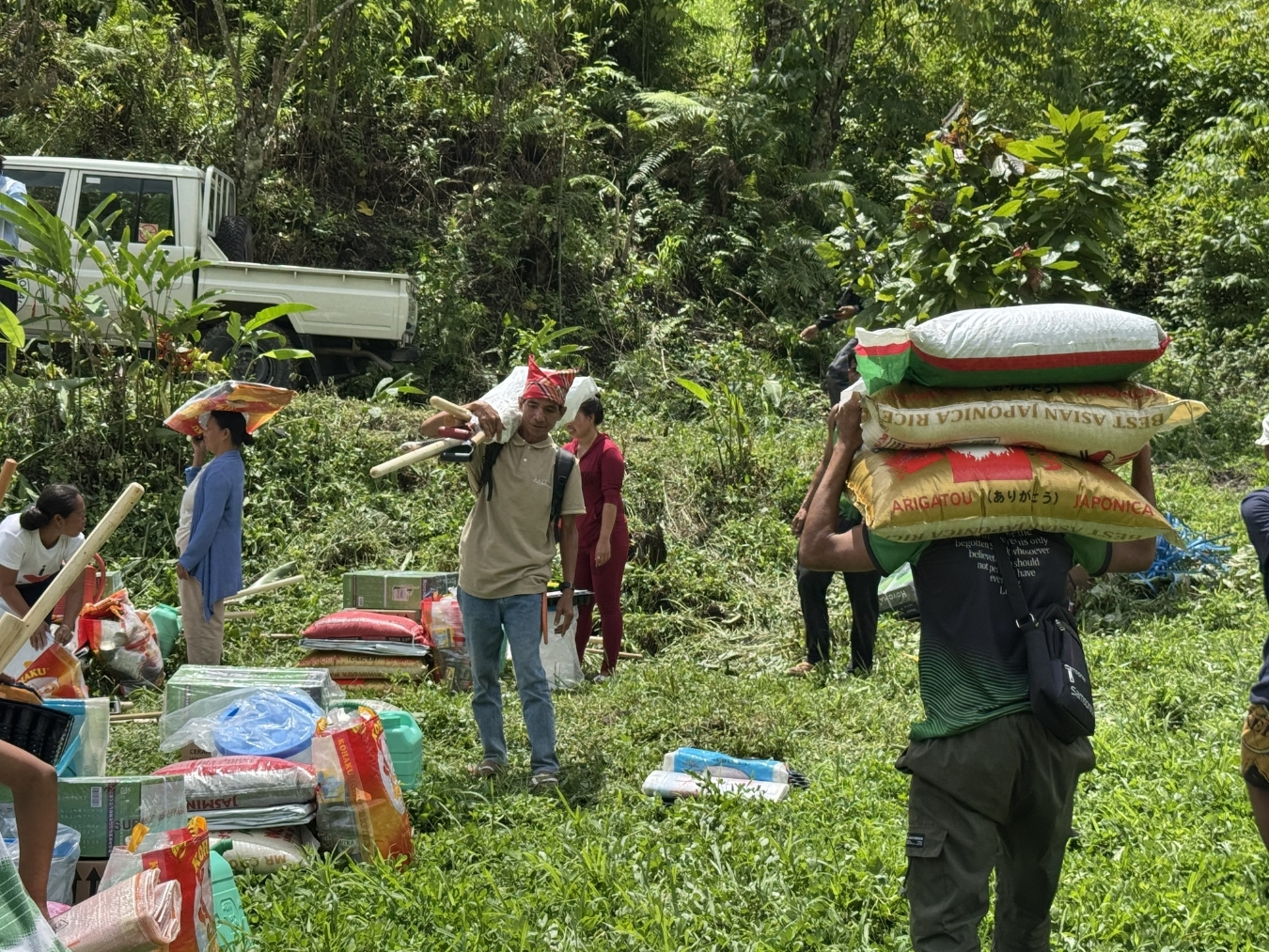
Tuding with the new farming tools he received from the ICRC and PRC. Photo: A. Sanggacala/ICRC.
Planting for the future
For Tuding, the assistance offers an opportunity to rebuild.
“The farming tools will help us cultivate our farms again. We also received seeds and tools for both corn farming and backyard gardening,” he said, his eyes beaming with excitement.
“With no harvest this season, money was a huge problem, so the cash grant came at the perfect time,” he said.
Looking ahead, Tuding hopes his community can recover from the disruption brought by the conflict and return to their old way of life.
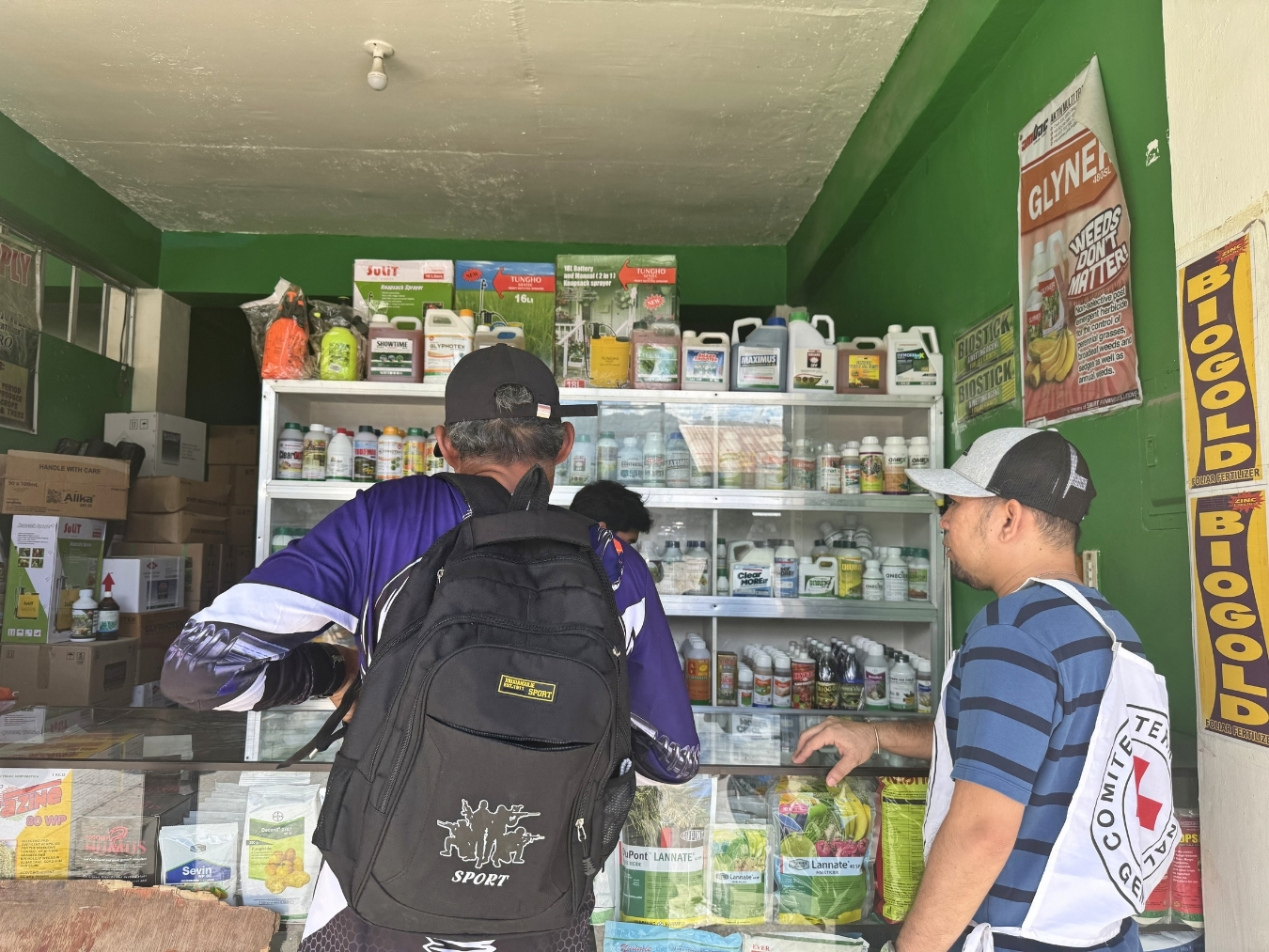
Community members bought fertilizer and other farming materials with the cash grant they received. Photo: A. Sanggacala/ICRC.
“Farming our land is important to us. We’ve been doing it our whole lives; our displacement brought uncertainty,” he shared.
“As we slowly return to normal, I hope we will have better harvests in the coming seasons and a more stable source of livelihood for our community,” he added.
At present, the ICRC continues to conduct bilateral and confidential discussions with all parties to the conflict to remind them of their obligations under IHL, to protect the people of Barangay Kematu as well as other neighboring villages.