20 years of advancing international humanitarian law: Zimbabwe national moot court competition marks milestone

The International Committee of the Red Cross (ICRC), in partnership with the Raoul Wallenberg Institute of Human Rights and Humanitarian Law (RWI), held the 20th Zimbabwe National International Humanitarian Law (IHL) Moot Court Competition in Harare from 5–7 August.
For two decades, the Zimbabwe National International Humanitarian Law (IHL) Moot Court Competition has provided a platform for aspiring legal professionals to engage with the laws governing armed conflict. This year marked its 20th edition, with the International Committee of the Red Cross (ICRC) and the Raoul Wallenberg Institute of Human Rights and Humanitarian Law (RWI) continuing their partnership to strengthen IHL knowledge among the next generation of legal practitioners.
What began with the participation of just two universities has grown into a national platform for advancing international humanitarian law (IHL) education. Twenty years later, Zimbabwe's National IHL Moot Court Competition marked two decades of nurturing legal talent, building partnerships and promoting respect for the rules of war.
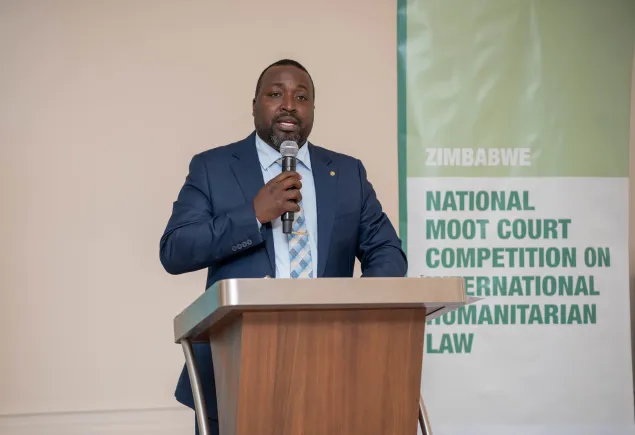
Nobert Mazungunye, Deputy Minister of Justice Legal and Parliamentary Affairs
His remarks, delivered at the luncheon marking the 20th anniversary, highlighted the initiative’s impact beyond the courtroom. Over two decades, it has equipped generations of students with practical IHL knowledge, with alumni carrying these skills into their professional careers and contributing to greater respect for humanitarian law.
Five universities — the University of Zimbabwe (UZ), Midlands State University (MSU), Africa University (AU), Great Zimbabwe University (GZU) and Zimbabwe Ezekiel Guti University (ZEGU) competed in a Moot competition in the days leading up to the luncheon, which saw UZ and MSU advance to the final held at the High Court of Zimbabwe, and presided by the Deputy Judge President of the High Court, Honourable Justice Garainesu Mawadze. UZ emerged as the 2026 champions, with MSU finishing as runners-up.
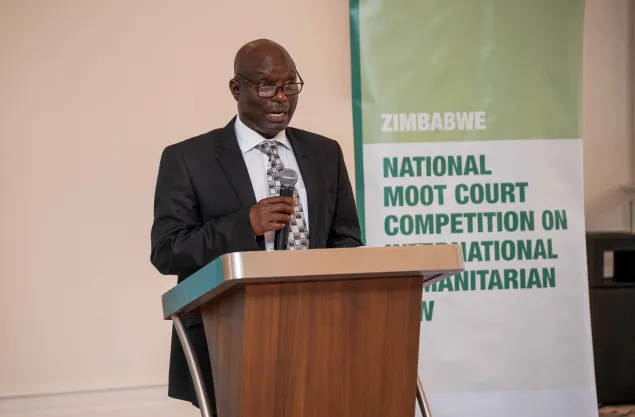
Honourable Justice Garainesu Mawadze, Deputy Judge President of the High Court
For Kudakwashe Masango, a member of the winning team, the competition offers an opportunity to connect legal knowledge with the realities of armed conflict.
“I hope to gain experience in assisting people who are facing armed conflict. We watch the news every day and witness what is happening in countries affected by conflict, but unfortunately, there isn’t always enough outreach,” Masango said.
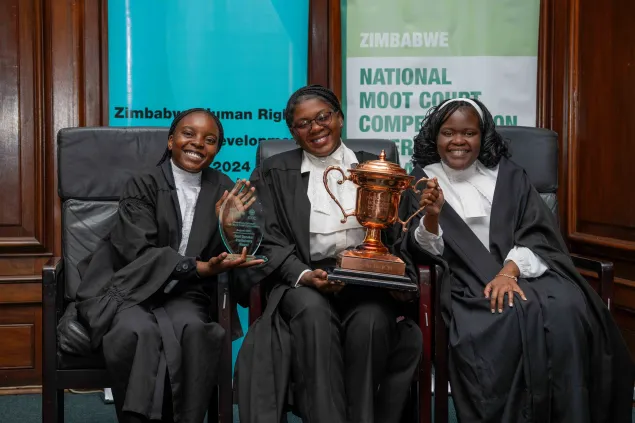
The 2026 champions from the University of Zimbabwe
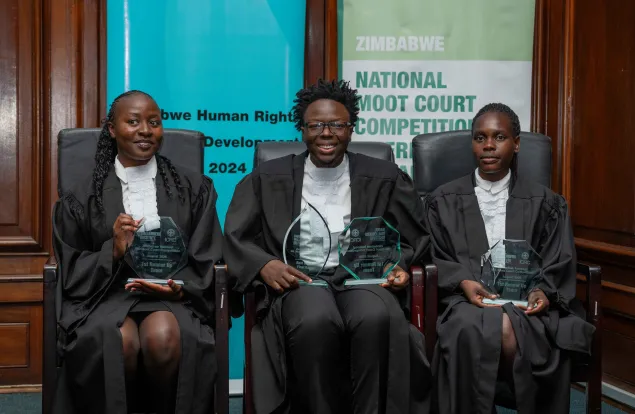
The 2026 runners-up from Midlands State University
The initiative’s impact extends beyond the competition, with alumni applying their IHL knowledge in Zimbabwe’s legal fraternity through legal practice, research and education, helping to strengthen legal expertise and promote respect for the rules of war.
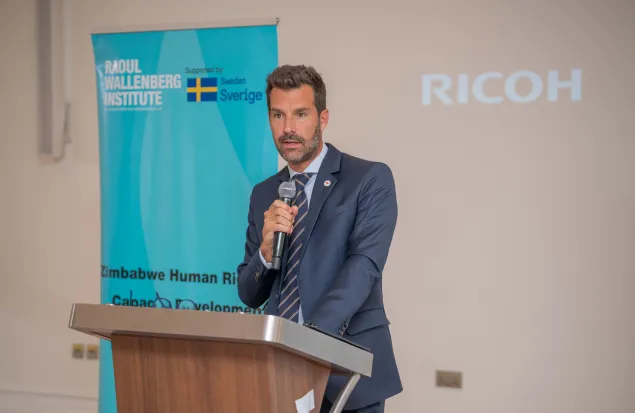
Jean-Nicolas Paquet-Rouleau, Head of the ICRC Pretoria Regional Delegation
Closing the programme, Jean-Nicolas Paquet-Rouleau, Head of the ICRC Pretoria Regional Delegation, reflected on the competition’s influence on the careers of former participants and the importance of strengthening its educational impact. Across the world, the ICRC invests in IHL education through universities as part of its aim to foster respect and dignity for people affected by armed conflict through practical application of IHL.