ICRC activities in Libya 2019

The International Committee of the Red Cross (ICRC) expanded its response to meet Libya’s growing humanitarian needs in 2019. The resumption of large-scale hostilities in April 2019 combined with years of deteriorating security situation overall has impacted all sectors and segments of life in Libya. The most affected have been the civilians and those displaced due to fighting.
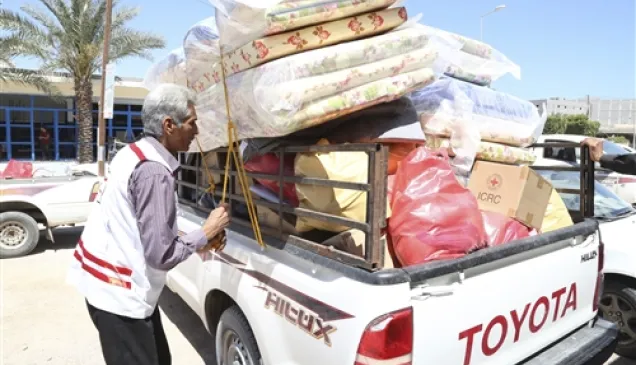
The ICRC in Libya delivers emergency assistance in the realms of health care, economic security and water, and sanitation. We support hospitals, primary health care clinics and physical rehabilitation centres with equipment and consumable materials. We implement water and sanitation projects in support of public institutions to ensure water is provided to the communities. We distribute food and non-food items (such as blankets and kitchen material) to internally displaced communities and populations in need and also provide cash grants and other support to help them build their livelihoods.
Through our protection programme, we visit detention centers, restore family links by tracing individuals who have lost contact with their families, run a forensic program to ensure a dignified management of the dead and deliver training sessions on international humanitarian law. Together with our partner, the Libyan Red Crescent Society (LRCS), the ICRC has been scaling up its response through four offices in Libya – Tripoli, Benghazi, Misrata and Sabha – supported by the main office in Tunis. We share with you some highlights of our humanitarian activities carried out in 2019.