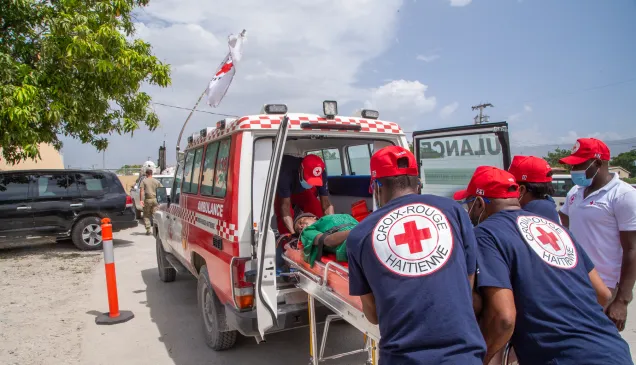
Mexico and Central America: People deprived of their freedom

The ICRC has visited people deprived of their freedom, and performed humanitarian work on their behalf, since 1870. At first, in accordance with international humanitarian law, the organization's main task was to safeguard the dignity and physical well-being of those taken captive during armed conflicts, and to enable them to exchange messages with their families.
Nowadays the ICRC works in over 80 countries throughout the world, including El Salvador, Honduras, Mexico and Panama. It visits people in prison and monitors detention conditions and whether there is respect for the due process of law and the basic rights of detainees.
The ICRC shares its findings in a constructive, confidential, bilateral dialogue with the prison authorities. This approach is conducive to the introduction of measures to bring detention conditions into line with international standards and preserve the dignity of detainees.
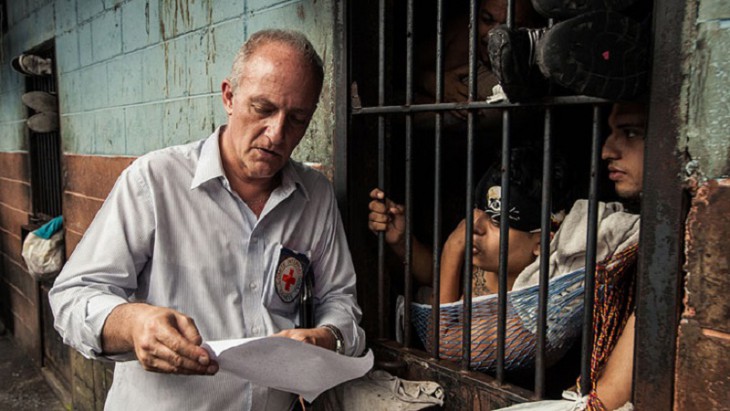
©ICRC/Jesús Cornejo
The aim of the ICRC's humanitarian work is to address the problems faced every day by people deprived of their freedom. This includes: protecting the dignity of every individual, regardless of their legal status; preventing unnecessary suffering caused by physical or mental illness that has not been prevented, or is going untreated; reducing the risk of structural disasters such as flooding, fire or collapsing buildings; and safeguarding detainees from being ill-treated, in violation of their basic rights.
The ICRC also helps put detainees back in touch with their families through phone calls, Red Cross messages and prison visits.
Detainees are still part of society, so it is vital to ensure that they are not permanently excluded from it, and to facilitate their rehabilitation when they re-enter it.
In El Salvador and Honduras the ICRC takes a holistic, structural approach to its work on behalf of people deprived of their freedom. It assesses aspects such as their access to water and health care, living conditions and judicial guarantees, and then works with the authorities to bring about tangible improvements in the prison system and detainees' conditions and treatment.
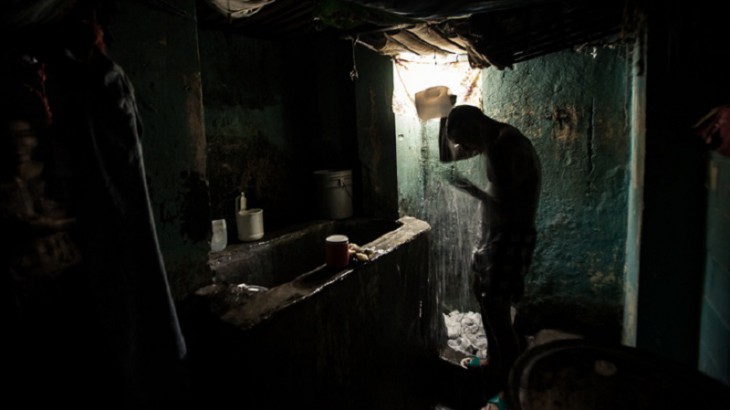
©ICRC/Jesús Cornejo
In El Salvador, the ICRC distributes hygiene articles and beds, and has improved conditions in a number of prisons by renovating floors, repairing roofs and improving ventilation and water supplies. It has also advised the authorities responsible for designing new prisons, and has provided training on public-health matters.
In Honduras the ICRC has improved sanitation conditions and access to water, upgraded electrical systems and reduced the amounts of flammable material in prisons. It has also provided training in disaster prevention and evacuation, and advised on the drawing up and implementation of contingency plans.
In Mexico and Panama the ICRC visits detainees individually, and helps put them back in touch with their families by means of phone calls and prison-visit programmes.
Facts and figures 2014
- The ICRC improved physical conditions in 21 prisons in the region.
- Upgrades to infrastructure and water supplies benefitted 20,188 detainees in El Salvador and 1,639 in Honduras.
- In cooperation with the national fire brigade, the directors of all 24 detention facilities in Honduras were trained in fire prevention and the preparation of contingency plans.