Frequently asked questions: 17th Ebola disease outbreak in the Democratic Republic of the Congo

On 15 May 2026, the authorities in the Democratic Republic of the Congo (DRC) declared a new outbreak of Ebola virus disease in the north-eastern province of Ituri. Four months later, by 15 September 2026, a total of 7,404 confirmed cases, 3,577 deaths and 1,776 recoveries had been recorded across seven of the country’s provinces, namely Ituri (the epicentre), North Kivu, South Kivu, Haut-Uélé, Bas-Uélé, Tshopo and South Ubangi.
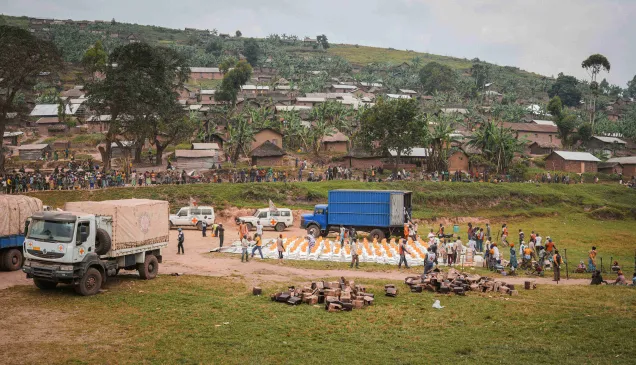
The outbreak is hitting parts of the country already laid low by decades of armed conflict and other violence – in particular Ituri, North Kivu and South Kivu – where access to essential services is severely limited. In response, the health authorities and humanitarian organizations have stepped up their emergency action.
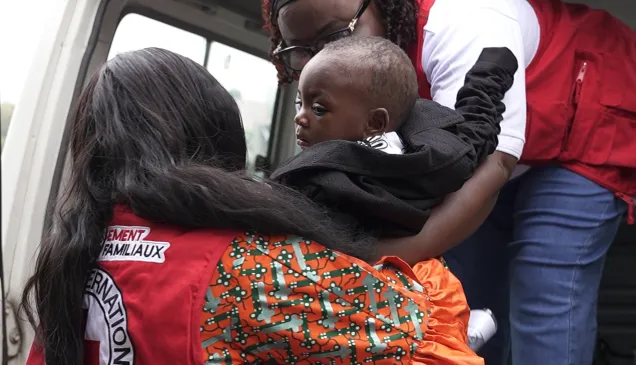
Among them, the Red Cross Society of the DRC is playing a key role – with support from the International Federation of Red Cross and Red Crescent Societies and the ICRC – through its community engagement, disease surveillance and infection prevention activities, and the organization of safe and signified burials.
Here are the most frequent questions received by our teams.
About Ebola
-
It is a severe disease caused by the Bundibugyo virus, one of several species of the Ebola virus. It takes its name from the Bundibugyo district of Uganda, where it was first identified during an outbreak in 2007–2008. Although its exact reservoir has not been formally confirmed, fruit bats are considered to be the virus’s natural hosts. They can transmit it to other animals (such as monkeys and antelopes) and to humans. The virus then passes from one person to another.
-
BVD is transmitted through direct contact with:
- Bodily fluids (blood, sweat, saliva, vomit, urine, faeces, breast milk, semen) from a person who is ill with or has died from BVD. The virus can persist in semen for up to 12 months after recovery; this is why survivors are advised to practise safe sex during this period.
- Objects contaminated with these bodily fluids (clothing, bedding or needles).
- Infected animals, whether alive or found dead in the forest (fruit bats, primates or antelopes).
An infected person can only transmit the disease once symptoms have appeared.
-
The disease presents as a sudden onset of fever accompanied by non-specific symptoms: abdominal pain, severe fatigue, muscle pain, sore throat and headache, followed by nausea, vomiting and diarrhoea.
BVD symptoms can resemble those of other diseases, such as malaria or typhoid. Only a laboratory test performed at a healthcare facility can confirm the disease.
-
The case fatality rate for BVD has historically been lower than for the Zaire species, and ranges between 25% and 50%. During the 2007 outbreak in Uganda it stood at 25%, whereas it reached 47% during the 2012 outbreak in Isiro, in the DRC. The variation in the case fatality rate – between 25% and 50% – is probably due to delays in accessing medical care. Patients who receive treatment soon after the onset of symptoms have a much higher chance of survival.
-
Yes, it can be cured, but this depends how early and how quickly medical treatment is provided. Four months after the official declaration of the outbreak, 1,776 people out of 7,404 cases were reported to have recovered.
Unlike for the Zaire Ebola virus – the most well-known species from recent outbreaks – there is currently no therapeutic treatment or approved vaccine specifically for BVD. However, early treatment and supportive care (rehydration, fever and symptom management) in a specialized centre significantly increase the chances of survival.
-
To date, the World Health Organization (WHO) recommends the use of Ervebo against BVD only within the framework of research protocols aimed at measuring its effectiveness and informing future decisions. This approved vaccine has been used during outbreaks caused by the Zaire Ebola virus, but has never been tested against BVD. Research is also under way to evaluate other vaccine candidates.
In late August 2026, the WHO reported that vaccination with Ervebo had begun among health workers in some areas of the DRC.
-
No. Unlike for other forms of Ebola, there are currently no proven and approved medicines specifically for BVD. However, early supportive care (rehydration, fever and pain management) provided in specialized treatment centres significantly increases the chances of survival.
-
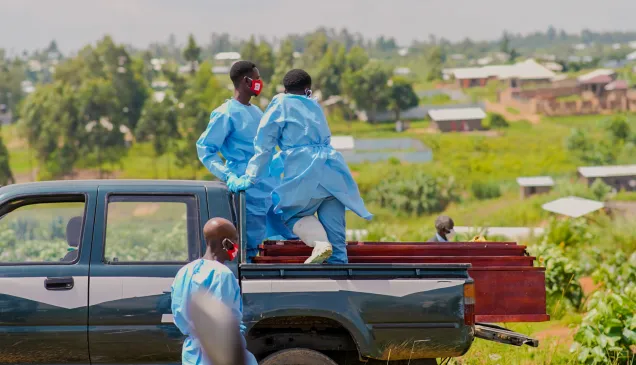
The body of a person who has died from BVD is extremely infectious. Any direct contact (washing, touching or kissing the deceased) during traditional funerals poses a major risk of infection. Specialized teams ensure that burials respect the dignity of the deceased, the wishes of the family and, more broadly, cultural and religious considerations, while using body bags and protective measures to prevent transmission of the virus.
-
Yes, but not in the same way as at a normal funeral. With a disease like Ebola, funeral rites are strictly regulated because the body of the deceased remains highly infectious. It is therefore forbidden to touch or wash the body, to prepare it (e.g. dress it or apply traditional funeral make-up) or to hold large gatherings around the body without protective measures. As long as health protocols are followed, however, families may attend a safe farewell ceremony, view the body without direct contact (sometimes in a sealed body bag), take part in symbolic rites (prayers, songs, tributes) and be present during the burial, which often takes place in a controlled area.
ICRC action
-
Together with its partners in the International Red Cross and Red Crescent Movement, the ICRC supports the work of the DRC Red Cross. Drawing on its strong local network, the National Society trains and deploys its volunteers to organize safe and dignified burials, carry out community engagement and infection prevention and control activities, and provide psychosocial support.
In accordance with its mandate, and in the fields where its added value is recognized, the ICRC is ready to support the response to the Ebola outbreak in several ways:
- With the agreement of all parties, the ICRC stands ready, in its role as a neutral intermediary, to facilitate the transport of medical supplies and medicines across front lines. For this it will rely on existing coordination mechanisms, or arrangements yet to be established, as well as on its ongoing confidential bilateral dialogue with all parties.
- Places of detention are particularly vulnerable to the introduction of the virus and therefore require special attention. Since the start of the outbreak, the ICRC has helped detention authorities implement urgent preventive measures by providing technical and structural support.
-
n a context where communities have endured multiple crises, mistrust of external players can be exacerbated during a health crisis. But Ebola is not a disease thought up by humanitarian organizations.
The virus was first identified in 1976, long before the current humanitarian responses and funding appeals. Since then, outbreaks have been documented in several African countries, and repeatedly in the DRC.
The ICRC urges the communities to look at the facts: people are falling ill, families are losing loved ones, local health workers are themselves affected, and tests carried out in different laboratories confirm the presence of the virus.
Amid the current budget cuts, this outbreak poses a challenge for many humanitarian organizations involved in the response. As for the International Red Cross and Red Crescent Movement, its goal is to support the efforts of health authorities to protect the lives of community members and halt the transmission of the disease as quickly as possible.
-
In the current context in eastern DRC, a region long torn by conflict and other violence, misinformation poses a major risk to the effectiveness of the Ebola response. It can undermine public trust, discourage people from seeking care and reduce acceptance of essential measures such as isolation and safe and dignified burials.
In its interactions with the authorities, the media and local communities, the ICRC therefore stresses the importance of respecting and protecting humanitarian workers, including Red Cross volunteers. All possible measures must be taken to keep them safe. Threats and acts of violence against them are strictly prohibited.
This message is further reinforced through the ICRC’s confidential bilateral dialogue with weapon bearers, in which particular emphasis is placed on the obligations of parties to conflict under international humanitarian law.
The ICRC also works with other partners within the International Red Cross and Red Crescent Movement, such as the International Federation of Red Cross and Red Crescent Societies, to coordinate efforts to protect volunteers. This enables the sharing of best practices and strengthens the overall response to acts of violence.
-
This is certainly a risk, in a context where human, financial and logistical resources are already under heavy strain.
The Ebola outbreak has plunged the region into a new crisis, hitting communities already weakened by decades of conflict and other violence, where access to essential services such as water, sanitation, health care and electricity is severely limited. In parallel, diseases such as cholera, malaria, tuberculosis and HIV continue to take their toll, while healthcare facilities also have to contend with influxes of weapon-wounded.
The combination of armed conflict and disease has potentially devastating consequences. In this critical context, it is essential that the parties to the conflicts act responsibly to ensure the best possible cooperation and coordination in the field of health care and that they facilitate the work of humanitarian organizations, including the rapid and unhindered delivery of humanitarian aid. This is vital to ensuring that sick and wounded people can receive appropriate medical care as quickly as possible.
-
The ICRC supports the work of the DRC Red Cross, which is at the forefront of the response to the outbreak. Its volunteers organize safe and dignified burials, carry out community engagement and infection prevention and control activities, and provide psychosocial support.
More broadly, in Ituri, North Kivu and South Kivu provinces – already stricken by decades of conflict and violence – the ICRC continues its assistance programmes in the fields of health, water and shelter, and economic security, while maintaining a confidential bilateral dialogue with weapon bearers in order to strengthen the protection of people affected by conflict.
-
In accordance with its mandate, the ICRC helps people affected by armed conflict and other situations of violence. During epidemics, it is above all its partners in the International Red Cross and Red Crescent Movement, namely National Societies – here the DRC Red Cross – and the International Federation of Red Cross and Red Crescent Societies, that are at the forefront of the response. The ICRC provides support to complement their actions, in particular in fields where its added value is recognized.
-
The ICRC continues to assist health facilities in areas affected by armed conflict, in order to strengthen their capacity to cope with the outbreak. It supports the implementation of infection prevention and control measures and the training of health staff, so that the facilities can keep providing quality care to people affected by armed conflict and other violence.
In addition, as part of its regular dialogue with weapon bearers, the ICRC continues to emphasize the need to respect and protect medical staff and facilities in all circumstances. In particular, conflict parties must take all possible measures to guarantee the safety of medical staff and facilities and ensure that the latter have access to essential resources such as electricity, water and medicines. These obligations have become even more important now in the context of the Ebola outbreak.
-
Through its confidential bilateral dialogue with weapon bearers, the ICRC works to facilitate safe and unhindered access for teams from the International Federation of Red Cross and Red Crescent Societies and the DRC Red Cross, so that they can respond to the needs arising from the Ebola outbreak in areas affected by conflict and other violence.
With the agreement of all parties, the ICRC also stands ready, in its role as a neutral intermediary, to facilitate the transport of medical supplies and medicines across front lines in order to respond to the Ebola virus disease.
-
When an epidemic breaks out, it is primarily the National Society – here the DRC Red Cross – and the International Federation of Red Cross and Red Crescent Societies that are at the forefront of the response. The ICRC lends support to complement their efforts, in particular in areas affected by armed conflict and other situations of violence, and adapts its own programmes there to address the needs arising from the disease.
In these areas, the ICRC assists health facilities so that they can continue to provide care despite the pressure caused by the epidemic. It supplies medicines, strengthens infection prevention and control measures, and supports the training of health workers.
To limit the spread of the virus, the ICRC works to improve access to water, hygiene and sanitation in health centres, places of detention and local communities in conflict-affected areas. It supports the DRC Red Cross in raising awareness of good prevention practices and organizing safe and dignified burials.