Exhausted after covering long distances on foot, they are staying at several locations in Mali. Many arrived with nothing to live on.
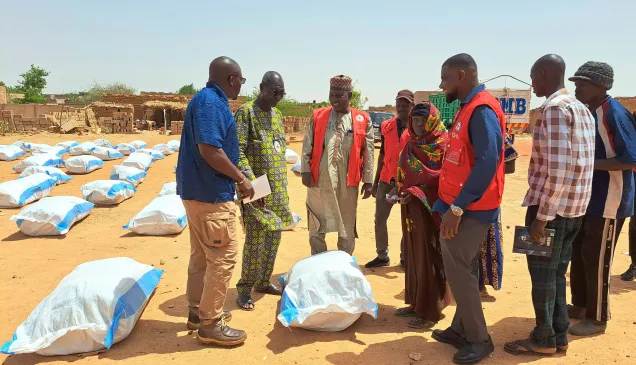
On 5 November, volunteers from the Mali Red Cross (Croix-Rouge malienne, CRM), responded to this sudden humanitarian emergency by deploying to the Bamako and Kourémalé reception sites and the Sikasso and Bougouni transit points, so they could begin meeting people’s most urgent needs.
“Our teams are active in a number of areas: food, water, first aid, psycho-social support, restoring family links, sanitation and hygiene,” says CRM Director-General Nouhoum Maiga. “We are working closely with the national and local authorities, especially the National Social Development Department, which is coordinating reception and assistance efforts.”
The ICRC and other partners within the International Red Cross and Red Crescent Movement are supporting the response, in particular the Red Cross Societies of Belgium, Denmark, Luxembourg and the Netherlands.
“The CRM is providing emergency aid to people affected by this crisis, with the support of the ICRC,” says Nicolas Lambert who heads the ICRC’s Mali delegation. “The ICRC has also supplied a number of government facilities with emergency medical kits. This temporary support will ensure that the most vulnerable people receive the care they need as exceptional numbers arrived over a short period.”
Operational update
Health
The ICRC has provided the CRM with the following medical supplies, enabling the National Society to respond to the returnees’ most urgent health needs:
- Six large medical kits, including medicines (anti-malarial drugs, antibiotics, painkillers, anti-parasite medication, anti-fungal medication, etc.), dressings, gloves, compresses and disinfectant. These kits, designed to treat 6,000 sick or wounded patients for three months, have been allocated as follows: two to the Bamako Civil Defence Department, three to the Mali Red Cross and one to Bougouni Regional Health Department.
- Two dressing kits, including antiseptic, bandages, compresses, cotton wool, gloves, serums and items for treating burns. These were handed over to the Bamako Civil Defence Department. Each kit is designed to treat 15 to 25 people with minor injuries.
- Two kits for the care of people with serious injuries, including antibiotics, painkillers, dressing material, sterilization supplies, surgical and examination gloves, serums and disinfectant. These were delivered to Bougouni Regional Health Department. Each kit is designed to treat 25 people with serious injuries.
- One kit for the care of people with serious injuries and 250 doses of saline solution for Kati University Hospital.
Food
The ICRC immediately provided the CRM with funds to help it serve daily hot meals to thousands of people in distress. Between 5 and 14 November, CRM volunteers distributed over 27,800 hot meals, over 30,000 packs of water and 18,000 loaves of milk bread in Bamako and the surrounding area.
Restoring family links
As of 14 November, 536 phone calls had been facilitated, enabling people to re-establish contact with their families.
Technical support
ICRC teams are providing advice and guidance to CRM personnel as they handle this emergency. Topics include the protection of vulnerable groups, health, sanitation and waste management.