Nigeria

In Nigeria, the ICRC helps people affected by armed conflict and violence, particularly in the north-east. We promote international humanitarian law and other rules that protect people during armed violence and support the emergency response work of the Nigerian Red Cross Society.

Nigeria RFL

Our work in Nigeria

In Nigeria, we provide emergency assistance and sustainable solutions, such as access to clean water and sanitation for internally displaced people and their host communities, and cash for livelihood programmes. We reunite separated family members by delivering messages and searching for missing relatives. 

We improve access to basic health care for vulnerable populations in conflict areas. We encourage the humane treatment of detainees through dialogue with authorities and visits to detention centres and promote respect for international humanitarian law (IHL) through information sessions with weapon bearers and dialogue with national and regional policymakers.

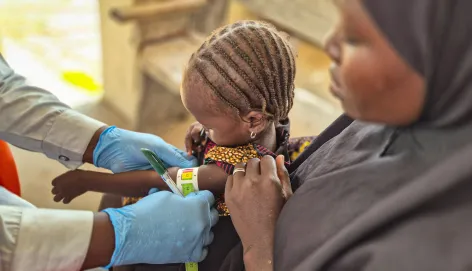
Borno State, Gwoza, camp for internally displaced people.

The impact of our work: January to December 2025

348,213

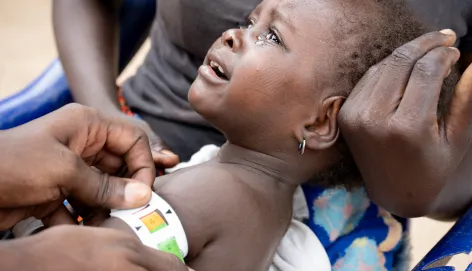
persons (including 16,347 children under five and 19,748 pregnant and lactating women were treated for severe acute malnutrition) at ICRC supported PHCCs and stabilization centers across the BAY states.

2,088

surgical operations were performed on 598 patients admitted to the ICRC -supported Specialist Hospital in Maiduguri, including 574 weapon wounded.

848

persons received physical rehabilitation care at ICRC-supported centres through clinical services, orthotics and prosthetics, helping them to reconnect with everyday life.

36,150

people affected by armed conflict received mental health and psychosocial support services (MHPSS).

198,335

people affected by violence received cash assistance to meet emergency essential needs, including food, healthcare, shelter, and other basic services.

163,400

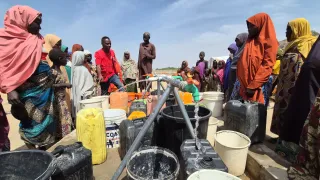
persons in rural communities across the BAY states had improved access to safe water through the drilling, rehabilitation, and upgrading of 137 solar-powered boreholes.

23,664

persons are registered as missing by the Red Cross Movement in Nigeria.

136,464

persons were reached with life-saving risk awareness and safer behaviour messages, helping communities exposed to weapon contamination adopt safer practices and reduce accident risks.

5,800+

detainees received hygiene and accessed medicines, around 1,900 benefited from supplementary food assistance, and a total of 4,803 detainees and staff were screened for tuberculosis using standard and AI-supported digital X-rays.

224

professionals from diverse fields (among them government officials, including military officers; NRCS branch secretaries; legal practitioners; Islamic law experts; academics; journalists) and 22 universities were engaged on IHL through in-person and online trainings, seminars, workshops, expert group meetings, courses and moot competitions, organized in Nigeria and abroad.

Stories from our staff

Each shared laugh or smile, each celebration of positive impact I experience, gives me the reasons I need to keep doing this work

Eric Ogbe Field Health Officer, Biu, Nigeria

Contact us

Community Contact Centre

Opening Hours:

8am – 4:30pm
Monday - Friday

Address

5, Queen Elisabeth Street, Off Yakubu Gowon Crescent
Asokoro, FCT
Abuja

Telephone

+234 7007 005 040

Our work with the Nigerian Red Cross Society

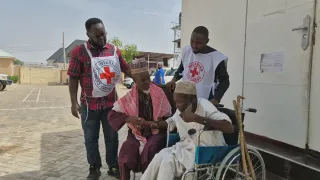
The ICRC supports the emergency response work of the Nigerian Red Cross Society.