Afghanistan: Operational Facts and Figures – January to June 2026

During the first half of 2026, the International Committee of the Red Cross (ICRC) continued to respond to humanitarian needs in Afghanistan through a comprehensive range of activities aimed at improving the lives of people affected by the consequences of past armed conflict and ongoing humanitarian challenges.
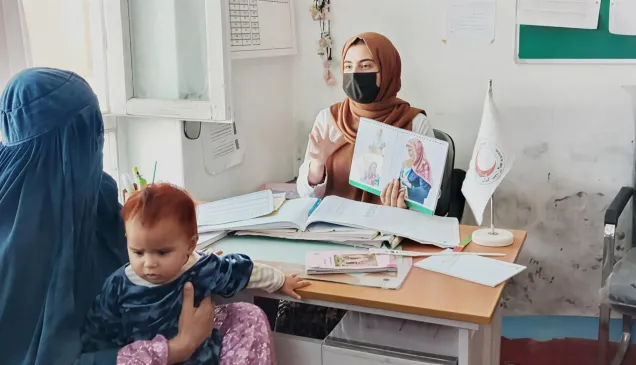
The ICRC improved access to essential primary healthcare by providing medical supplies and technical assistance to Afghan Red Crescent Society (ARCS) primary health centres. Emphasis was placed on ensuring that women, children and other vulnerable groups continued to receive essential health services, including routine maternal and child healthcare. Support also included routine immunization services and nutrition programmes for children suffering from malnutrition, helping strengthen preventive and primary healthcare at the community level.
The ICRC continued to provide comprehensive physical rehabilitation services through its network of seven Physical Rehabilitation Centres across the country. These centres delivered prosthetic and orthotic devices, physiotherapy, mobility support and rehabilitation programmes designed to restore mobility and improve the quality of life of people with disabilities. In addition to rehabilitation services, the programme continued to promote the social and economic inclusion of persons with disabilities through support such as vocational training, interest-free micro-credit loans and sports.
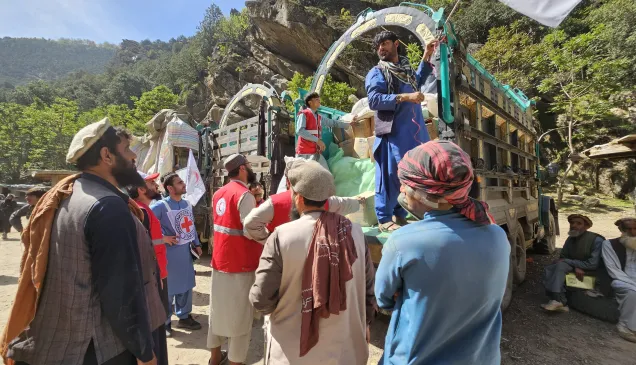
Responding to the humanitarian consequences of armed conflict and displacement remained a priority throughout the reporting period. Following escalation of the Afghanistan–Pakistan armed conflict, the ICRC provided multipurpose cash assistance to households, helping affected families meet their most urgent needs. In Nuristan Province, the ICRC, in partnership with the World Food Programme (WFP) and the Afghan Red Crescent Society (ARCS), distributed food parcels in the Bargi Matal and Kamdish districts as part of an emergency response operation. The ICRC also supported people returning from Pakistan by providing multipurpose cash grants to returnee households in Jalalabad City to help them address immediate humanitarian needs upon their return.
In line with its protection mandate, the ICRC maintained regular visits to places of detention to monitor detention conditions and engage confidentially with the relevant authorities on living conditions and treatment of detainees. The organization also supported efforts to improve hygiene conditions in detention facilities by providing essential hygiene materials and promoting dignified living conditions for detainees.
Improving access to safe drinking water, sanitation and sustainable water services remained an important component of the ICRC's humanitarian response. Working alongside relevant authorities and communities, the ICRC working with the authorities supported the rehabilitation and strengthening of urban and rural water supply systems, enabling communities to access safe and reliable sources of drinking water.
The ICRC also continued its efforts to restore family links by tracing missing persons and helping reconnect families separated by armed conflict and other humanitarian circumstances. These activities provided answers to families searching for missing relatives and helped alleviate the uncertainty associated not knowing the fate and whereabouts of loved ones who went missing.
Community engagement remained central to the ICRC's approach throughout the reporting period. Regular dialogue was maintained with local authorities, religious leaders, community representatives and affected populations to better understand their humanitarian concerns, strengthen acceptance of humanitarian action and ensure that assistance remained responsive to the needs of communities.
Guided by its principles of humanity, neutrality, impartiality and independence, the ICRC remains committed to addressing the humanitarian consequences of armed conflict and supporting people across Afghanistan through protection, assistance and dialogue with all relevant interlocutors.
A look at the impact of our work from January to June 2026:
- 615,766 patients, (64.54 per cent women), received primary health care at 47 basic health centres of the Afghan Red Crescent Society (ARCS) that are supported by the ICRC.
- 184,973 doses of routine vaccinations were administered and 4,339 malnourished children benefited from the ARCS nutrition programme at the 46 clinics.
- 105,932 patients – people with disabilities – were assisted in seven ICRC-supported physical rehabilitation centres.
- 15,002 prostheses and orthoses were manufactured, and 80,641 physiotherapy sessions were held for people with disabilities.
- 23,939 detainees in 12 prisons received hygiene materials as the ICRC continued to support efforts of the Office of the Prison Administration (OPA) to ensure suitable hygiene conditions in their detention facilities.
- Over 83,000 people living in urban areas gained improved access to safe drinking water.
- Over 50,000 people gained access to improved electricity supplies through the donation of tools, transformers, and other electrical equipment to Da Afghanistan Breshna Sherkat (DABS) in Balkh, Baghlan and Herat Provinces.
- 16,940 households (135,520 people) who were affected by the Afghanistan-Pakistan armed conflict in Khost and Jalalabad areas received multipurpose cash assistance.
- 16,978 households (135,824 individuals) received food parcels in Nuristan (Bargi Matal and Kamdish districts), as part of the Nuristan emergency operation implemented in partnership with World Food Programee (WFP) and ARCS.
- 1,997 Returnees’ households (15,976 people) who returned from Paktistan received multipurpose cash grants in Jalalabad City.
- 800 households (6,400 women) received the first round of cash assistance as part of the PLW (Pregnant and Lactating Women) project in Mazar-i-Sharif and Kandahar.
- 64 cases of missing people were solved and their whereabouts were ascertained out of which 11 missing persons were located with the assistance of national society/movement partners.