Dnipro: improving continuity of care for prisoners of war through coordination

When a person deprived of liberty needs medical care, finding a doctor is only one step in a chain of response. Patients need to be examined in a timely manner, referred to a specialized health-care facility when necessary, receive the treatment they need, and be able to continue that treatment without interruption.
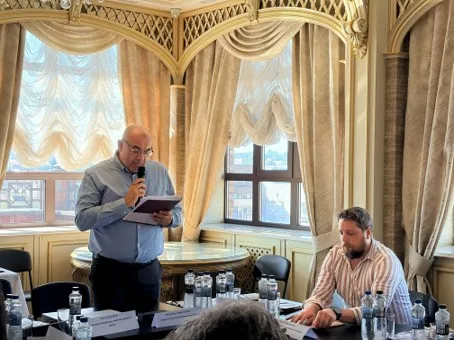
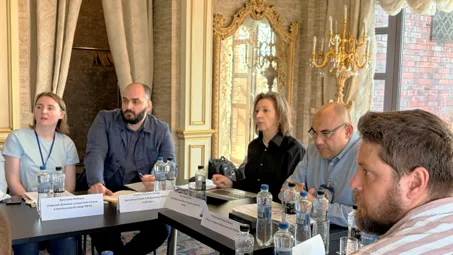
These were among the issues discussed at the recent Inter-Ministerial Coordination Working Meeting on “Medical Support for Prisoners of War,” held for the second time in Dnipro.
Representatives of the Ministry of Justice, Ministry of Health, Ministry of Defence, health-care facilities, and the International Committee of the Red Cross (ICRC) came together for the meeting.
Support in detention
The ICRC has been working with health-care services for those deprived of liberty in Ukraine for many years, to improve conditions and provide support where needed.
Those deprived of liberty include soldiers in captivity as prisoners of war, who are generally held in places of internment, and detainees, who are those that have been judicially charged with a crime and are held in places of detention. There are times when each may be held in the same facility in separate areas. Regardless of the reason for being deprived of liberty, all have a right to medical treatment.
When coordination helps prevent interruptions in care
For internment or detention facilities in front-line regions, organizing medical care can be more challenging. People may need to be relocated or evacuated and, in some cases, referred to specialized health-care facilities. At the same time, treatment that has already begun needs to continue without interruption.
The first such meeting to discuss these challenges was held in Dnipro last year. Some of the solutions agreed on at that meeting have already resulted in practical changes.
One example was the opening of an X-ray department at Penal Institution No. 4, which began operating at the end of 2025. X-ray examinations can now be carried out on site, without transporting patients to another health-care facility.
The ICRC’s work towards consistent medical care involves not only dialogue and professional support, but also practical assistance. According to representatives of the State Criminal and Executive Service, the results of previous cooperation include support for an X-ray facility, the establishment of medical rooms, and the provision of other necessary equipment.
But equipment alone cannot overcome every challenge.
With more internment facilities now existing, more medical staff need to know where to refer a patient, who is responsible for the next stage of treatment, and how to transfer the necessary information. This is why inter-agency coordination remains an important part of the work.
The first such meeting to discuss these challenges was held in Dnipro last year. Some of the solutions agreed on at that meeting have already resulted in practical changes.
One example was the opening of an X-ray department at Penal Institution No. 4, which began operating at the end of 2025. X-ray examinations can now be carried out on site, without transporting patients to another health-care facility.
From capture to treatment
One of the key questions discussed at the recent meeting was very practical: what happens when a prisoner of war needs medical care that cannot be provided at the place of internment?
Participants discussed the patient pathway — where medical staff should turn when specialized treatment is needed, how a patient can receive care at Ministry of Health or Ministry of Justice facilities, and how to ensure continuity of any needed treatment until the prisoner of war is repatriated.
For Hanna Ostakhova, Head of the Dnipropetrovsk and Donetsk Regional Branch of the State Criminal and Executive Service Health Centre of the Ministry of Justice of Ukraine, working together as different institutions to find joint solutions is vital.

This time, participants developed a patient pathway and identified the changes needed in the regulatory framework.
Participants also discussed the transmission of information in cases involving the deaths of prisoners of war, agreeing on the importance of ensuring that the necessary information reaches the relevant authorities in a timely manner, without delays or loss of information.
When care needs to be provided closer to the place of detention
For internment or detention facilities in front-line regions, medical care needs to remain accessible even when people have to be relocated or evacuated.
At the same time, some medical procedures can, where appropriate, be performed directly at detention facilities.
This is not about replacing specialized hospitals. Where care can be safely provided closer to the place of detention, it can reduce waiting and transportation times.
Tuberculosis: when time matters
Participants also discussed the treatment of prisoners of war with tuberculosis.
Some patients currently need to be referred to other cities for treatment. Such transportation requires additional time and resources, so attendees also considered the possibility of organizing appropriate medical care in Dnipro.
Timely detection and treatment of infectious diseases are important first and foremost for the patients themselves. They also matter for medical staff and others who may come into contact with them.
From discussion to the next step
Last year’s meeting in Dnipro showed that regular dialogue can lead to concrete changes.
This year, participants identified the next steps: improving the patient pathway, strengthening access to specialized care, working specifically on tuberculosis treatment, strengthening the transmission of information, and establishing the necessary processes within the regulatory framework.
The next step is to work towards turning these agreements into sustainable mechanisms — so that medical staff know where to turn, patients do not lose time because of organizational difficulties, and treatment that has already begun is not interrupted.
Ultimately, that is the result of such coordination: decisions made around one table helping people receive the medical care they need, and under international humanitarian law, have a right to, in a timely manner.