Prevention of entry of weapons into health facilities: A Toolkit

Throughout the lifespan of its Health Care in Danger initiative the ICRC has recommended hospitals in areas affected by conflict and other emergencies to implement policies to reduce the presence of weapons.
BACKGROUND:
Weapons in healthcare facilities undermine their character of neutral and safe spaces, create an atmosphere non-conducive to respect of medical ethics and are a precursor for threats and security incidents. The presence of weapons inside of health-care facilities may also lead to perceptions and mistrust that a health-care facility is being involved in military operations and has thus lost its protection under IHL.
This toolkit’s aim is to reduce the presence of weapons in healthcare facilities. It does this by exploring some of the reasons people bring in weapons and then provides them with alternatives that keep weapons outside the facility. The toolkit uses messaging, re-design of the environment and training to change people’s behaviour over the long term.
THE TOOL:
The tool is very flexible and takes you through a series of stages that are consecutive and build knowledge to generate specific interventions that are likely to work on the ground. The key to success is to engage with the people that are currently bringing in weapons and co-design a solution with them.
You will find the following components:
- A simple planning process that takes users from start to finish and the generation of interventions.
- A set of tools that supports users with the different elements of the planning process
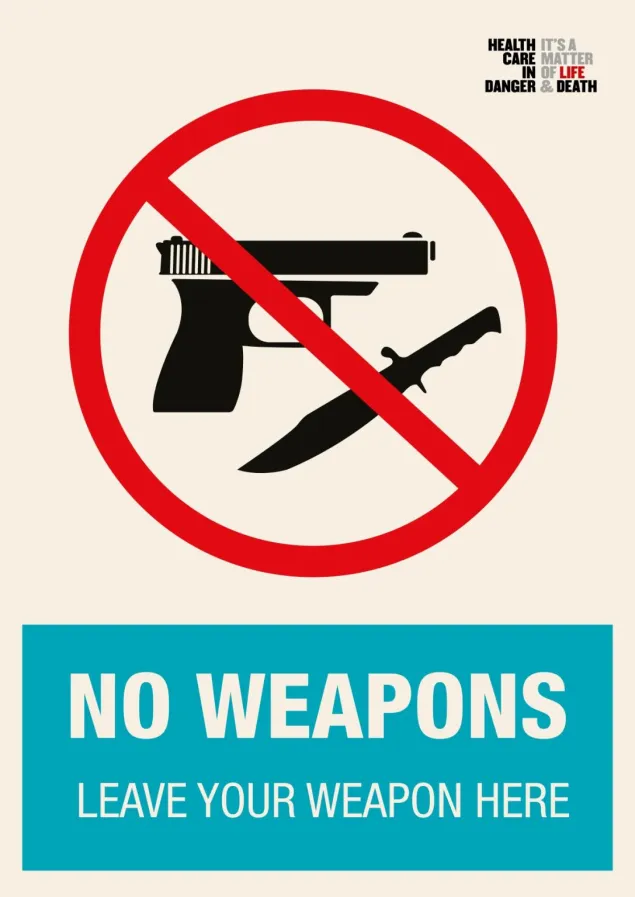
- A communication tool that provides templates and simple techniques to persuade people not to bring weapons into facilities
- A number of case studies showing where healthcare facilities have developed their own interventions successfully
- A template to support a “No Weapons” policy for individual facilities.
STEP 1: INTRODUCTION
- This presentation shows the main processes you will need to go through to build an effective, measurable and sustainable intervention to reduce weapons from healthcare facilities.
- The presentation has a soundtrack that you can listen to as you work through the slides. It should take you 3 minutes to listen to the presentation in full.
- The presentation will also provide you with references if you need to research into any particular concept or issues in more detail.
You can also download the presentation below
STEP 2: GETTING STARTED
MAKING THE CASE FOR ACTION
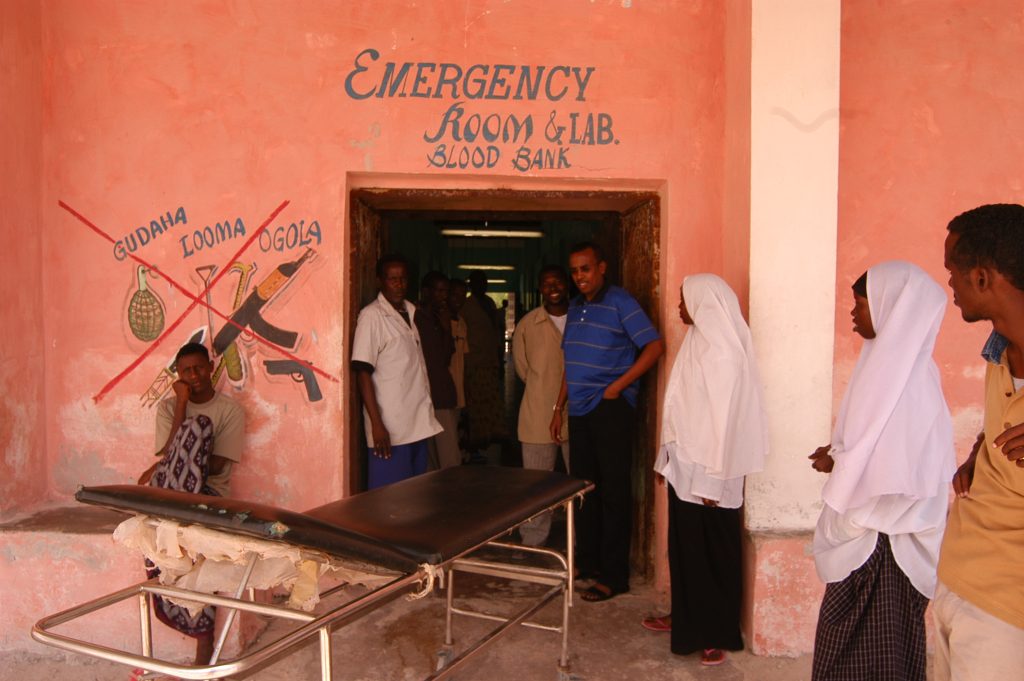
This section shows what the key impacts are on healthcare quality and safety when weapons are infiltrated into healthcare facilities. Importantly it provides you with evidence to show to your stakeholders why reducing weapons is so important.
THE PLANNING PROCESS
The Planning Process shows you how to develop your “Reduction of Weapons” intervention step by step. The Planning Process has six easy to carry out stages that take you from identifying the type of problem that needs to be addresses through to implementation and finally evaluation.
RESOURCES AND MORE
CASE STUDIES
These case studies show how different healthcare facilities have developed, implemented and evaluated their own interventions. It will provide you with ideas that could be used in your healthcare facilities and some key learning points from each location.
COMMUNICATION TECHNIQUES
This section provides you with a range of “best practice” communication and engagement techniques to make your “No Weapons” campaign effective and efficient. They are simple to understand and use and could make your communications more successful.