After Syria and Iraq: mental health support helps repatriated families rebuild in Central Asia

“I am not scared anymore. Because I know we can stay together.”
Maryam is ten years old. She spent years without a home, without a mother, and without the documents to prove that the woman raising her was family. Today she goes to school, and that woman is, finally, her mother on paper too.
Maryam is one of more than a thousand women and children who have returned since 2021 to Kazakhstan, Kyrgyzstan, Tajikistan and Uzbekistan*, after years in Syria and Iraq. For each of them, coming home was only the beginning. What came next, the slow work of healing, trust and belonging, is a story that rarely makes headlines.
In June 2026, after five years of working side by side with national authorities, local institutions, and humanitarian partners to mend the region's invisible wounds, the ICRC concluded the mental health and psychosocial support (MHPSS) programme. Through dedicated work, they planted seeds of endurance, strengthening local care networks, equipping practitioners with new tools, and standing beside families piecing their lives back together after the trials of return. Behind the statistics are real journeys of recovery and resilience. Below are three stories of people who rediscovered themselves.
Tajikistan: “She didn’t leave”
Maryam speaks about the hardest years of her life with a calm that makes you listen carefully.
Her father disappeared when she was small. Her mother died in a displacement camp, leaving Maryam entirely alone. A family friend took her in, and over time became her caregiver.
“At first, my heart hurt too much, and I couldn’t call her mom,” Maryam says. “But she was kind. She took care of me. She didn’t leave.”
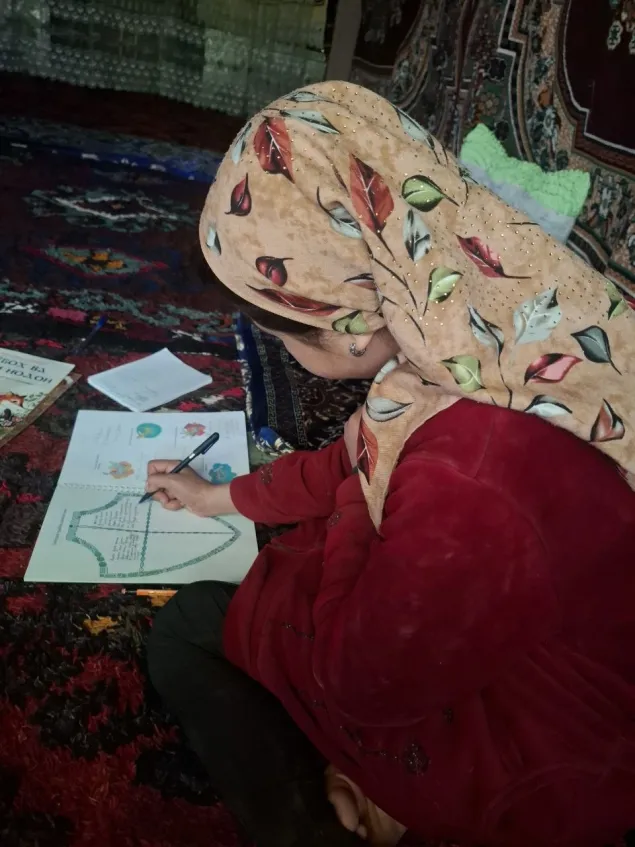
Maryam identifies personal strengths and coping resources during a psychological support session.
The two arrived at a transit centre in Tajikistan. But as the woman raising Maryam was not her biological mother, and without documentation to prove their relationship, every day brought the risk of separation. Officials came with questions. The nights were long.
ICRC psychologists began visiting the centre. Using child-centred approaches such as play and drawing, they gradually built trust with Maryam and provided a safe space to express herself. It was, she says, the first time she felt genuinely heard.
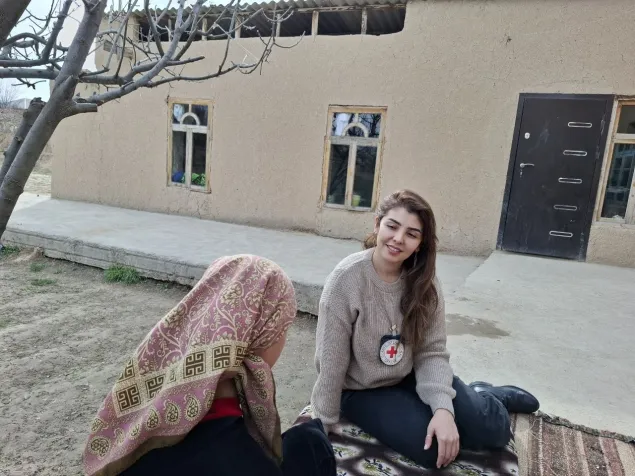
Maryam takes part in a psychological support session at home during a follow-up visit in Tajikistan.
Her adoptive mother received psychoeducation and parenting guidance from ICRC psychologists, and Maryam, too, became more settled. Eventually, the legal process was resolved in their favour: Maryam was formally recognised as her daughter.
Maryam now attends school, while her mother runs a small sewing business from home.
“I am not scared anymore,” Maryam says. “Because I know we can stay together.”
Uzbekistan: It is about small steps
Nazima works as a psychologist at an orphanage. When children repatriated from Syria and Iraq began arriving in her care, she soon realised that her existing training had not prepared her for their complex needs.
“I didn’t know how to approach them and was afraid of causing more harm,” she says.
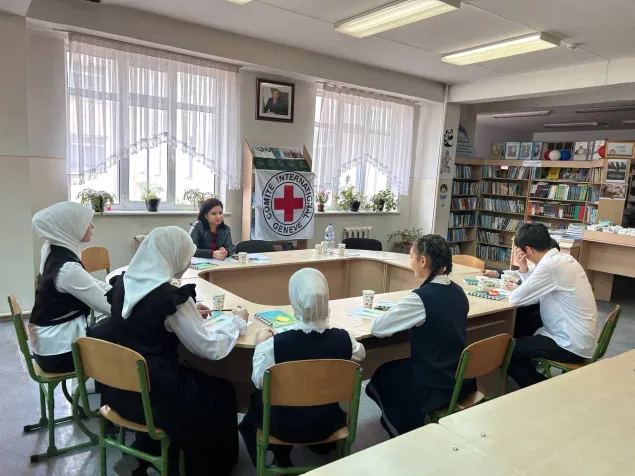
A psychologist conducts a focused psychosocial group session with repatriated children at a school in Uzbekistan.
The children had lost parents, siblings, and in many cases their entire social world. They were withdrawn and slow to engage. Inside the institution, they faced stigma from peers who called them “children of terrorists.” Staff, without the tools or knowledge to respond differently, would sometimes send struggling children to Nazima as a form of discipline, which meant she became associated with punishment rather than support.
She navigated this largely on her own, until the ICRC offered her the training, tools, and knowledge to support the children in her care. She learned grounding techniques, psychoeducation, and trauma-focused approaches that helped children understand and process their reactions to difficult experiences without feeling ‘broken’ or ‘abnormal’.
“Without the training, supervision, and ongoing support of the ICRC, I would not have been able to help them this way,” she says.
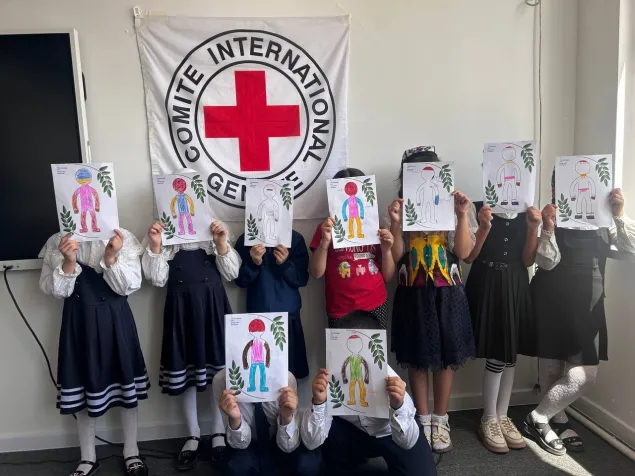
Children during an ICRC focused psychosocial support session hold up “body-mapping of emotions” drawings, a tool that helps children connect emotions with bodily sensations and communicate how they are feeling. Tashkent, Uzbekistan.
Progress in mental health and psychosocial work is rarely linear. A child who chooses to attend a session. A therapeutic room that no longer feels like punishment.
“Working with repatriated children is not about quick results. It is about small steps, trust, and rebuilding hope,” Nazima says.
Kyrgyzstan: Healing is possible
Aigul followed her husband to Syria as a young woman. Shortly after they arrived, he went missing. Left with five children, no identity documents, and no route home, she spent the next twelve years in a displacement camp. During that time, she also lost contact with her father, who told her by phone that he no longer considered her his daughter.
When her plane landed in Kyrgyzstan, she says she could barely believe it was real.
“For the first time in many years, I felt freedom and safety.”
But reintegration brought its own difficulties. Family members blamed her for what had happened. Her children faced stigma at school. Her in-laws treated her with distrust.
Aigul had encountered the ICRC before, in the camp where she had lived in Syria. When an ICRC psychologist offered to visit her, she accepted.
The sessions gave her a space to talk about the accumulated weight of more than a decade of hardship. She learned breathing and grounding techniques, and ways to manage overwhelming emotions and intrusive thoughts.
“These exercises and simple moments helped me feel alive again.”
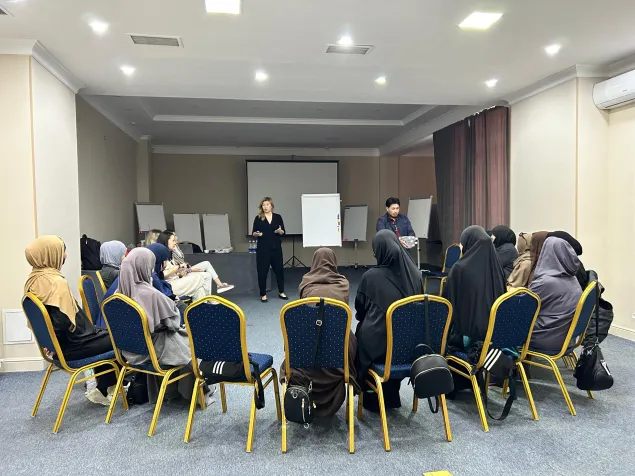
A focused psychosocial support group session for repatriated women in Kyrgyzstan, co-facilitated by a trained local psychologist and an ICRC psychologist.
Aigul also joined an ICRC-organised support group for repatriated women. Across Kyrgyzstan, nearly 100 women took part in these groups.
Aigul found comfort in shared experience: proof that others carried a similar weight, and that it was possible to move forward.
“Listening to others helped me realise that healing is possible, even after years of hardship. Each session reminded me that my voice and my feelings mattered.”
She now speaks about her children with quiet determination.
“I want them to grow up in a safe place.”
Walking alongside families: Five years of human centered support in Central Asia
Repatriation is not the end of a humanitarian crisis. Sustainable support requires investing in the people and systems that remain after an organisation’s direct presence ends. Through training, technical supervision, and direct psychological support, the MHPSS programme has equipped practitioners to support people in their care.
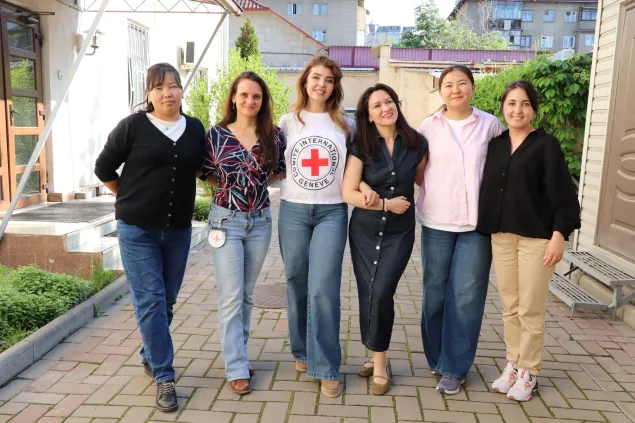
ICRC’s MHPSS Central Asia team.
For those who carried out this work, the programme was about more than numbers. One psychologist described it as a matter of trust, “built step by step, between families and us.” Others emphasised quality, long-term, needs-driven support tailored to each person and context. The team likened their work to a thread, connecting moments in people’s journeys and ensuring continuity. Psychological support, they said, does not simply solve problems, it accompanies people, and in doing so, it transforms lives.
* Data relevant to Turkmenistan is not available to the ICRC.
** The names of beneficiaries have been changed and identifying details modified to protect their privacy.