TREAT FIRST, SAVE LIVES: a joint campaign to promote timely emergency care for gunshot victims in Nigeria

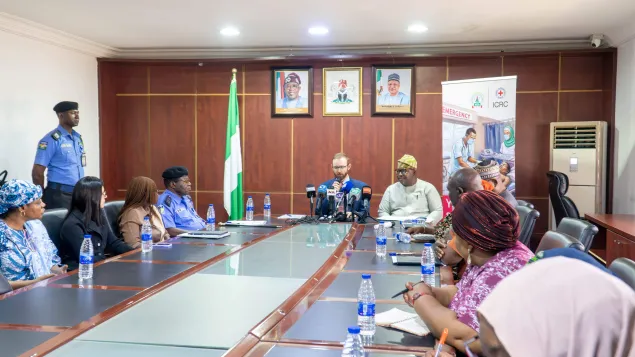
The International Committee of the Red Cross (ICRC), in partnership with Nigeria's National Orientation Agency (NOA), launched the TREAT FIRST, SAVE LIVES campaign on 12 November 2026. The initiative seeks to promote timely emergency medical care for gunshot victims and improve public understanding of the legal obligations governing their treatment.
The campaign builds on findings from a 2021 ICRC–National Association of Resident Doctors (NARD) research collaboration, which examined awareness of and compliance with provisions relating to the protection of health care in Nigeria. The study engaged 900 health-care workers and 1,200 police personnel across Borno, Plateau, Kaduna, Abia, Rivers and Oyo states.
It also included interviews with 24 hospital chief executives and 24 divisional police officers. The findings revealed gaps in awareness, training and compliance, pointing to the need for continued engagement with relevant institutions and wider public information.
The research provided an important foundation for the campaign's development. Despite existing legal safeguards, gunshot victims may still encounter delays or be denied timely medical attention when hospitals make treatment conditional on police clearance or an initial monetary deposit.
The Compulsory Treatment and Care for Victims of Gunshot Wounds Act, 2017, establishes the right of gunshot victims to immediate and adequate treatment in public and private hospitals, with or without police clearance. It also provides that treatment should not be conditional on an initial monetary deposit.
TREAT FIRST, SAVE LIVES is intended to help bridge the gap between the law, on the one hand, and public understanding and institutional practice, on the other. By communicating the obligations under the law and the importance of prompt treatment, the campaign seeks to encourage responsible action by individuals and institutions.
The launch was attended by representatives of the ICRC and NOA, representatives of the Inspector-General of Police and members of the media. The participation provided an opportunity to highlight the importance of coordinated efforts to improve awareness and promote compliance with the law.
To support dissemination, the campaign has produced a range of communication materials, including posters, flyers, radio jingles, an audio drama, an animated video, a roll-up banner and endorsement videos featuring the Inspector-General of Police and the Director-General of NOA. These resources are intended for use across media platforms and in community-level engagement.
NOA's extensive network of national, zonal and local structures is central to the planned outreach. Through these structures, the agency will support public information and community mobilization, while continued engagement with health and law-enforcement institutions will help reinforce awareness of their respective responsibilities.
The initiative reflects the ICRC's broader efforts to promote the protection of health care and ensure that people can access medical attention when they need it. Through its partnership with NOA, the ICRC aims to support a more informed public and contribute to improved practices surrounding emergency medical care for gunshot victims in Nigeria.
When a life is at risk, treatment must come first.