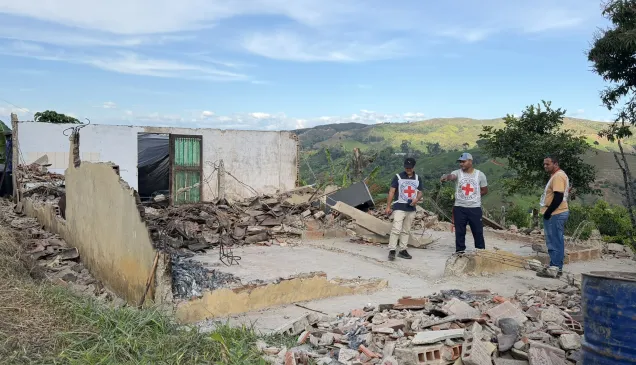
Despite challenging geographical conditions affecting access, multidisciplinary teams from the ICRC have reached rural areas in the department of Chocó, in western Colombia. In the areas visited so far, the teams have observed destruction and damage to homes and disruption to water supply caused by the earthquake. They also report that landslides on access roads continue to limit movement in some rural communities and damage to some educational facilities has left students unable to attend classes.
“This situation is very hard for these communities to bear because they feel cut off from the world. Isolation is affecting their access to basic services, which is difficult even under normal circumstances,” says Emilie Prache, ICRC delegate in Chocó.
These new challenges are compounding an already complex humanitarian situation. Over the years, hostilities, weapon contamination, confinement, displacement and restrictions on movement have affected these communities’ livelihoods and limited their access to essential goods and services, such as food, drinking water, health care and education.
“When a new emergency affects communities that are already grappling with the consequences of armed conflict, their needs cannot be understood in isolation. A new crisis can exacerbate existing needs and make peopleʼs daily lives even more difficult. Understanding what has changed is essential to tailoring our humanitarian response to what these communities need right now,” says Olivier Dubois, head of the ICRCʼs regional delegation in Bogotá.
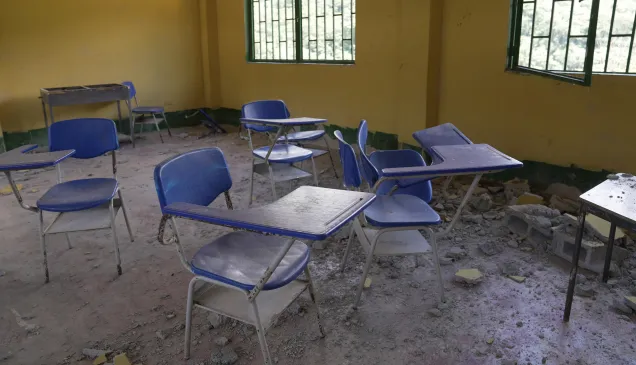
In one of the rural communities visited in San José del Palmar, the earthquake damaged the inside of a school and left the classroom used by the youngest children without a roof. Since the earthquake, students have been unable to return to school, and it is still unclear when they will be able to do so.
“School is a safe place for students because it’s where we guide and support them. The resumption of classes depends on the professional assessment of the school’s condition and on whether assistance is available to repair the damage,” explains Lorenza Moreno, the schoolʼs principal.
In areas affected by armed conflict, maintaining access to education is particularly important. In addition to being a place of learning, schools provide a safe environment for children and adolescents. Disruptions to classes may increase their vulnerability to armed-conflict-related risks.
The ICRC has maintained a humanitarian presence in Chocó for years, where it responds to the consequences of armed conflict. The dialogue it maintains with communities and parties to the conflict enables its teams to access remote rural areas and understand firsthand the situation of people living there. This visit is being conducted with the Colombian Red Cross, which is leading the International Red Cross and Red Crescent Movement’s humanitarian response to the earthquake in Colombia.
The ICRC is also visiting communities affected by armed conflict in various parts of Valle del Cauca to find out what happened after the earthquake and understand their current situation. The team has already visited the town of Dagua and is continuing its assessment in the rural area of Jamundí. In Bajo Calima, Buenaventura, the team provided assistance to 400 people from a community affected by armed conflict by purchasing food for the community kitchen following the earthquake. It also donated medical supplies and forensic equipment to various institutions in Valle del Cauca.
About the ICRC
Since 1863, the International Committee of the Red Cross (ICRC) has worked to relieve suffering and preserve human dignity during war and armed violence. Alongside our Red Cross and Red Crescent partners, we deliver life-saving aid across front lines and strive to reconnect families and locate missing people.
Engaging with authorities and armed forces on all sides, often confidentially, we advocate for humane treatment of detainees and urge compliance with international humanitarian law to protect civilians from harm, including online.
Lorena Hoyos, ICRC, Bogotá
Public Relations Officer
Phone: +57 3102218133