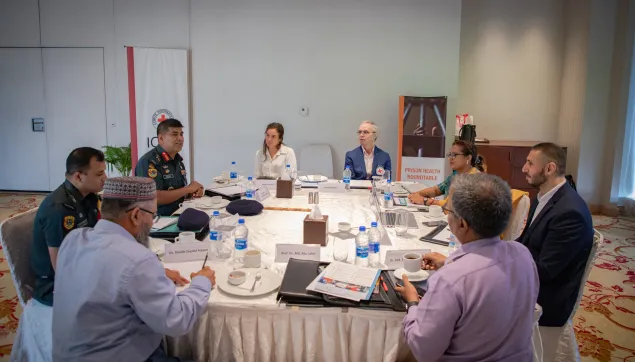
The ICRC facilitated a Prison Health Roundtable in collaboration with the Directorate General of Health Services and the Prisons Directorate to explore opportunities and challenges in improving health care for detainees across Bangladesh. The discussions reinforced a shared commitment to a coordinated and sustainable approach to strengthening Bangladesh’s penitentiary health system.
Promoting humanitarian principles among government officials
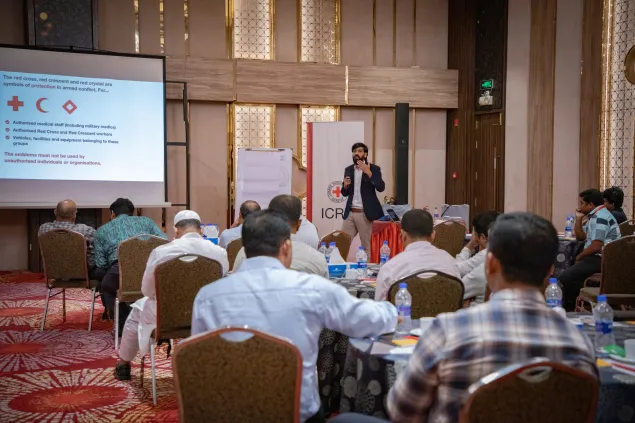
Officials from the Office of the Refugee Relief and Repatriation Commissioner participated in an International Humanitarian Law (IHL) dissemination session in Cox's Bazar. The discussions explored humanitarian principles, the relationship between IHL and international human rights law, and the ICRC's humanitarian activities, including Restoring Family Links services for displaced people from Myanmar.
Restoring family links and hope
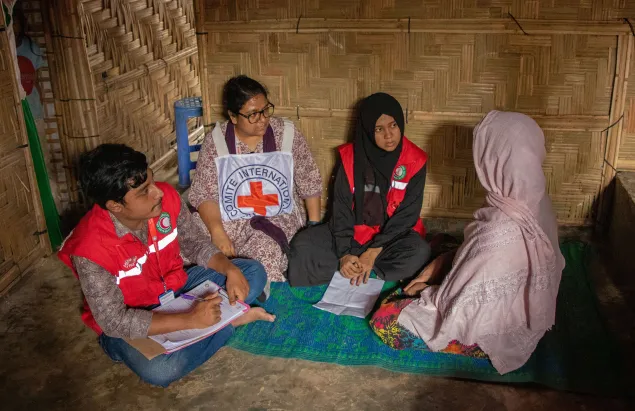
Every missing person leaves a family searching for answers. Together with the Bangladesh Red Crescent Society, the ICRC helps reconnect families separated by migration, violence, disasters and other humanitarian challenges, while supporting relatives living with the uncertainty of not knowing the fate or whereabouts of their loved ones.
Promoting inclusion through junior amputee football
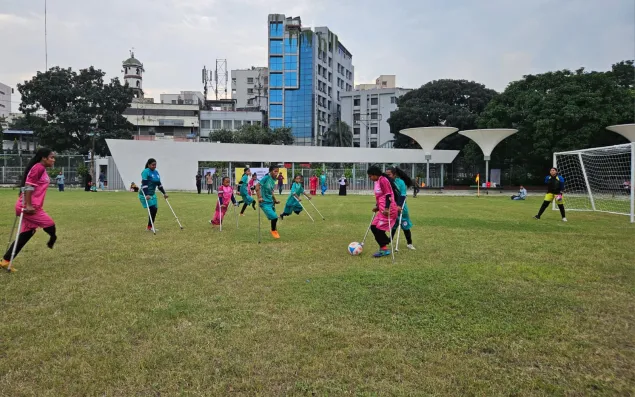
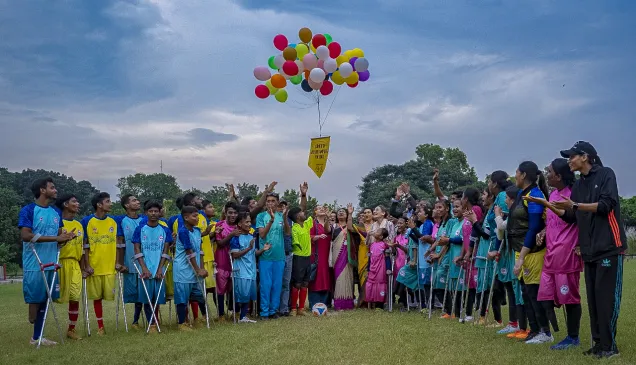
Twenty-eight young footballers with disabilities took part in intensive training as Bangladesh launched its first Junior Amputee Football Programme. Supported by the ICRC and Sports for Hope and Independence, the initiative promotes inclusion, confidence and resilience while creating new opportunities for children and adolescents with disabilities.
Preparing volunteers for emergency response
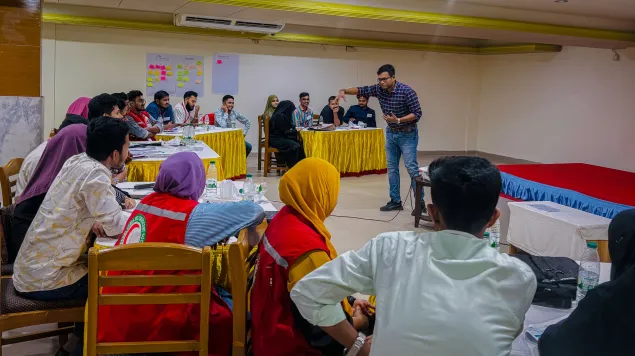
In Cox’s Bazar, Bangladesh Red Crescent Society volunteers participated in a four-day training programme to strengthen their preparedness for emergencies. Through practical exercises and simulations, they enhanced their ability to assess needs, coordinate assistance and safely support affected communities.
Exploring shared values of humanity
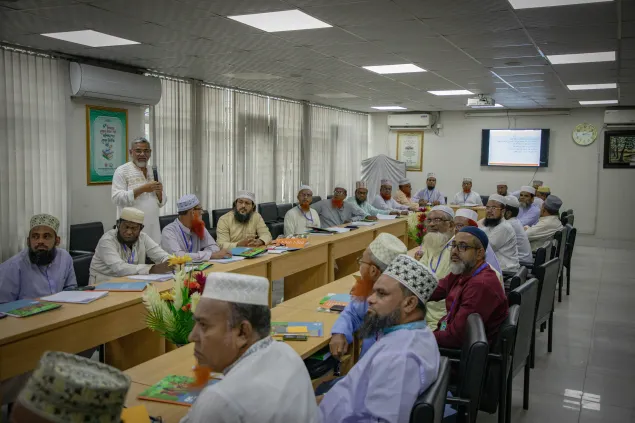
The ICRC engaged Madrasah teachers from the Bangladesh Madrasah Teachers Training Institute in discussions on the common principles shared by Islam and international humanitarian law.
Developing future advocates of IHL
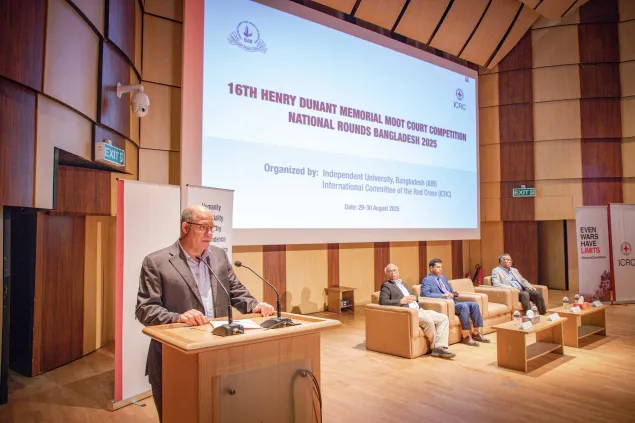
The national rounds of the 16th Henry Dunant Moot Court Competition brought together law students from universities across Bangladesh to debate complex humanitarian issues in a simulated courtroom setting. Organized jointly with Independent University, Bangladesh, the competition helps build awareness of IHL and strengthen legal advocacy skills among future professionals.
Preparing peacekeepers for humanitarian challenges
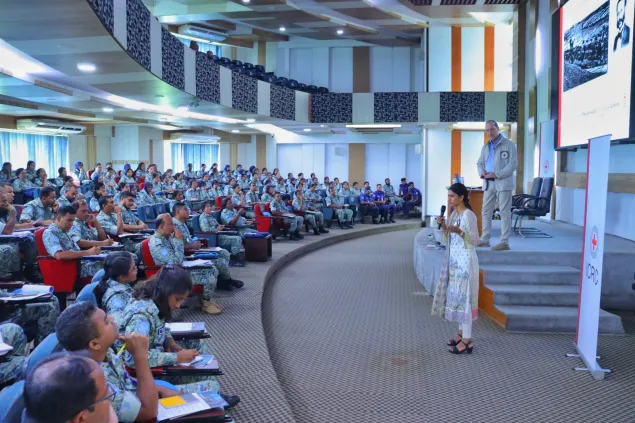
Members of the Formed Police Unit (FPU) received pre-deployment training from the ICRC at the Police Training Centre in Tangail ahead of their United Nations mission in the Democratic Republic of the Congo. The sessions strengthened participants' understanding of international humanitarian law and international standards relevant to policing in peace operations.
Strengthening first-aid skills among police officers
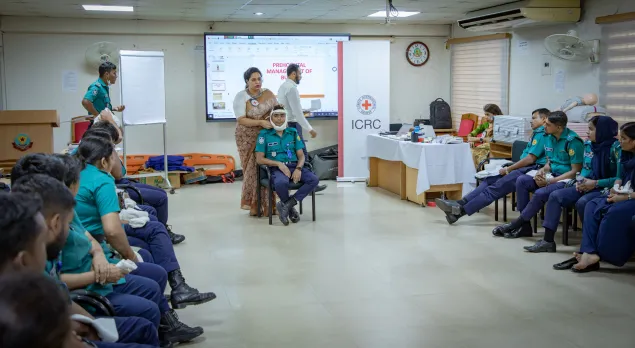
The ICRC, in collaboration with the Bangladesh Red Crescent Society, strengthened the emergency response capacity of Dhaka metropolitan police through Basic First Aid training and the provision of essential first-aid equipment.. This initiative helps ensure that police officers are better prepared to provide timely and effective assistance during emergencies.
Raising awareness of IHL among legal journalists
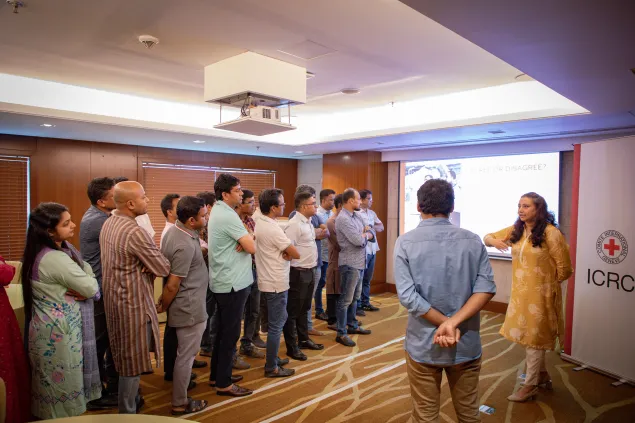
The ICRC brought together members of the Supreme Court Reporters Forum for a session on international humanitarian law and humanitarian reporting. Participants discussed the fundamental principles of IHL and the role of the media in reporting on conflict and other humanitarian situations. The exchange encouraged informed, accurate and responsible coverage of issues affecting people impacted by crises.
Access to clean water for detainees and prison staff in Cox’s Bazar District Jail
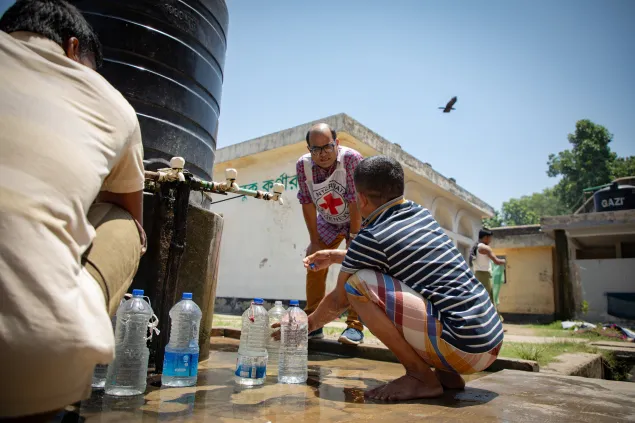
The ICRC worked with prison authorities to upgrade the water supply system at Cox’s Bazar District Jail to improve access to clean and reliable water services. Beyond infrastructure improvements, the initiative strengthened the jail’s capacity to sustainably operate and maintain the system, contributing to better living conditions, health and dignity for those living and working in the facility.