Build on the past, shape the future: the ICRC’s 40 years of humanitarian dialogue with the PLA

In 1989, a delegation of the People’s Liberation Army (PLA) walked into the Geneva headquarters of the International Committee of the Red Cross (ICRC). A simple handshake built a bridge for dialogue between the Chinese military and the world’s first humanitarian organization. Over the past nearly 40 years since then, from military classrooms to international forums, the two sides have continued to engage in humanitarian preparedness for the contingency of armed conflict, as framed by the Geneva Conventions.
This is part of the ICRC’s global endeavor to engage with armed forces. As part of its humanitarian mandate, the ICRC engages with weapon bearers and military personnel worldwide, to promote the principles of IHL, secure access to vulnerable populations in conflict zones, and ensure that a neutral humanitarian space is preserved even in times of war.
High-level engagement
The ICRC has been invited to present at the annual Beijing Xiangshan Forum since 2016. Former ICRC vice president Gilles Carbonnier spoke at the Forum five times from 2018 to 2025, sharing the ICRC’s insights on IHL, protection of civilians and essential infrastructure.
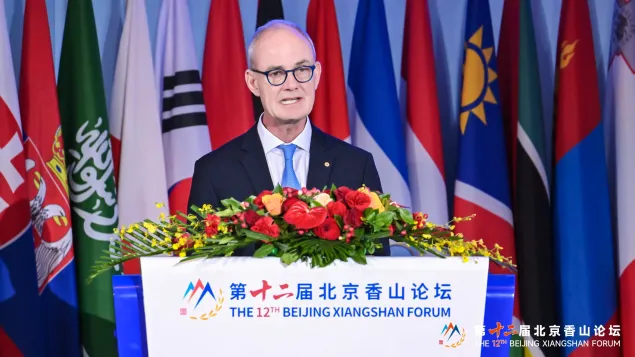
ICRC VP Gilles Carbonnier made remarks at the 12th Beijing Xiangshan Forum, Fourth Plenary Session, 19.09.2025.
“The first steps toward peace are often humanitarian ones, such as parties agreeing to release and safely transfer detainees back home. More broadly, compliance with IHL provides the necessary enabling environment for sustainable peace.” Among others, he highlighted the links between IHL and peace in his speech at the 12th Beijing Xiangshan Forum in 2025.
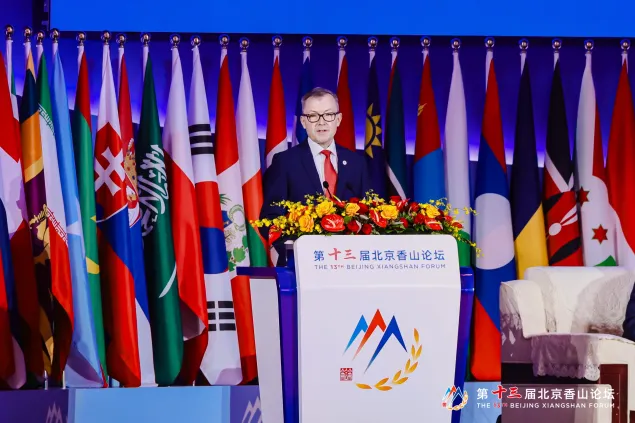
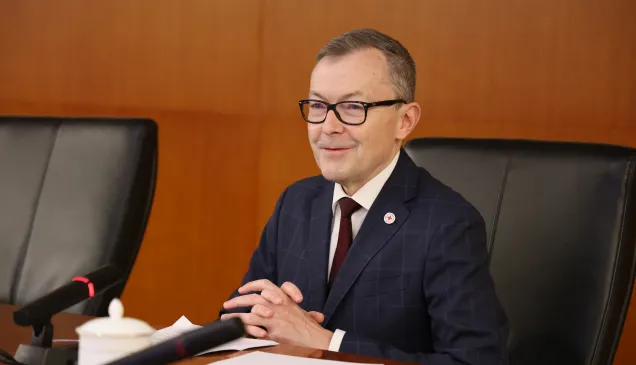
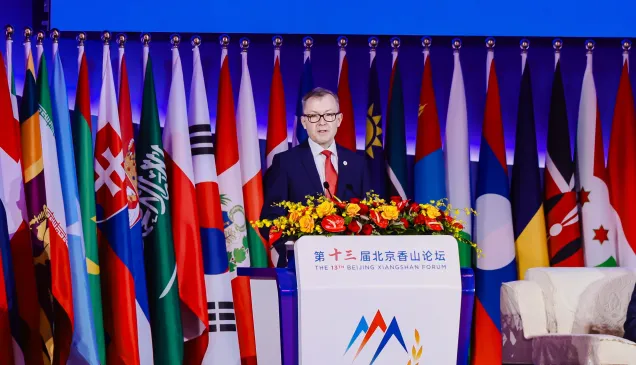
Jürg Lauber, Vice President of the International Committee of the Red Cross, delivered panel remarks at the Third Plenary Session of the 13th Beijing Xiangshan Forum, held on 17 September 2026.
This year, ICRC Vice-President Jürg Lauber was invited to speak at the 13th Beijing Xiangshan Forum. He stated that amidst rising conflict numbers, geopolitical volatility, and rapid developments in military technology, strengthening compliance with international humanitarian law is an urgent imperative.
"It is our duty to remind states that preparing for wars must include establishing systems to ensure compliance with international humanitarian law from the very outset of hostilities. This necessitates integrating IHL compliance into peacetime planning to ensure that the necessary mechanisms are fully operational when hostilities begin."
At the same time, the two sides have maintained communication at the most prominent international security platforms including the Shangri-La Dialogue, while maintaining reciprocal visits between Beijing and Geneva.
Integrating international humanitarian law into operational practice
Based on solid high-level strategic engagement, the PLA and ICRC co-hosted a series of international events aimed at promoting the integration of international humanitarian law (IHL) into the operational practice of armed forces.
From 1997 to 2025, the PLA sent a total of 73 officers to ICRC seminars in the Asia-Pacific, covering IHL, peacekeeping operations, the law of armed conflict at sea, the role of operational legal advisers and the humanitarian consequences of new technologies of warfare.
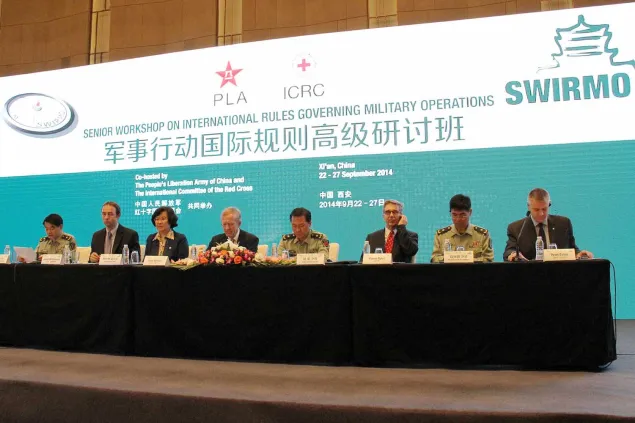
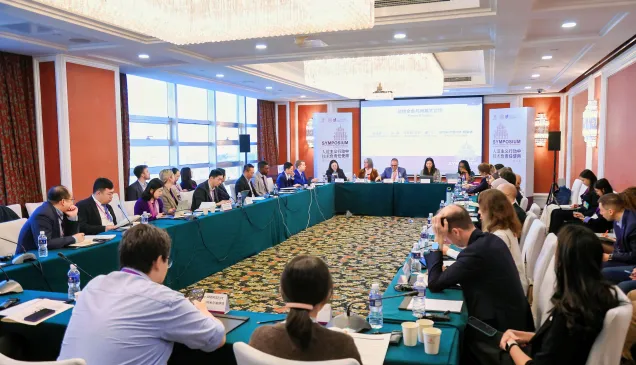
Senior military officers from 57 countries participated in SWIRMO 2014, held in Xi'an, China, from 22 to 27 September.
The 2004 Asia-Pacific seminar on the law of armed conflict brought together senior officers from 19 countries, while the eighth Senior Workshop on International Rules Governing Military Operations in 2014 gathered senior officers from 62 countries. Subsequent seminars on the law of armed conflict at sea and on operational legal advisers brought exchanges closer to concrete military-operational settings.
Education and training on the laws of war
IHL education and training have remained a core pillar of interaction. The ICRC has been pushing forward collaboration with military academies since the 1990s.
From 1990 to 2004, the ICRC sponsored 21 PLA officers to attend courses at the International Institute of Humanitarian Law in San Remo.
Since 2005 when the ICRC Regional Delegation for East Asia was officially established in Beijing, the two sides have held 31 workshops at 11 military academies, and more than 180 Chinese military officers participated in ICRC training and seminars in China.
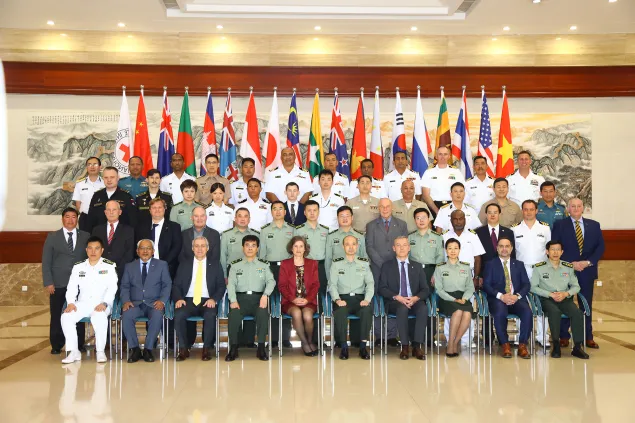
A regional workshop on the law of armed conflict at sea was held from 8 to 11 May, 2018, in Shanghai, China, gathering dozens of senior naval officers from 19 countries in the Asia Pacific.
Notably, in May 2018, the ICRC and the Political College of National Defense University co-hosted the 5th Asia-Pacific Regional Workshop on the Law of Armed Conflict at Sea in Shanghai, the first time this workshop was held in China. Thirty-five senior naval officers from 19 countries across the Asia-Pacific region engaged in in-depth discussions on issues related to the law of naval warfare and maritime humanitarian operations.
In addition, several experts from PLA were invited to serve as reviewers and contributors to the updated Commentaries on the Geneva Conventions. Chinese-language reference materials, including Lectures on the Law of Armed Conflict, Essentials of the Law of War and the Code of Conduct for Combatants, were translated and produced, while knowledge cards incorporating the “Three Rules of Discipline and Eight Points for Attention” were distributed to grassroots units, further integrating the theorical understanding of the rules of war into military operational practice.
Military Medicine
Cooperation also extended more deeply into military medicine. PLA specialists participated in ICRC training on war-wounded care in Switzerland and Australia.
The ICRC was invited to the annual Great Wall International Military Medicine Forum from 2014. In 2018 and 2019, ICRC surgeons conducted two international tactical combat casualty care courses at the Army Medical University, whose experts also led the translation and revision of a new edition of War Surgery.
Looking Ahead
The character of warfare is changing rapidly, new technologies continue to emerge, and operational environments are increasingly more complex. Yet the value of IHL in protecting life and dignity during armed conflict remains constant. Looking ahead, the two sides are expected to continue to explore new approaches to IHL integration into operational practice, contributing to more effective protection for people affected by armed conflict and to reducing the human cost of war.