World Mental Health Day: Art and Messages That Reach Beyond Borders

World Mental Health Day, observed on 10 October, is marked this year under the theme “Lived experiences heard: real voices, real change”.
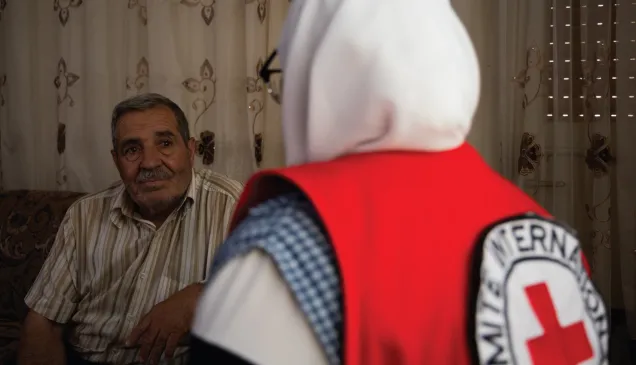
Supporting people affected by armed conflict and responding to their needs are central to the work of the International Committee of the Red Cross (ICRC).
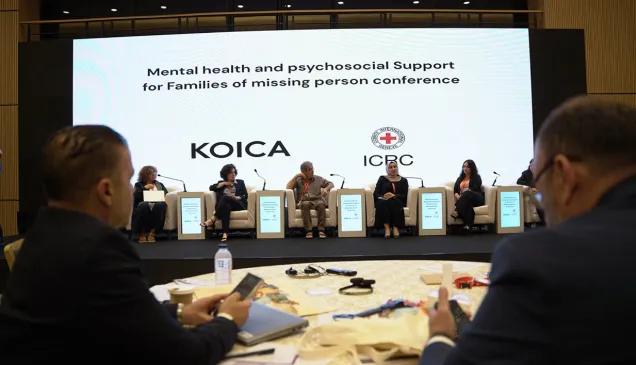
In Jordan, the ICRC marked the International Day of the Disappeared under the theme “The Journey of Families of the Missing”. The Concept of the Journey grew out of a series of focus groups and activities with Syrian families of missing persons living in Jordan whose relatives went missing due to the conflict in Syria.
Throughout these consultations, one message came through clearly: families wanted the world to feel their pain and the challenges they face when a family member goes missing. They wanted to share their stories through an immersive experience, bringing the different stages of their lives much like stations along a railway journey.
That reference to a train gave the ICRC team in Jordan both the idea and the setting for this year’s event: a railway station.
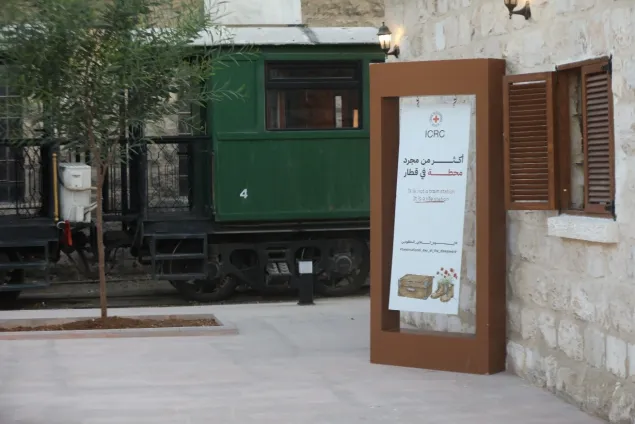
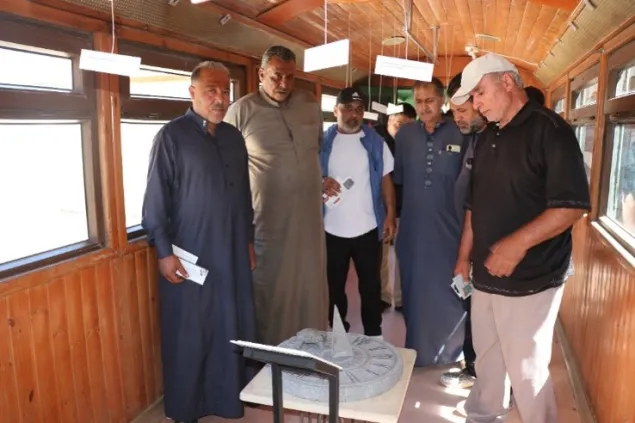
The train carriages represented three stages in the families’ journey: The disappearance and search for answers; migration and the uncertainty that follows; and the psychological, social and economic consequences of ambiguous loss.
The fourth station represented a new beginning within a journey that remains unfinished. After years of waiting, it created space for families to give voice to their experiences and tell their stories. It invited us to listen to how a loved one’s absence has shaped their memories and daily lives. Here, families spoke of their resilience and the questions that remain unanswered, ensuring that missing persons and their families are not forgotten.
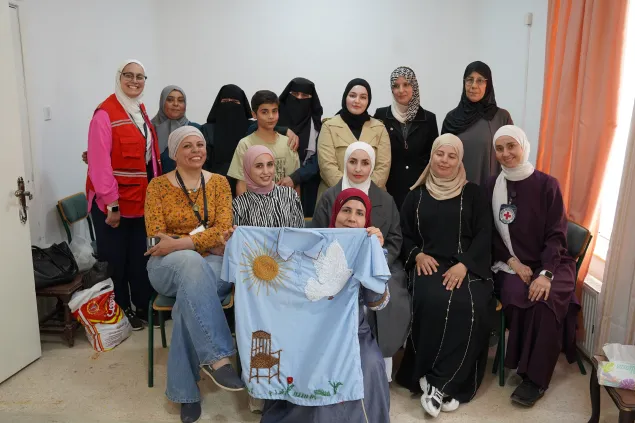
As part of its accompaniment programme, which provides psychological and social support to families of missing persons, the ICRC worked with families to develop activities that keep the memory of their loved ones alive. These activities were facilitated by family members who, after participating in Mental health and psychosocial support sessions, became accompaniers, supporting others facing similar experiences.
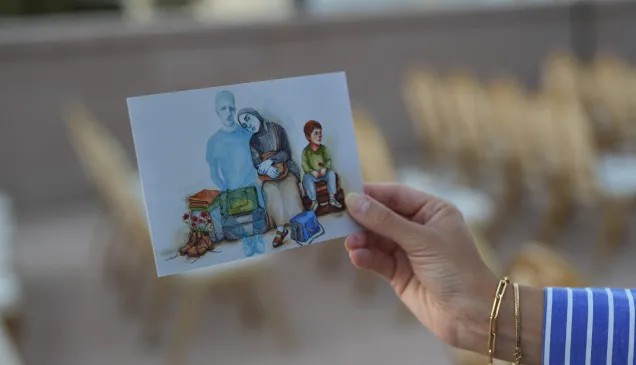
Over four months, families came together to create artworks, each expressing an experience, an emotion or a message. Through these pieces, they gave tangible form to what they carried within them, creating something they could see and share with the world to honor their loved ones. These activities also provided a safe space for families to come together. They shared food, stories and ways of coping. They supported one another, organized themselves and refused to be forgotten.
This station stood on the ground, outside the moving train carriages. Its stillness reflected the families’ own experience of lives held in suspension as they waited for answers.
Artworks Reflecting Resilience and the Pain of Waiting
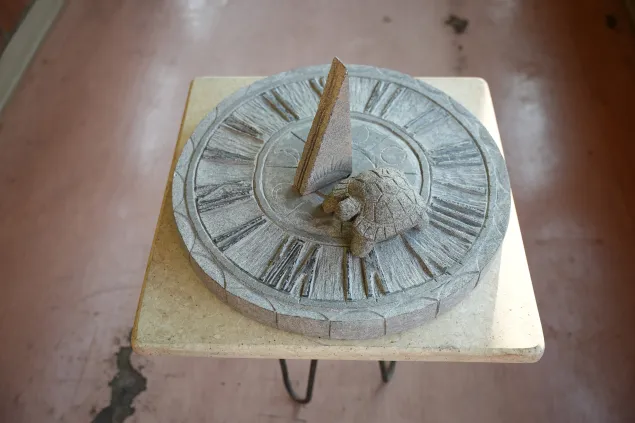
Sundial
This stone was carved in honor of men who are missing yet remain deeply present in the lives of those who love them.
Shaped as a sundial and surrounded by the phases of the moon, the piece reflects the experience of ambiguous loss: a passage of time measured not only in days and months, but also in enduring love, hope and unanswered questions.
This is not a monument to the past. It is a testament to an ongoing bond, to remembering, waiting and loving someone whose story is still unfinished.
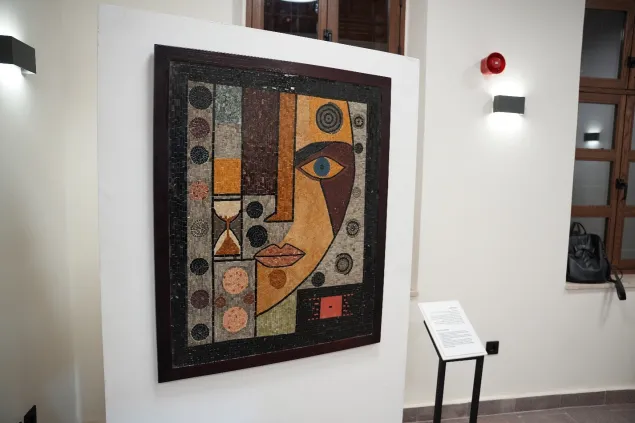
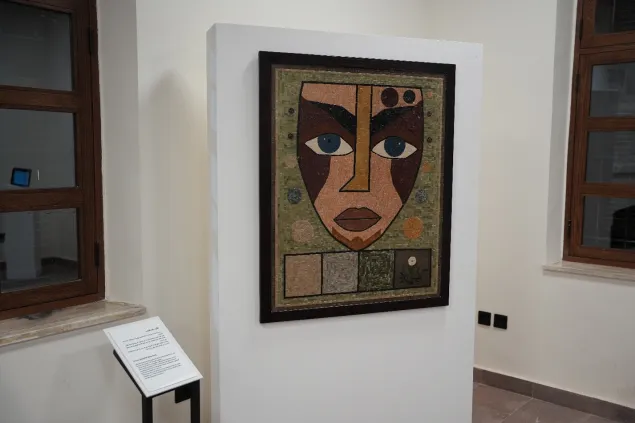
Faces of Waiting
This artwork is not the portrait for one woman, but thousands of women whose lives have been suspended by the disappearance of a loved one.
This work turns stone into memory, the face is divided into two halves, one continues to search, while the other learned to live with absence.
The open eye is not watchful, it’s an eye that can’t lay to sleep before knowing the truth is known, the muted hues and the natural stone carry the weight of silence, the endurance of memory, and the resilience of hope despite the passing of years.
Hope Despite Absence
Women found a safe space to share their experiences and find a community of mutual support.
The artwork shows a fragile sapling growing from stone, becoming a symbol of life and hope emerging despite hardship, while the olive-green shade, represents growth and the strength to carry on.
This artwork is an exhibit of how healing does not mean forgetting, it means allowing life to continue while they remain present in memory.
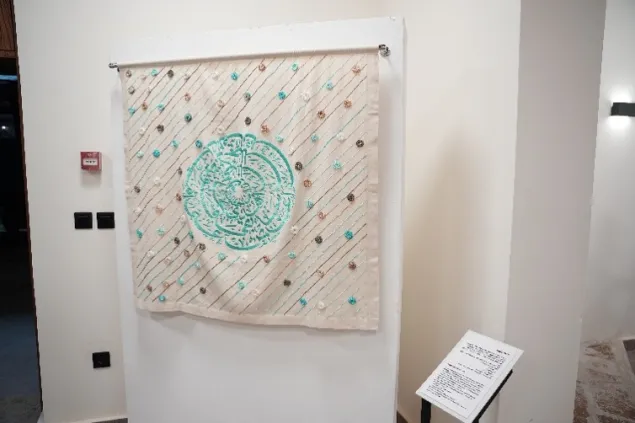
Mandala / Koffiyeh
At the entrance of many homes, the Koffiyeh of a missing father still hangs.
Suspended between return and memory, it waits as though its owner might walk through the door and wrap it once more around his shoulders. It is an ordinary object transformed by absence: no longer simply a piece of cloth, but a witness to waiting, a keeper of hope, and a reminder that love continues even when certainty does not.
In this work, daughters of missing fathers recreate that familiar garment, transforming it into both a tribute and a testimony.
“I’ll make you proud.”
“I dedicate my success to you.”
“I’ll stay strong for you.”
“I live on the hope of meeting you one day.”
These are not farewell messages. They are promises that love endures and hope lives
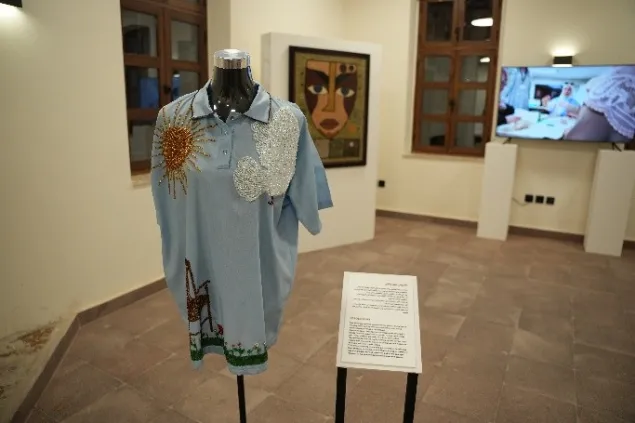
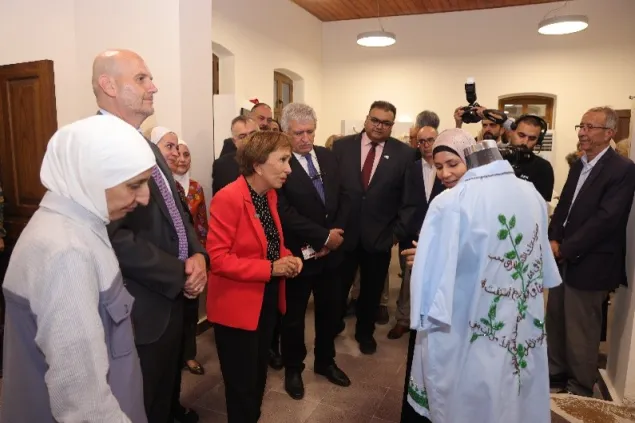
Beaded shirt
This shirt was created collectively by sisters, and wives of missing persons. It is a living conversation with those whose absence remains unresolved.
Across its back, messages to the missing are stitched in beads: “You are always on my mind.” “Come back, I miss you.” “Our children are safe.” “I entrust you to God.” “Separation is difficult, I will continue to care for the tree.” Words that are spoken quietly at home, carried in silence for years, and now made visible.
This work honors those who are missing while refusing to reduce them to absence. It speaks of lives that continue to matter, of love that persist without certainty, and of the courage required to live suspended between hope and sorrow.
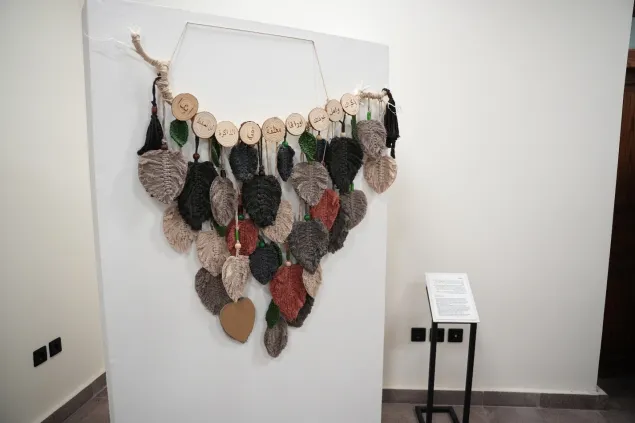
Macrame
Each thread in this work has passed through the hands of mothers and sisters living with the absence of someone they love. Woven slowly and deliberately, the threads carry what cannot be let go: love, waiting, remembrance, and the quiet determination to keep a presence alive within the fabric of everyday life.
The braids mark the passage of time, and the strands tighten and cross over one another, echoing the emotional tension of holding onto hope while facing a world that often urges letting go. In these moments, the makers speak of turning toward prayer, and one another, finding ways to sustain themselves through endless waiting.
Together, these leaves form a collective act of remembrance delicate yet enduring, suspended between sorrow and resilience, absence and continued love.
Through its multidisciplinary accompaniment programme, the ICRC supports Syrian families living in Jordan whose loved ones went missing in connection with the conflict in Syria. The MHPSS aspect of the programme delivered through support groups and other psychosocial / memorialization activities -some of which are led by peers, - seeks primarily to reduce isolation and distress related to the disappearance of a loved one, increase coping abilities while strengthening families’ support network through interactions with others who share similar experiences.
Since 2020, more than 693 families have benefited from these activities.