The pain of separation transcends borders and generations

ICRC (Amman, Seoul): “This isn't only about us in Syria… the whole world is going through this pain of missing.”
As the world marks the International Day of the Disappeared this week, a new ICRC film brings together the stories of three women from different countries, each shaped by a different conflict. Their stories reveal a truth: the pain of not knowing is universal—and so is the strength and endurance of families of the missing and those separated from their loved ones.
The 16-minute documentary, titled "Missing in Syria, Separated in Korea", follows the stories of Nawras and Alida, who are from Syria, and Lee Yeon-bin who came from North Korea.
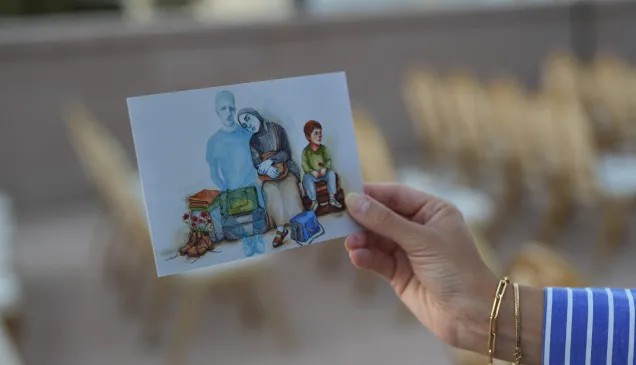
What binds the three women together is one unanswered question: “Where is my family?”
Nawras's two sons, Ahmad and Munaf, went missing in Syria in 2012. Alida’s son, Hisham, went missing in 2015. Lee Yeon-bin, meanwhile, was separated from her brother and sister when she and her parents fled to South Korea, leaving them behind in North Korea in the years leading up to the Korean War (1950–1953).

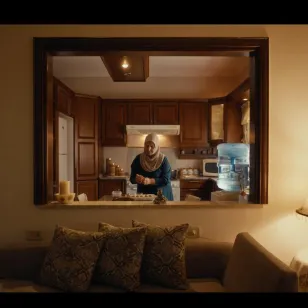

Despite coming from different geographic and historical backgrounds, it is striking how they share the pain of not knowing what happened to their loved ones.
“When my husband passed away, [we accepted it as] God’s will,” Nawras says, “But it's different when you lose someone to an ambiguous loss” referring to her two sons.
“You have no idea how much my parents missed their son. Every night, they’d set out a bowl of water and pray for him,” Lee recollected of the enduring agony.
In Syria, an armed conflict has led to about 38,000 registered cases of missing persons with the ICRC and national Red Cross and Red Crescent societies since 2011. But the actual number is believed to be considerably higher. The Korean War, meanwhile, also left hundreds of thousands of families separated, with today around 30,000 people still waiting to be reunited with their loved ones – or at least find out what happened to them.
How can you help someone like me, someone whose heart is completely shattered?
The process of healing and gaining resilience is also similar.
“Life doesn't stop when we lose someone. You can't just sit there with your head in your hands,” Nawras said. Alida echoes: “[We] must accept the new reality. My grief won't change anything. I must live with it and support those who still can't accept their missing.”
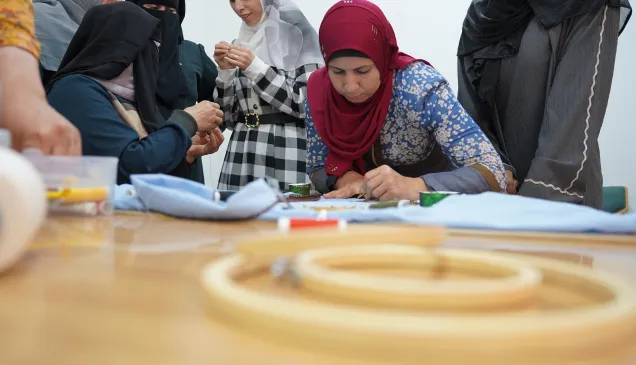
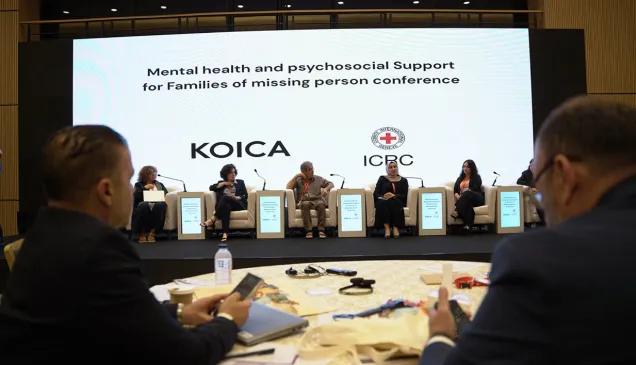
They both participated in ICRC’s Mental Health and Psychosocial Support (MHPSS). Nawras and Alida are both accompaniers trained by the ICRC to provide peer support to other families of the missing.
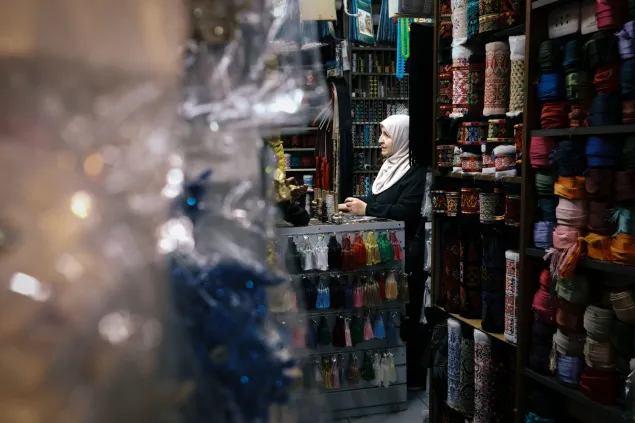
Through its Conflict and Fragility Program (CFP), Korea International Cooperation Agency (KOICA) has been working with the ICRC to support families of missing in Syria, Jordan and Lebanon.
I felt like I was covered in dust, and it was slowly being brushed away.
As more than 130 armed conflicts are currently taking place around the world – which more than double the number 15 years ago, the challenges of missing persons and family separation are becoming increasingly acute. According to 2024 figures, around 284,000 missing persons were registered across the International Red Cross and Red Crescent Movement, an increase of approximately 70 per cent over the five years from 2019 to 2024.
Even after hostilities end, facilitating family reunification and ensuring families’ right to know what happened to their loved ones must remain core humanitarian priorities. Addressing these needs helps not only individual families recover, but entire communities heal — laying the groundwork for lasting peace in the region.

The documentary was produced by the ICRC as part of KOICA's Conflict and Fragility Program (CFP), and directed by a video journalist Lee Hwa-won, alongside Park Sung-hoon, a Sony Future Filmmaker Award winner among other accolades.
Further resources
- For more information on ICRC support for Syrian Families of the Missing: Supporting Syrian Families of the Missing | International Committee of the Red Cross
- For more information on ICRC activities in Jordan: Jordan | International Committee of the Red Cross
- For more information on ICRC activities in Republic of Korea, visit Republic of Korea | International Committee of the Red Cross
- For more information on ICRC activities during the Korean War: ICRC action during the Korean War - ICRC Archives & Library | Cross-Files | ICRC Archives, audiovisual and library