Solferino & Henry Dunant in a nutshell
©ICRC / hist-00110
The battle of Solferino was fought in northern Italy on 24 June 1859. It was a decisive episode in the struggle for Italian unification and also a pivotal moment in the evolution of modern humanitarianism. It is at the origins of the International Red Cross and Red Crescent Movement and the Geneva Conventions.
Allied Franco-Sardinian troops, led by Emperor Napoleon III, faced off against Austrian soldiers at around three in the morning on the 24th. By six o'clock, the battle was in full swing. Bright sunshine bore down on the 300,000 soldiers, who shot, trampled, bayoneted and slit the throats of their enemies. After 15 hours of slaughter and bloodshed, around 6,000 men were dead and more than 35,000 were wounded or missing.
The medical services of the French and Sardinian armies were overwhelmed. Transportation for the wounded was practically non-existent, while food and water were scarce. In the church of Castiglione, the Chiesa Maggiore, a young Swiss man named Henry Dunant – who was in the area for business – did his best to care for the wounded and dying, helped by local women volunteers. They treated the men equally, regardless of what side they had fought on, inspiring the women to coin the phrase "tutti fratelli" (all brothers).
Considered by many as the father of modern humanitarianism, Henry Dunant was also arguably the first embedded war reporter and citizen journalist rolled into one. In 1862, he self-published a graphic account of the aftermath of the battle, called A Memory of Solferino.
The battle of Solferino led Dunant to push for the creation of a neutral and impartial organization to protect and assist the war wounded (ICRC). He also suggested that voluntary relief societies should be established to care for the injured – an idea that would eventually lead to the formation of National Red Cross and Red Crescent Societies. In addition, he proposed that an international principle be created to serve as the basis for these societies, an idea that developed into the Geneva Conventions, which will turn 60 on 12 August 2009.
In 1901, Henry Dunant was awarded the first-ever Nobel Peace Prize for what was described as the "supreme humanitarian achievement of the 19th century". Now, 150 years later, his legacy lives on in the tens of thousands of staff and volunteers who continue to help others around the world each day.
A few things you might not know about the ICRC
- Contrary to popular belief, the ICRC is neither a non-governmental organisation (NGO) nor an international organisation. It isn't an inter-state body either. It is a private agency, governed by a committee of between 15 and 25 exclusively Swiss members, who set policy and decide on strategy.
- The German-Danish War of 1864 was the first to break out following the creation of the Red Cross. Two delegates were sent to the scene of the fighting to serve as neutral intermediaries. By the end of 1914, an initial team of ten Committee members had grown to 1,200 volunteers and paid staff, who sifted through thousands of requests for information about civilians who had gone missing in the chaos of World War I.
- Today, the ICRC has roughly 11,800 employees worldwide, including 9,500 national staff and more than 1,300 expatriate delegates.
- Up until the early 1990s, only Swiss citizens were allowed to serve as ICRC delegates abroad. Today, roughly half of the ICRC's international staff are non-Swiss.
- Around 90 per cent of the ICRC's funding comes from States, yet the organisation is independent from any government.
- This year's initial budget of more than 1.1 billion Swiss francs ($949 million USD) is the largest in ICRC history.
- The ICRC works in 80 countries around the world and assists roughly 15 million people annually through water, sanitation and construction projects.
- In 2008, the organisation visited almost half a million detainees in 83 countries to monitor their conditions of detention.
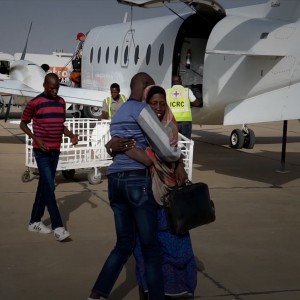
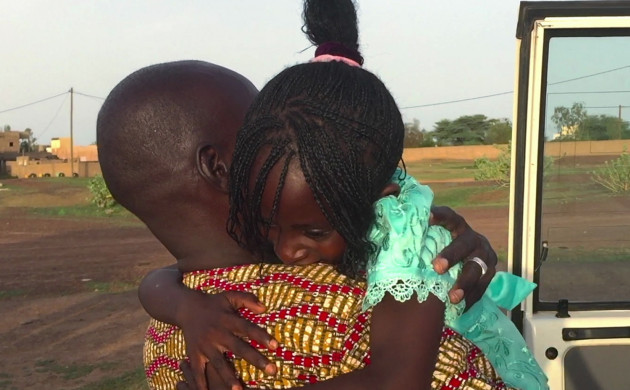
- The ICRC reunited more than 800 children with their families in 2008, while over 650,000 Red Cross messages were collected or distributed, enabling relatives separated by armed conflict to exchange news.
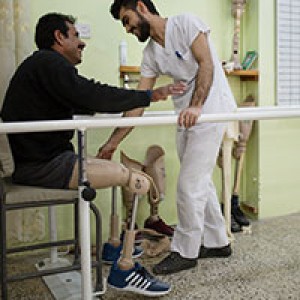
- An estimated 3.5 million people benefited from ICRC-supported health care facilities in 2008, half of whom were children. Over 100,000 surgical operations were performed by the ICRC last year.
- Around 2.3 million people received support through sustainable food production programmes and micro-economic initiatives from the ICRC in 2008.
- The ICRC is the custodian of the Geneva Conventions and the guardian of International Humanitarian Law, which outlines the rules of war.
- The organisation's biggest operations include Sudan, Somalia, Iraq, Afghanistan, Israel and the Occupied and Autonomous Territories, the Democratic Republic of the Congo, Colombia, Sri Lanka, Chad and Pakistan.
- The ICRC's motto is Inter Arma Caritas (Amidst War, Charity).
See also: Our world. Views from the field. The impact of conflicts and armed violence on civilians