Home
Document printed from the website of the ICRC.
URL: http://www.icrc.org/web/eng/siteeng0.nsf/html/57JMY2
International Committee of the Red Cross
Archived page (may contain outdated information)

31-05-1996  Annual Report 1995 
Harare, regional delegation (Botswana, Malawi, Mozambique, Namibia, Zambia and Zimbabwe)

Introduction
Botswana

Malawi

Mozambique

Namibia

Zambia

Zimbabwe


Introduction

Peace prevailed in 1995 in the countries covered by the regional delegation in Harare. Relative stability in South Africa had a positive influence on the social and political climate in neighbouring countries. By the end of the year all six States had become party to the Geneva Conventions and their Additional Protocols. The regional delegation concentrated its efforts on dissemination activities and on strengthening emergency preparedness and response programmes with the National Societies. It completed its detention-related activities in Malawi.

From 23 to 27January, the ICRC was invited to participate in a workshop in Harare on the subject of peace-keeping, organized by Zimbabwe and the United Kingdom and sponsored by the UN and the OAU. The workshop was attended by representatives from 17 African countries and gave the ICRC the opportunity to underline its role as a neutral and impartial humanitarian institution.

In cooperation with the OAU, on 2 and 3 March the ICRC held a two-day international seminar on anti-personnel landmines and the 1980 UN Weapons Convention in Harare, which was attended by over 60 people, including government representatives from 13 southern African and Portuguese-speaking West African countries, national and international NGOs and representatives from National Red Cross Societies. It was one of three regional seminars organized by the ICRC to foster awareness in Africa of the problem of landmines and their devastating effects. The seminar also dealt with the problem of blinding laser weapons.

The ICRC's Harare office served as a logistics centre for the region, forwarding relief stocks for operations in Angola and Zaire.

Botswana

To encourage the Botswana Red Cross to take advantage of sponsorship offered by the ICRC, a five-day workshop on emergency preparedness and response was organized for staff members in late September. Representatives of WHO*, UNDP, UNHCR, the Council for Refugees and the National Disaster Committee participated in the workshop, giving the Society information on the resources proposed by the various institutions for improving disaster preparedness and response to emergencies.

* WHO: World Health Organization

Malawi

The ICRC completed its programme of visits to Malawi's prisons, the purpose of which was to examine the inmates' material and psychological conditions of detention and to establish whether the improvements it had made to water and sanitation facilities from 1992 to 1994 had been properly maintained. The ICRC reported its findings to the highest authorities and also provided blankets, soap and other hygiene articles to 25 prisons throughout the country. Construction work began on the hospital ward at Zomba prison to enable detainees to receive the medical treatment they needed.

Mozambique

The peace process remained on course in Mozambique in 1995.

Under a cooperation agreement between the ICRC and the Mozambique Red Cross Society, a national seminar was held from 5 to 12 March for all dissemination officers, including participants from all provinces.

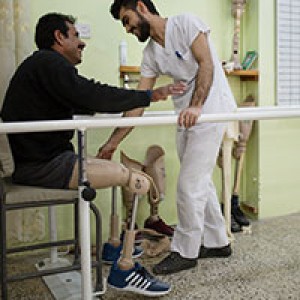
The ICRC's programme for the war-disabled in Mozambique was handed over in October to the Ministry of Health and a British NGO called "Power". Since it started its programme in 1981 the ICRC registered 5,324 amputees, and produced around 8,190 prostheses, 350 orthoses and 26,000 pairs of crutches. The total number of amputees in Mozambique is estimated to be around 7,000.

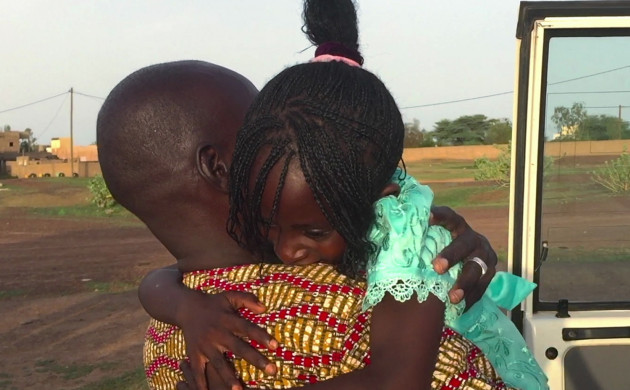
During the year further efforts were made to trace the families of unaccompanied children registered by the ICRC in 1994. Thirteen children, out of a total of 138 still unresolved cases, were reunited with their relatives in 1995.

Namibia

In August, the regional delegate went to Namibia to meet the authorities and the National Society's leadership in order to discuss the landmines issue, with regard to the revision of the 1980 UN Weapons Convention. The authorities intimated that Namibia was considering adhering to the Convention. They announced that an interministerial committee on human and humani-tarian rights had been set up, and the regional delegate agreed to organize a workshop for the committee members to inform them of the specific measures to be applied.

Zambia

In 1995 Zambia underwent an economic crisis which threatened the country's political and social stability. Inflation stood at 60 percent, individual spending power was greatly diminished and sharp cuts in civil service posts dramatically increased unemployment, placing a large part of the population below the poverty line. This prompted the Zambia Red Cross Society to step up its emergency preparedness and response programme under the guidance of the ICRC.

The regional delegate was in Zambia at the end of July, when he congratulated the authorities on the country's accession to the 1977 Additional Protocols. It was agreed that the newly created interministerial committee on human rights would be extended to include international humanitarian law.

Zimbabwe

In preparation for the April parliamentary elections, the National Society organized three one-day workshops on emergency preparedness in the three provincial headquarters, to discuss the setting-up and management of first-aid posts and action teams. Many first-aid posts were installed and around 4,900 people were given first aid by voluntary teams in the areas surrounding the polling stations. The general elections confirmed overwhelming support for the ZANU-PF* party in power since independence.

* ZANU-PF: Zimbabwe African National Union - Patriotic Front


go to top of page
Copyright © 2009  International Committee of the Red Cross31-05-1996
Section:  Info resources > Annual Report > 1995
Back to previous page Back to previous page